
HVAC in Lafayette, CO: Heating Service for Homes at 5,200 Feet
Call Us
(720) 764-0399
Same-Day Requests
Speak To Our Team
Serving Lafayette from Boulder
Rapid Response

Heating a home in Lafayette
Lafayette sits at about 5,210 feet, and nearly one home in four here was built before 1980. That combination is why a furnace call here in January so often comes down to the same two things: a gas appliance that was never set up for this altitude, and a heating system that has outlived the house’s first owners. Boulder HVAC Pros serves Lafayette from Boulder, one city over. This page is about what heating a home here actually involves — the elevation, the housing stock, how the town heats and who supplies it — and what to do when yours stops.
Lafayette is a Boulder County city of about 13,300 housing units at roughly 5,210 feet, where three homes in four heat with utility gas and the median house dates from 1993. Those four facts — elevation, housing age, fuel, and who serves the address — decide most of what goes right or wrong with a heating system here, so each gets its own section below.
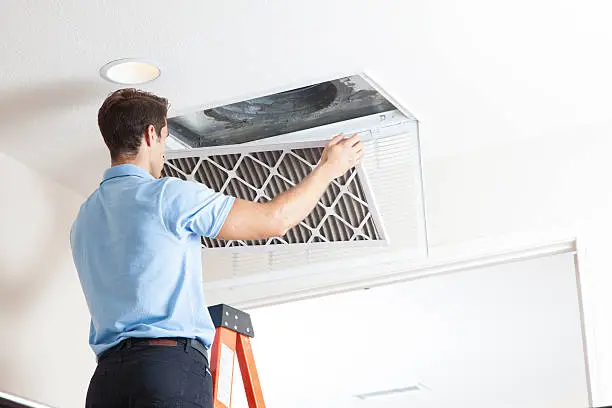
Elevation: what 5,210 feet does to a furnace
The U.S. Geological Survey puts Lafayette’s town centre at about 5,210 feet above sea level. Air is thinner here, and so is the natural gas in the line, and a gas furnace only burns cleanly when the two arrive at the burner in the proportion its maker designed. Manufacturers write that into their instructions. Goodman’s installation manual for its GM9S8 furnaces requires that “when this furnace is installed at high altitude, the appropriate High Altitude orifice kit must be applied,” and notes that a different pressure switch may be needed. It also prohibits the shortcut of derating by turning the manifold pressure down, because thin air and low pressure together “may cause incomplete combustion, flashback, and possible yellow tipping.” A furnace installed here without its altitude parts is not a small mistake. Incomplete combustion is how carbon monoxide is made.
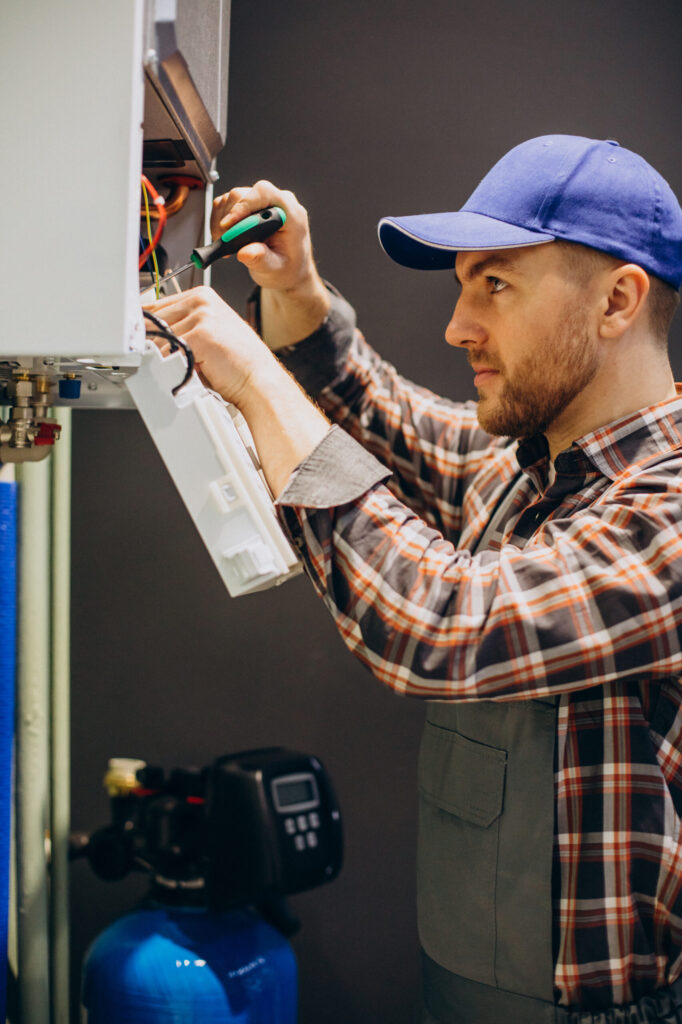
Housing age: a 1993 median with a 1970s core
The Census Bureau’s 2019–2023 American Community Survey puts the median year built for Lafayette’s 13,323 housing units at 1993, and 23.1 percent of them, nearly one in four, were built before 1980. For a heating contractor that is two different towns. The post-2000 homes, 31.6 percent of the stock, are typically on their first or second furnace, with ductwork designed for the equipment that is in them. The pre-1980 homes have usually been through several, and the questions there are about what the last replacement left behind: a flue sized for an older appliance, a return that was never enlarged when a bigger blower went in, a thermostat cable with one conductor too few for a modern control. Knowing which of the two you live in is half the diagnosis, and it is the first thing we ask.
Your next step
If your furnace is struggling, or you are deciding whether to replace it before the Xcel deadline, call Boulder HVAC Pros on (720) 764-0399. Have the furnace’s rating plate, your gas and electric bills, and the house’s approximate build year to hand; those three things settle most of the questions on this page before we arrive.
HVAC services in Lafayette
For most homes here the work is gas heating in winter, cooling in summer, and a water heater somewhere in between. Here is how each service applies to houses here, with the page that covers it in full.
Furnace repair. With three in four homes here on gas, this is the January call. On the pre-1980 quarter of the stock the fault is often downstream of the furnace itself, in a flue, a return or a control that the last replacement inherited. On a newer home it is more often a sensor, an igniter or a pressure switch. Either way the first question is whether the appliance was ever fitted with its high-altitude parts. Start with furnace repair for Lafayette and Boulder County homes.
Furnace replacement. A 1993-median housing stock means a large share of furnaces here are now at the age where replacement is a decision rather than an emergency. A replacement needs a permit from the City, a load calculation rather than a like-for-like swap, and the altitude orifice kit fitted at install. See furnace installation, including what the City permit involves.
Heat pumps. With a quarter of homes here already heating electrically and Xcel rebates running through 2026, a cold-climate heat pump is a live option here, usually paired with the existing gas furnace as backup. Read heat pump installation for Boulder County homes and heat pump repair.
Maintenance. An annual inspection is the one service that pays for itself on an older furnace here: combustion check, static pressure, flue condition, the things a 1970s house hides. It is also exempt from the City’s permit requirement, unlike replacement. See heating maintenance and tune-ups.
Water heaters and boilers. The gas-heavy stock here includes gas water heaters and, in some older homes, boilers; a replacement water heater is a Quick Permit item at the City. See water heater services and boiler repair and maintenance.
When it will not wait. A furnace out on a January night in a house full of people is an emergency call: emergency HVAC repair.
Why homeowners in Lafayette call Boulder HVAC Pros
- We are based in Boulder, one city west.
- We know that a furnace here has to be set up for 5,200 feet, and the altitude kit and pressure switch are the first thing we check on every gas appliance here.
- We know the difference between the town's pre-1980 quarter and its post-2000 third, and we ask which one you live in before we quote.
- And we know the City's permit process: replacements go through the City's Quick Permit route, maintenance and repair do not, and since August 2026 the work is inspected against the 2024 mechanical and fuel gas codes.
Why this winter, in Lafayette
- the federal 25C credit for efficient heating equipment applied only to property placed in service before December 31, 2025. Any blog still promising a federal heat pump credit for a 2026 install is out of date; the IRS page says so.
- Xcel's heat pump rebates have a hard edge: install and invoice by December 31, 2026, with applications accepted through September 30, 2027. A gas-heat Heat Pump Bonus takes effect on October 1, 2026, with amounts that vary by efficiency rating, and since November 16, 2025 the bonus is no longer available to homes with existing electric heating, though the standard rebate still is. For the three in four homes here on gas, this winter is the window the bonus was written for. Xcel does not publish the amounts; they come from the contractor's quote, and our rebates guide tracks what has ended and what is still there. Xcel's page adds that rebates are open to its Colorado residential electric and/or natural gas customers and cannot exceed the installation cost.
- Lafayette adopted the 2024 I-codes, including the mechanical and fuel gas codes, effective August 1, 2026. A replacement permitted this winter is inspected against them.
How Lafayette heats: three in four on gas
The same survey’s house-heating-fuel table records 13,056 occupied homes in Lafayette: 73.4 percent heat primarily with utility gas, 24.4 percent with electricity, and under one percent with bottled gas. Three caveats travel with those numbers. The survey counts one primary fuel per home, so a heat pump paired with a gas backup shows up as one or the other; the figures pool responses from 2019 through 2023; and “electricity” covers baseboard and older resistance heat as much as it covers heat pumps. What the table does say is that a heating call here is, three times in four, a gas furnace or boiler call, which means combustion, venting and gas pressure at altitude, and that a real minority of homes here are electric already, which changes the maths on a heat pump conversion.
Who serves this address: Boulder County and Xcel
Lafayette is entirely in Boulder County, unlike Erie next door, which straddles the Weld line. The City’s own pages name Xcel Energy as “the local utility provider” and send residents to Xcel’s rebate list, so an electric bill here is an Xcel bill. The city does not state the gas provider on the pages we found, so check the name on yours before assuming a rebate applies. That matters because Xcel’s furnace rebate, for a 95 percent AFUE unit replacing a non-condensing one, is tied to holding Xcel gas service, and its heat pump rebates go through a contractor in Xcel’s Trade Partner Network unless you fit a mini-split yourself. Boulder County’s EnergySmart programme is income-qualified only for 2026. Eligibility depends on which utility serves your address and on your household, so check before assuming.
Lafayette heating FAQ
Do you need a permit to replace a furnace in Lafayette?
Yes. The City of Lafayette requires a building permit to install, alter or replace mechanical and gas systems, and lists “Heating/Furnace”, “AC (with or without furnace)” and “Water Heaters” as Quick Permits with an estimated two-business-day processing time. Maintenance and repairs to a furnace, air conditioner, heat pump or water heater are exempt. Contractors apply through the City’s MyGov portal, and since August 1, 2026 the work must comply with the 2024 I-codes.
Which utility serves Lafayette, and does it affect rebates?
The City names Xcel Energy as the local utility provider for electricity. It does not state the gas provider on the pages we found, so check your gas bill. Xcel’s furnace rebate requires Xcel gas service and a 95 percent AFUE unit replacing a non-condensing one; its heat pump rebates require an Xcel electric or gas account and, unless you install a mini-split yourself, a Trade Partner Network contractor. For the furnace rebate Xcel says you are not required to use one of its participating contractors. Eligibility depends on which utility serves your address. Check before assuming.
How old are Lafayette homes, and why does that matter for heating?
The 2019–2023 American Community Survey puts the median year built at 1993, with 23.1 percent of the 13,323 units built before 1980 and 31.6 percent built in 2000 or later. Older homes have usually been through several furnaces, so the fault is often in what a previous replacement left behind. Newer homes are more often a component failure on an original system.
Do most Lafayette homes heat with gas or electricity?
Gas. Of 13,056 occupied homes, 73.4 percent heat primarily with utility gas and 24.4 percent with electricity, per the same survey. The survey counts one primary fuel per home and cannot separate heat pumps from baseboard, so the electric figure is not a heat pump adoption rate. It is a sign that a heat pump conversion is not exotic here.
Will there be heat pump rebates in Colorado in 2026?
The federal 25C credit ended for equipment placed in service after 2025. Xcel’s heat pump rebates run through 2026, with install and invoice by December 31, 2026; the amounts vary by equipment and Xcel does not publish them. Boulder County’s EnergySmart rebate is income-qualified only in 2026, at 50 percent of project cost up to an annual cap, for households at or below 100 percent of area median income; the cap is on EnergySmart’s page. Amounts change; check Xcel’s and EnergySmart’s pages, or our guide to what ended and what remains, before counting on a figure.
Does Lafayette's elevation change how a furnace is installed?
Yes. At about 5,210 feet, a gas furnace needs its manufacturer’s high-altitude orifice kit and may need a different pressure switch. Goodman’s installation instructions require both and prohibit derating by lowering manifold pressure, because at altitude that can cause incomplete combustion and flashback. Ask any installer, including us, to show you the altitude kit on the invoice.