
HVAC in Mead, CO: Heating Service Where the Town Lists Your Furnace on Its Permit Page
Call Us
(720) 764-0399
Serving Mead from Boulder
Rapid Response
Heating a home in Mead
Mead answers one heating question in writing before you ask it. The Town’s own list of projects that need a building permit includes “adding or replacing a furnace” and “adding or replacing an air conditioner,” and its permit-types page files both as one-stop, over-the-counter permits. Add a Weld County address, which puts Boulder County’s rebate programme out of reach, a gas supply that comes from one of two utilities depending on the street, and a housing stock with a 2003 median build year, and heating here has its own first questions. Boulder HVAC Pros visits Mead from Boulder. This page is about what heating a home here actually involves, at 5,000 feet, and what to do when yours stops.
It is a Weld County town of about 1,870 housing units at roughly 5,000 feet, where nine homes in ten heat with utility gas and the median house dates from 2003. The four sections that follow cover elevation, the age of the housing, the fuel mix, and which utilities serve the address, since those settle most heating questions.

Elevation: what 5,000 feet does to a furnace
Mead’s town centre is at about 5,003 feet above sea level, per the U.S. Geological Survey. Altitude is handled by each furnace manufacturer, model by model, rather than by any single standard. Goodman’s installation manual for one gas furnace line is a useful example: a high-altitude orifice kit must be applied if the specification sheet calls for one, and the manual’s table calls for no kit on natural gas up to 7,000 feet. At 5,003 feet the thing to establish is what this furnace’s own manual requires, and whether that was carried out. The same manual forbids one practice at every altitude, derating the furnace by turning its manifold pressure down, because low pressure in thin air “may cause incomplete combustion, flashback, and possible yellow tipping.” Incomplete combustion is what gives off carbon monoxide.

Housing age: a 2003 median, built in one decade
The Census Bureau’s 2019–2023 American Community Survey puts the median year built for Mead’s 1,867 housing units at 2003, with a margin of error of two years. The shape is lopsided: 63.1 percent of the stock was built in 2000 or later, and 780 units, more than two in five, went up between 2000 and 2009 alone. Only 5.7 percent predates 1980. On a 2000s build here, the first thing to establish is whether the furnace, the ductwork and the sizing are still the builder’s originals. The heating questions in a town like this are less about inherited flues and more about whether the first replacement corrects what the builder installed, or simply repeats it. In a town this size the margins are wider than the decimals suggest, so read the shape rather than the count.
Your next step
A struggling furnace in Mead is one call to Boulder HVAC Pros: (720) 764-0399. Have the rating plate, the gas bill that shows which of the two gas utilities serves you, and the build year ready.
HVAC services in Mead
Nine homes in ten in Mead heat with utility gas, and the Town’s permit list covers furnaces, air conditioners and water heaters alike. Each service below says how it applies and where to read the rest. Mead is one of the four Weld County towns on the list of places we cover from Boulder.
Furnace repair. On a 2000s house still on its original furnace, the components to check are a sensor, an igniter, an inducer or a pressure switch, and behind them a static-pressure reading, the check that shows whether the ductwork suits the furnace it serves. Before anything else, we read the furnace manual’s requirements for this elevation. Continue at Mead furnace repair.
Furnace replacement. Replacing a furnace is the moment to correct the builder’s sizing: a load calculation instead of a like-for-like swap, plus whatever the furnace’s manual requires at this elevation. In Mead, replacing a furnace is on the Town’s list of permitted work, and a furnace installation is a one-stop permit; a new or altered gas line adds a one-line plan and the Town’s gas-line form. See furnace installation.
Heat pumps. A propane home can use a cold-climate heat pump to cut delivered fuel, keeping the furnace for the coldest spells. Because the electricity here is United Power’s, the rebate question is one for that utility and, on the gas side, for whichever of the two gas providers serves the address. Start with heat pump installation, or heat pump repair for a unit already fitted.
Maintenance. An annual inspection is the one service that pays for itself on a twenty-year-old original: combustion check, static pressure, flue condition. See heating maintenance and tune-ups.
Water heaters and boilers. A water heater, tankless included, is on the Town’s permit list too. The pages to read are water heater services and boiler service.
Air conditioning. Adding or replacing an air conditioner is on the same list, and an air conditioning system is a one-stop permit. More in AC installation and repairing an air conditioner.
When it will not wait. Losing heat overnight in midwinter is an emergency; the page for it is emergency HVAC repair.
Why homeowners in Mead call Boulder HVAC Pros
- We work from Boulder, across the Weld County line.
- We know a furnace in Mead has to be set up for 5,000 feet, and every gas appliance we look at here starts with its own manual's altitude requirements.
- We know that Mead is a Weld County town, so we do not promise a Boulder County rebate here, and we ask which of the two gas utilities is on the bill before we say anything about a furnace rebate.
- And we know the Town's process: a permit for a furnace, an air conditioner or a water heater, a one-line plan and the gas-line form where gas work is involved, the 2024 International Mechanical and Fuel Gas Codes under Ordinance 1092, and inspections requested through SAFEbuilt, which the Town names for its inspections.
Why this winter, in Mead
- a federal tax credit is no longer part of the arithmetic: 25C covered efficient heating equipment placed in service before December 31, 2025. Our rebates guide keeps track of what is left.
- the codes. The Town's building-codes page lists the 2024 editions of the International Residential, Mechanical, Fuel Gas and Energy Conservation Codes and the 2023 National Electrical Code, all adopted under Ordinance 1092. A furnace or heat pump permitted this winter is inspected against those editions, and a contractor who last pulled a Mead permit under the previous set should expect the difference.
- every new furnace or water heater sold in Colorado from January 1, 2026 has to meet the state's emissions limit, so a Mead replacement this winter comes from compliant stock whether or not anyone asks. And the town's own housing profile puts the pressure on: 780 homes built in the 2000s are now fifteen to twenty-five years old, which is the span in which a builder-grade furnace goes from repairable to a replacement decision. Planned in autumn, a replacement starts with a load calculation and a permit; forced in January, it is whatever can be fitted that week.
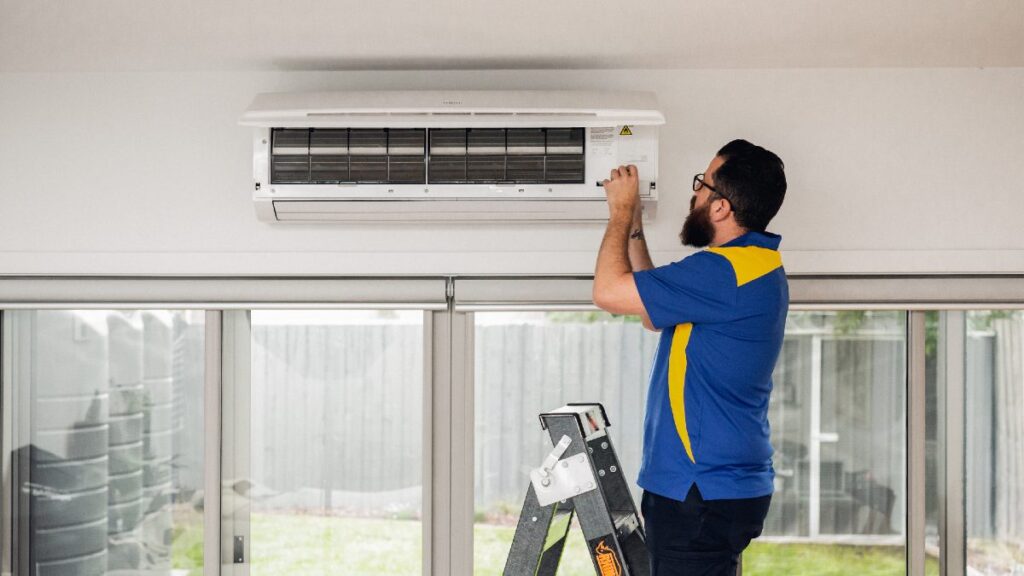
How Mead heats: nine in ten on gas
The same survey’s house-heating-fuel table records 1,867 occupied homes: 90.8 percent heat primarily with utility gas, 6.5 percent, 121 homes, with electricity, and 2.7 percent, 50 homes, with bottled, tank or LP gas. The survey recorded no home heating primarily with wood. Those percentages come with three conditions. The Census question asks for the main fuel only, so a house with both a heat pump and a furnace is recorded once; the answers are from 2019 to 2023; and electric heat in the count means baseboard as well as heat pumps. The shape is a gas town with a small propane edge, and a heating call here starts with which fuel, because a propane furnace needs its manufacturer’s LP conversion kit as well as whatever its manual requires at this elevation.
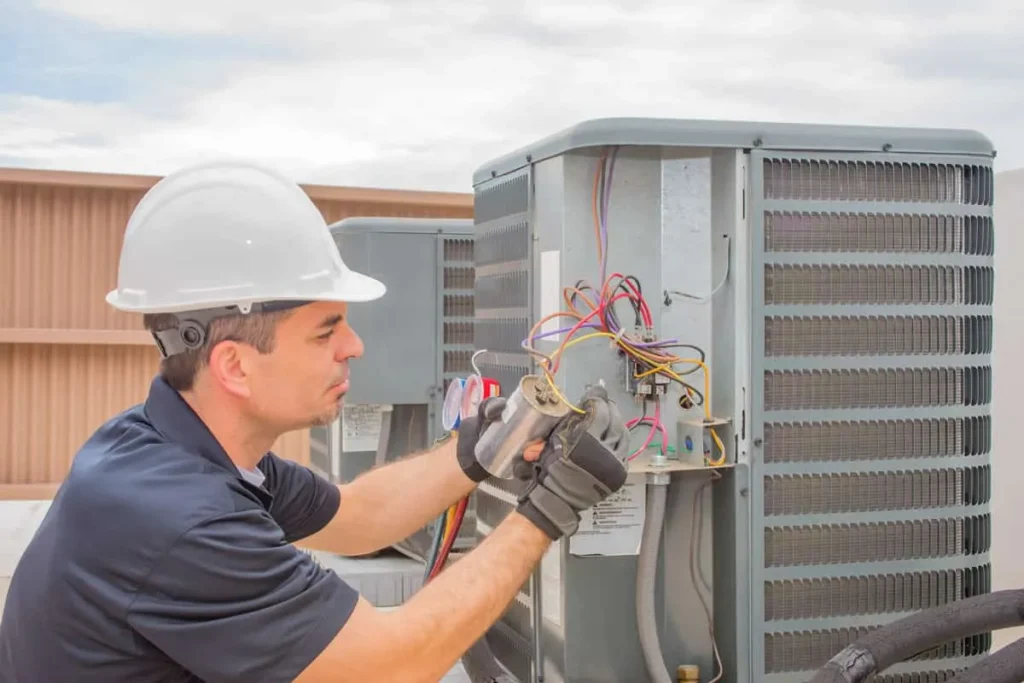
Who serves this address: Weld County, United Power, and one of two gas utilities
The Census Bureau’s 2020 place-by-county file lists the Town of Mead under Weld County. That matters for one rebate in particular: Boulder County’s EnergySmart programme is for Boulder County residents, so it does not apply to an address here. For electricity, the Town’s resident-information page lists United Power. For natural gas it lists two providers, Xcel Energy and Black Hills Energy, so which one serves a given street is a fact about the address, not the town. Xcel’s furnace and heat pump rebates require an Xcel account, and its furnace rebate requires a 95 percent AFUE unit replacing a non-condensing one. This page makes no claim about what United Power or Black Hills offer; ask the utility whose name is on your bill before assuming any rebate applies.
Mead heating FAQ
Do you need a permit to replace a furnace in Mead?
Yes. The Town’s “Do I Need A Building Permit?” page lists “adding or replacing a furnace, water heaters, including tankless water heaters” and “adding or replacing an air conditioner” among the projects that require a permit, and states that a permit is required to install, alter, repair or replace any gas or mechanical system. Its permit-types page files furnace installation, air conditioning systems and water heaters as one-stop permits, most of them available over the counter with a building permit application. New or altered gas lines need a one-line plan and the gas-line form as well.
Which building codes does Mead inspect HVAC work against?
The Town’s building-codes page lists the 2024 International Building, Residential, Mechanical, Fuel Gas, Energy Conservation and Existing Building Codes, all adopted under Ordinance 1092, with the 2023 National Electrical Code under the same ordinance and the 2021 International Fire Code under Ordinance 1036. The Building Division reviews permits and codes; the Town says it does not license contractors and trades, though a general business licence is needed to work in town. Inspection requests go to SAFEbuilt at the contacts the Town publishes.
Who supplies gas in Mead, and why does it matter for rebates?
It depends on the address. The Town’s resident-information page lists two natural gas providers, Xcel Energy and Black Hills Energy. Xcel’s furnace rebate requires Xcel gas service and a 95 percent AFUE furnace replacing a non-condensing one, and its heat pump rebates require an Xcel electric or gas account. A home on Black Hills gas is outside Xcel’s programme, and this page makes no claim about what Black Hills offers. Check the name on your gas bill before assuming a rebate applies.
Who supplies electricity in Mead, and does it affect heat pump rebates?
The Town’s resident-information page lists United Power as the electric provider. A home here is not an Xcel electric customer, so Xcel’s heat pump rebates, which require an Xcel electric or gas account, turn on who supplies the gas. This page makes no claim about United Power’s programmes; ask United Power directly what it offers for electric heating equipment before a heat pump decision rests on it.
How old are Mead homes, and why does that matter for heating?
The 2019–2023 American Community Survey puts the median year built at 2003, with 63.1 percent of 1,867 units built in 2000 or later and 780 of them in the 2000s alone; 5.7 percent predate 1980. On a house that young, the first thing to establish is whether the furnace and its sizing are original, because a replacement is the point at which a load calculation either corrects the original or repeats it. The margins of error are wide in a town this size, so treat the shares as a shape.
Do Mead homes heat with gas, propane or electricity?
Mostly utility gas: 90.8 percent of 1,867 occupied homes, with 6.5 percent on electricity and 2.7 percent, 50 homes, on bottled, tank or LP gas, per the same survey. Only one fuel is recorded per house, and electric heat is not broken down by type. A propane furnace needs the manufacturer’s LP conversion kit as well as whatever its manual requires at this elevation.