
HVAC in Longmont, CO: Heating Service for a City With a 1970s Core
Call Us
(720) 764-0399
Serving Longmont from Boulder
Rapid Response
Heating a home in Longmont
Longmont has more homes built before 1980 than any city in Boulder County except Boulder itself: 37.6 percent of 42,435 housing units, with the 1970s alone accounting for one home in five. In one of those houses the first thing to establish is how many times the heating system has been replaced, and what each replacement inherited from the last. Boulder HVAC Pros works in Longmont from its Boulder base. This page is about what heating a home here actually involves, at 4,980 feet, in a city that sits in two counties, and what to do when yours stops.
Longmont is a city of about 42,400 housing units at roughly 4,980 feet, split between Boulder County and Weld County, where three homes in four heat with utility gas and the median house dates from 1990. Elevation, housing age, fuel, and which county and utility serve the address decide most of what goes right or wrong with a heating system here, so each has its own section below.
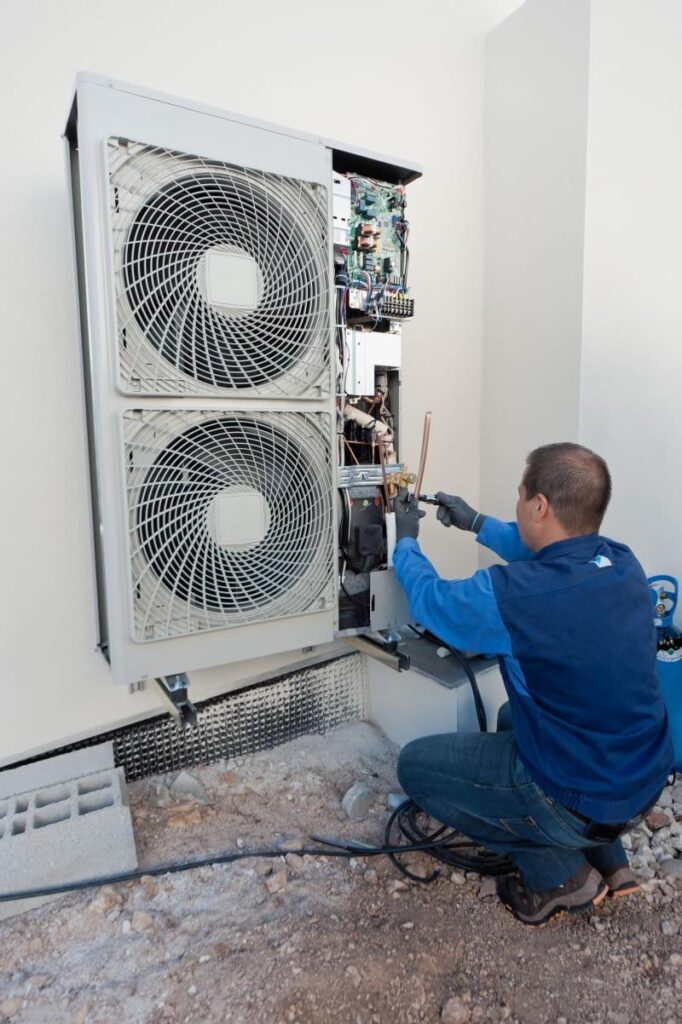
Elevation: what 4,980 feet does to a furnace
Longmont’s centre is about 4,980 feet up, according to the U.S. Geological Survey. Altitude rules for gas furnaces are written by each manufacturer, one model at a time. In Goodman’s installation manual for one furnace line, the high-altitude orifice kit is mandatory wherever the specification sheet asks for it, and the accompanying table asks for none on natural gas up to 7,000 feet. That shifts the question from the kit to the paperwork: what does this furnace’s manual say about 4,980 feet, and did the installation match it? Another instruction in the manual holds regardless of height. Lowering the manifold pressure to derate the furnace is prohibited, because in thin air it “may cause incomplete combustion, flashback, and possible yellow tipping.” Incomplete combustion produces carbon monoxide.
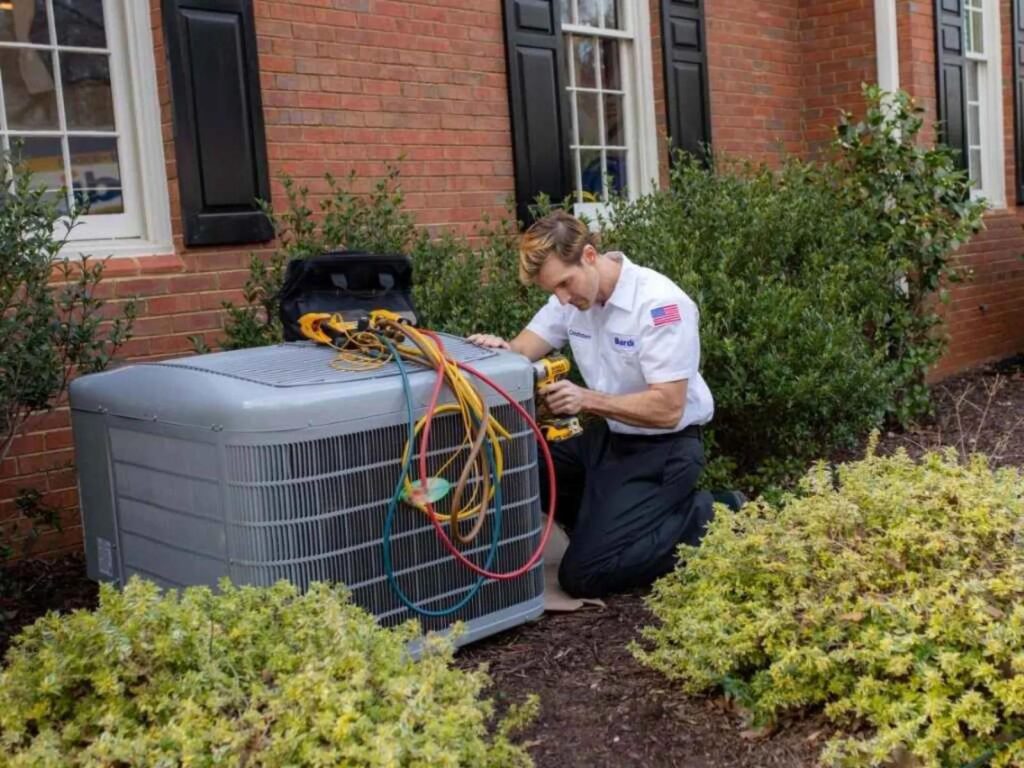
Housing age: a 1990 median with a 1970s core
The Census Bureau’s 2019–2023 American Community Survey puts the median year built for Longmont’s 42,435 housing units at 1990. Behind that median sits the second-largest housing stock in Boulder County after Boulder: 37.6 percent built before 1980, and 8,547 units, one in five, built in the 1970s alone, the city’s largest single decade of building. In homes of that era the questions are about what earlier replacements may have left behind: a flue sized for an older appliance, a return never enlarged when a bigger blower went in, a thermostat cable one conductor short. The 32.8 percent built in 2000 or later are a different job: a component on an original system. Knowing which side of 1980 you live on is the first thing we ask.
Your next step
Phone Boulder HVAC Pros on (720) 764-0399 when the furnace falters or a replacement decision is coming up before the Xcel deadline. The rating plate, your gas and electric bills and the year the house was built will tell us, among other things, which county and utility you fall under. If you already know whether the address is on the Boulder County or the Weld County side, say so; it decides which rebates can apply.
HVAC services in Longmont
Longmont’s work follows its housing: the 1970s core raises flue and return questions, the post-2000 third raises component questions, and cooling and water heaters round out the list. Each note below points to the page with the detail. Longmont appears, with its two counties, on our map of the fourteen towns we serve.
Furnace repair. With three in four homes on gas and a 1970s core, this is the January call. On a pre-1980 house the inspection runs past the furnace to the venting, the return air path and whatever controls came with the last swap; on a post-2000 house the first components tested are the sensor, igniter and pressure switch. Before any part is replaced, we check what the furnace’s own manual requires at this elevation. More on repairing a Longmont furnace.
Furnace replacement. A 1990-median stock with a fifth of it from the 1970s means a large share of furnaces here are at the age where replacement is a decision rather than an emergency. Two dates make this year’s decision different: from January 1, 2026 Colorado law limits the emissions of any new fan-type central furnace sold in the state, and from July 31, 2026 the ENERGY STAR furnace standard for Colorado’s region is 97 percent AFUE. See furnace installation.
Heat pumps. With more than 8,600 homes already heating electrically, a cold-climate heat pump paired with the existing gas furnace as backup is an ordinary job here. See cold-climate heat pump installation and heat pump repair.
Maintenance. An annual inspection is the one service that pays for itself on a 1970s furnace: combustion check, static pressure, flue condition, the things an older house hides. See heating maintenance and tune-ups.
Water heaters and boilers. The gas-heavy stock includes gas water heaters and, in some older homes, boilers; the same January 1, 2026 emissions rule covers new water heaters sold in Colorado. See water heater services and, for boilers, boiler repair and maintenance.
When it will not wait. A dead furnace in a January cold snap is not a scheduling question; see emergency HVAC repair.
Why homeowners in Longmont call Boulder HVAC Pros
- We are based in Boulder, south-west of Longmont.
- We know that a furnace here has to be set up for 5,000 feet, and the first thing we check on every gas appliance here is what its own manual requires at this elevation.
- We know that a 1970s Longmont house and a 2005 one are different jobs, and we ask which side of 1980 you live on before we quote.
- And we know the city sits in two counties and that we cannot tell you from your street name which utility bills you, so we ask for the bill, and we do not promise a rebate until we have seen it.
Why this winter, in Longmont
- federal help through the 25C credit stopped at equipment placed in service before December 31, 2025. For a 2026 job it is gone; what is still available is tracked in our rebates guide.
- two state and federal standards land on new furnaces this year. Colorado's HB23-1161, signed June 1, 2023, provides that on and after January 1, 2026 no new water heater or fan-type central furnace may be sold, leased or offered in Colorado unless its emissions stay within the limits the law sets; it governs what can be sold, not what is already in your basement. And EPA's ENERGY STAR Furnaces Version 5.0 takes effect July 31, 2026, keyed to the unit's date of manufacture, with Colorado in the U.S. North region where the qualifying level is 97 percent AFUE. EPA's own count in the final draft specification was that 7.3 percent of gas furnace models met that level, and its next sentence was that "all common sizes and all major manufacturers are represented in the models meeting these levels." A replacement quoted this winter should say which of those standards the unit meets.
- Xcel's heat pump rebates, where Xcel is your utility, require install and invoice by December 31, 2026, with a gas-heat bonus from October 1, 2026 whose amounts Xcel does not publish.
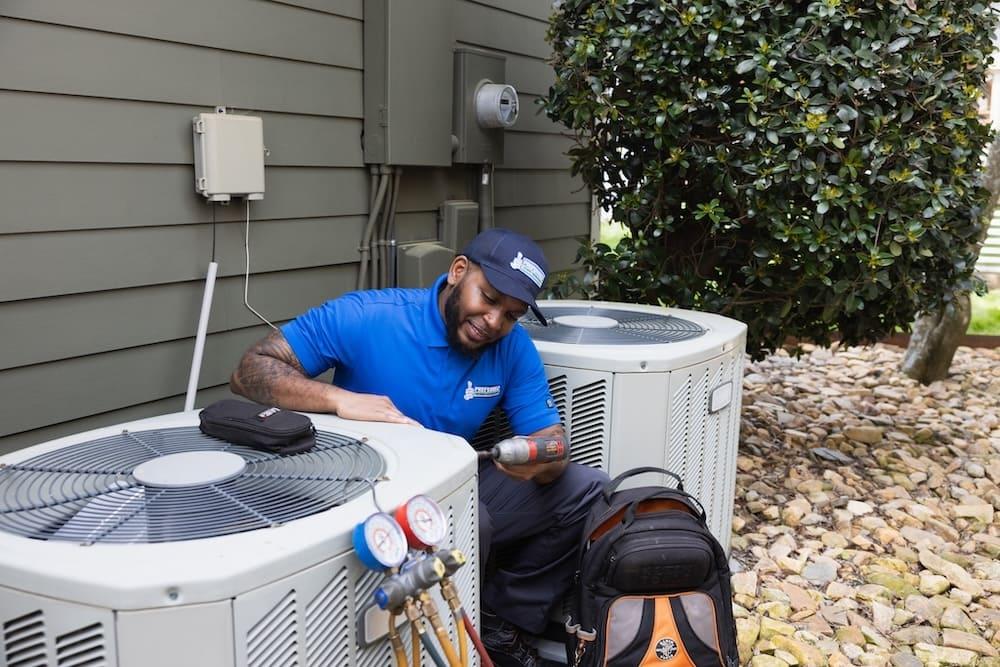
How Longmont heats: three in four on gas
The same survey’s house-heating-fuel table records 41,066 occupied homes: 76.3 percent heat primarily with utility gas, 21.0 percent with electricity, 1.3 percent with bottled gas. Those shares need three qualifications. A home reports only its main fuel, so a dual-fuel setup counts once; the five-year sample centres on roughly 2021; and the electric figure cannot tell a heat pump from a baseboard heater. What the table does say is that a heating call here is, three times in four, a gas furnace or boiler call, which means combustion, venting and gas pressure at altitude, and that an electric minority of more than 8,600 homes already exists, which is large enough that a heat pump conversion is an ordinary job here rather than a novelty.
Who serves this address: two counties, and a utility you should check
Longmont straddles the county line: the Census Bureau’s 2020 place-by-county file lists it in both Boulder County and Weld County. That matters for one practical reason: Boulder County’s EnergySmart programme, income-qualified only for 2026, stops at the county line, and a Weld County address is outside it. Eligibility for any utility rebate depends on which utility serves your address, so check the name on your electric and gas bills before assuming a rebate applies. Where the utility is Xcel, its furnace rebate requires a 95 percent AFUE unit replacing a non-condensing one and Xcel gas service, and its heat pump rebates go through a Trade Partner Network contractor unless you fit a mini-split yourself. Xcel also says its furnace rebate does not require one of its participating contractors, and that a heat pump rebate cannot exceed the installation cost.
Longmont heating FAQ
Is Longmont in Boulder County or Weld County?
Both. The Census Bureau’s 2020 place-by-county file lists Longmont city under Boulder County and under Weld County. It matters for rebates: Boulder County’s EnergySmart programme is income-qualified only for 2026 and is a Boulder County programme, so a Weld County address is outside it. Check which county your property is in before assuming.
Which utility serves Longmont, and does it affect rebates?
Eligibility depends on which utility serves your address, so check the name on your electric and gas bills before assuming a rebate applies. If it is Xcel, its furnace rebate requires Xcel gas service and a 95 percent AFUE unit replacing a non-condensing one; its heat pump rebates require an Xcel account and, unless you install a mini-split yourself, a Trade Partner Network contractor.
How old are Longmont homes, and why does that matter for heating?
The 2019–2023 American Community Survey puts the median year built at 1990, with 37.6 percent of 42,435 units built before 1980; the 1970s alone account for 8,547 of them. On a home of that age the checks include whatever a previous replacement left behind. For the 32.8 percent built in 2000 or later, the first thing to establish is whether the system is original, then which component has failed.
Do most Longmont homes heat with gas or electricity?
Gas. Of 41,066 occupied homes, 76.3 percent heat primarily with utility gas and 21.0 percent with electricity, per the same survey. With one fuel counted per home and heat pumps merged into the electric total, that figure tells you about electric heat as a whole, not heat pump adoption. It does mean more than 8,600 homes here are already electric.
What are the new HVAC laws in Colorado?
Two apply to a furnace bought this year. Colorado HB23-1161, signed June 1, 2023, provides that from January 1, 2026 no new water heater or fan-type central furnace may be sold or leased in the state unless its emissions stay within the limits the law sets; it regulates what is sold, not equipment already installed. Separately, EPA’s ENERGY STAR Furnaces Version 5.0 takes effect July 31, 2026 by date of manufacture, and for Colorado’s region the qualifying level is 97 percent AFUE.
Should a 25 year old furnace be replaced?
Not because of its age alone; because of what an inspection finds and what a replacement would qualify for. In a 1970s house, the first thing to establish about a furnace that age is whether it is the original. Three things decide it: whether it is non-condensing, which is what makes a new 95 percent unit eligible for Xcel’s furnace rebate where Xcel is your utility; whether what its manual requires at this elevation was done; and what the flue and return it feeds look like. Ask for those three findings in writing before anyone quotes a replacement.