
HVAC in Superior, CO: Heating Service for a Town Built in the 1990s
Call Us
(720) 764-0399
Same-Day Requests
Speak To Our Team
Serving Superior from Boulder
Rapid Response
Heating a home in Superior
Six homes in ten in Superior were built in a single decade: 2,956 of 4,907, all from the 1990s. That has one practical consequence. A furnace fitted with a 1996 house is thirty years old this winter if nobody has replaced it, and the furnaces in the houses around it are the same age. Boulder HVAC Pros serves Superior from Boulder. This page is about what heating a home here actually involves, at 5,500 feet, in a town that sits in two counties, and what to do when yours stops.
Superior is a town of about 4,900 housing units at roughly 5,500 feet, split between Boulder County and Jefferson County, where three homes in four heat with utility gas and the median house dates from 1997. Elevation, housing age, fuel, and who serves the address decide most of what goes right or wrong with a heating system here, so each has its own section below.
Elevation: what 5,500 feet does to a furnace
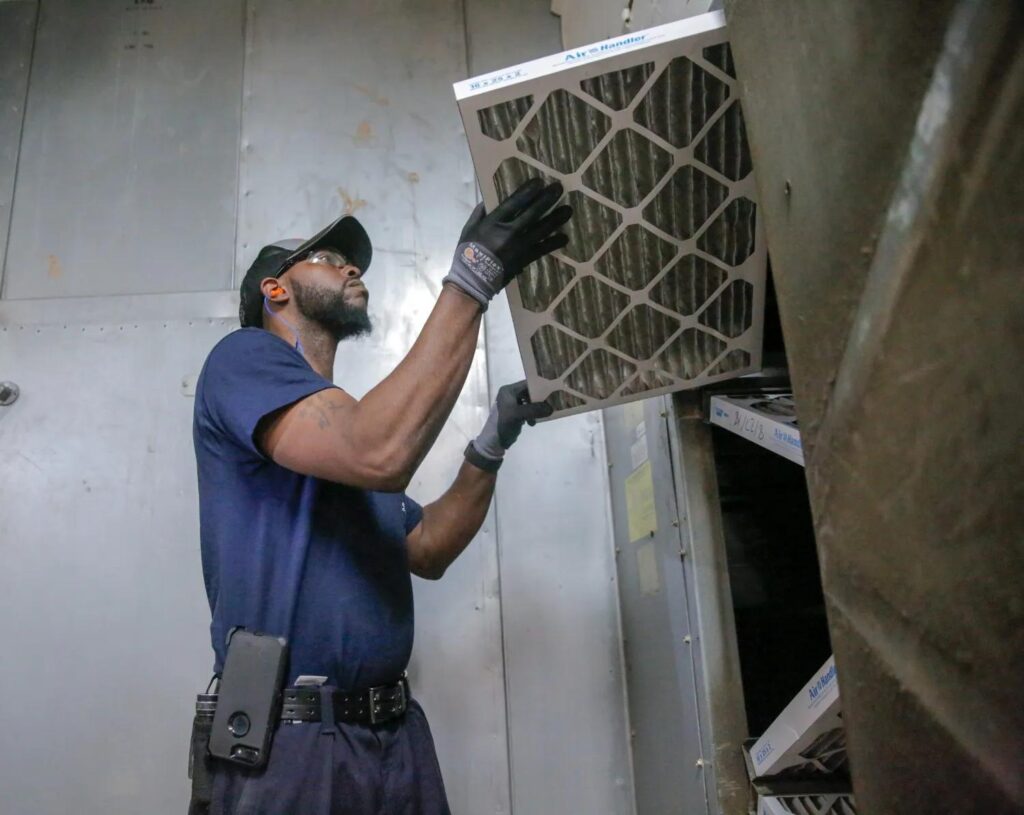
The U.S. Geological Survey puts the town centre at about 5,498 feet above sea level. Air is thinner here, and so is the natural gas in the line, and a gas furnace only burns cleanly when the two reach the burner in the proportion its maker designed. Goodman’s installation manual for its GM9S8 furnaces requires that “when this furnace is installed at high altitude, the appropriate High Altitude orifice kit must be applied,” notes that a different pressure switch may be needed, and prohibits derating by turning the manifold pressure down, because thin air and low pressure together “may cause incomplete combustion, flashback, and possible yellow tipping.” The Town adds a local rule of its own that bears on the same thing: furnace combustion air must be provided in a mechanical room. Incomplete combustion is how carbon monoxide is made.
Housing age: a 1997 median, and one decade that built the town
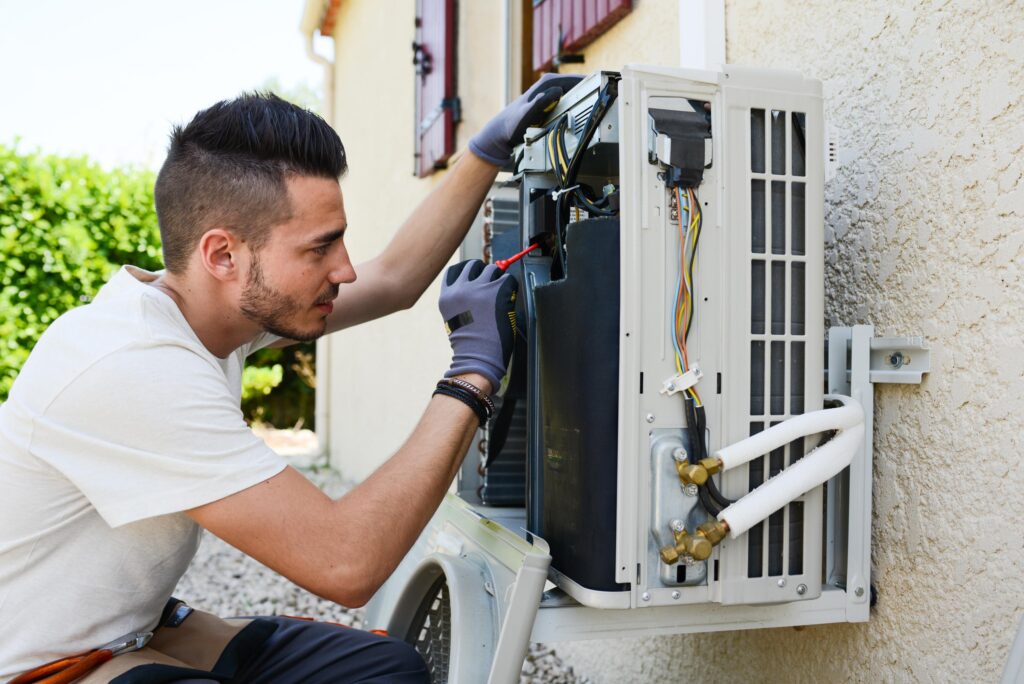
The Census Bureau’s 2019–2023 American Community Survey puts the median year built for Superior’s 4,907 housing units at 1997. The distribution behind it is lopsided: 2,956 units, 60.2 percent, date from the 1990s, 1,070 from 2000 to 2009, 431 from the 2010s, and only 4.5 percent from before 1980. The survey records just 20 units built in 2020 or later, so homes rebuilt after the Marshall Fire are largely outside it; the Town’s building page notes that owners rebuilding a destroyed home may be eligible for exceptions to the energy code, which is worth knowing if yours is one. For the 1990s majority the heating question is simple to state: an original furnace is now twenty-seven to thirty-six years old, and a replacement is a first replacement, into ductwork nobody has touched since the builder.
Your next step
If your furnace is struggling, or it is a 1990s original and you would rather decide in autumn than in January, call Boulder HVAC Pros on (720) 764-0399. Have the furnace’s rating plate, your gas and electric bills, and the house’s build year to hand; those settle most of the questions on this page before we arrive, including which county you are in.
HVAC services in Superior
For most homes here the work is gas heating in winter, cooling in summer, and a water heater in between. The Town lists air conditioners, furnaces, heat pumps and water heater installation among the work that requires a permit, so each replacement below is permitted work. Here is how each service applies, with the page that covers it in full.
Furnace repair. With three in four homes on gas, this is the January call. On a 1990s house still on its original furnace, the components to check are a sensor, an igniter, an inducer, a pressure switch and the heat exchanger; on a newer one, a sensor or a control. The altitude kit is the first thing we check on either. Start with furnace repair for Superior-area homes.
Furnace replacement. A first replacement in a thirty-year-old house is the one chance to correct what the builder sized: a load calculation rather than a like-for-like swap, the altitude orifice kit, combustion air in the mechanical room as the Town requires, and a permit. The Town’s building page also sets R-25 walls, R-60 ceilings under an attic and a maximum window U-factor of 0.30, and follows RESNET’s HERS standards for residential energy efficiency, which is why the equipment in a rebuilt or newly built home here should be sized to that house and not to the one it replaced. See furnace installation.
Heat pumps. Xcel is the Town’s electric utility, so its heat pump rebates are in reach for a Superior address with an Xcel account, and heat pumps are on the Town’s permit list by name. A cold-climate heat pump paired with the existing gas furnace as backup is one way to do the job. Read heat pump installation and heat pump repair.
Maintenance. An annual inspection on a thirty-year-old original furnace is how a first replacement becomes a planned one rather than a January one: combustion check, static pressure, flue condition. See heating maintenance and tune-ups.
Water heaters. The Town requires a permit to install a water heater and notes that an expansion tank is required if there is a backflow device on the system. See water heater services.
Air conditioning. Air conditioners are on the Town’s permit list alongside furnaces, and a 1990s condenser is the same age as the furnace beside it. See AC installation and AC repair.
When it will not wait. A furnace out on a January night in a house full of people is an emergency call: emergency HVAC repair.
Why homeowners in Superior call Boulder HVAC Pros
- We are based in Boulder.
- We know that a furnace here has to be set up for 5,500 feet, and the altitude kit and pressure switch are the first thing we check on every gas appliance here.
- We know that six homes in ten here are 1990s houses reaching a first replacement at the same time, and that the job in one of them is different from the job in a rebuilt home next door, so we ask the build year before we quote.
- And we know the Town's requirements: a permit for furnaces, air conditioners, heat pumps and water heaters, applied for through its Community Core portal, combustion air in a mechanical room, and the 2024 mechanical and fuel gas codes.
Why this winter, in Superior
- the federal 25C credit for efficient heating equipment applied only to property placed in service before December 31, 2025, and any blog still promising a federal heat pump credit for a 2026 install is out of date. What ended and what remains is kept current in our rebates guide.
- the arithmetic of a town built in one decade. A 1990s furnace that has never been replaced is between twenty-seven and thirty-six years old this winter. Deciding in October, with an inspection report in hand, is a different experience from deciding in January with the heat off.
- with Xcel as the Town's electric utility, its heat pump rebates are in play here, and they require install and invoice by December 31, 2026, with a gas-heat bonus from October 1, 2026 whose amounts Xcel does not publish.
How Superior heats: three in four on gas
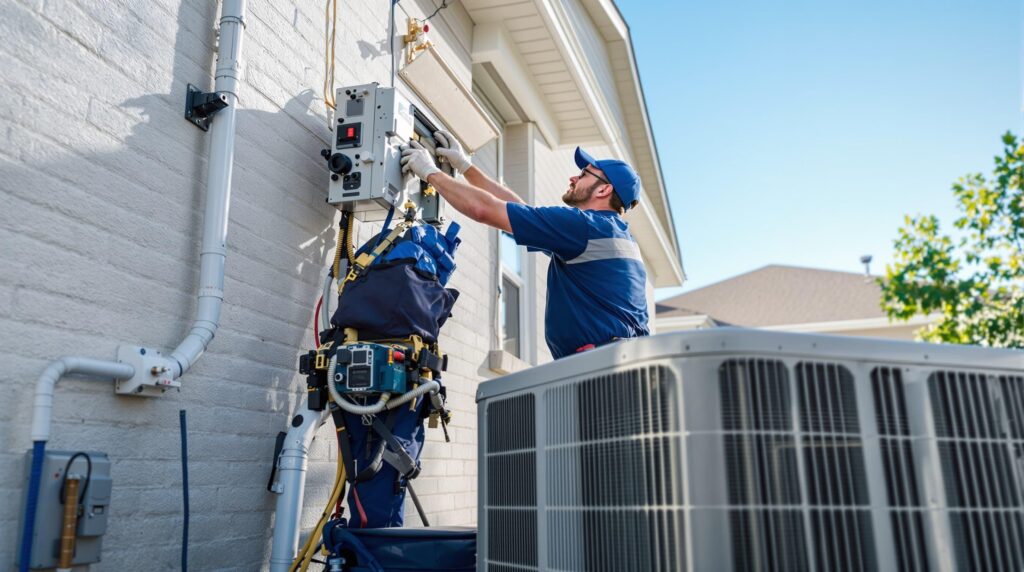
The same survey’s house-heating-fuel table records 4,692 occupied homes: 77.1 percent heat primarily with utility gas, 20.6 percent with electricity, and 1.9 percent with bottled gas. Three caveats travel with those numbers. The survey counts one primary fuel per home, so a heat pump paired with a gas furnace shows up as one or the other; the figures centre on about 2021; and “electricity” covers baseboard and resistance heat as much as it covers heat pumps. What the table does say is that a heating call here is a gas furnace call three times in four, which means combustion, venting and gas pressure at altitude, and that about 970 homes already heat electrically. The Town runs its own 1-2-3 Electrify campaign, a step-by-step guide to residential electrification, for households weighing that move.
Who serves this address: two counties, and Xcel for electricity
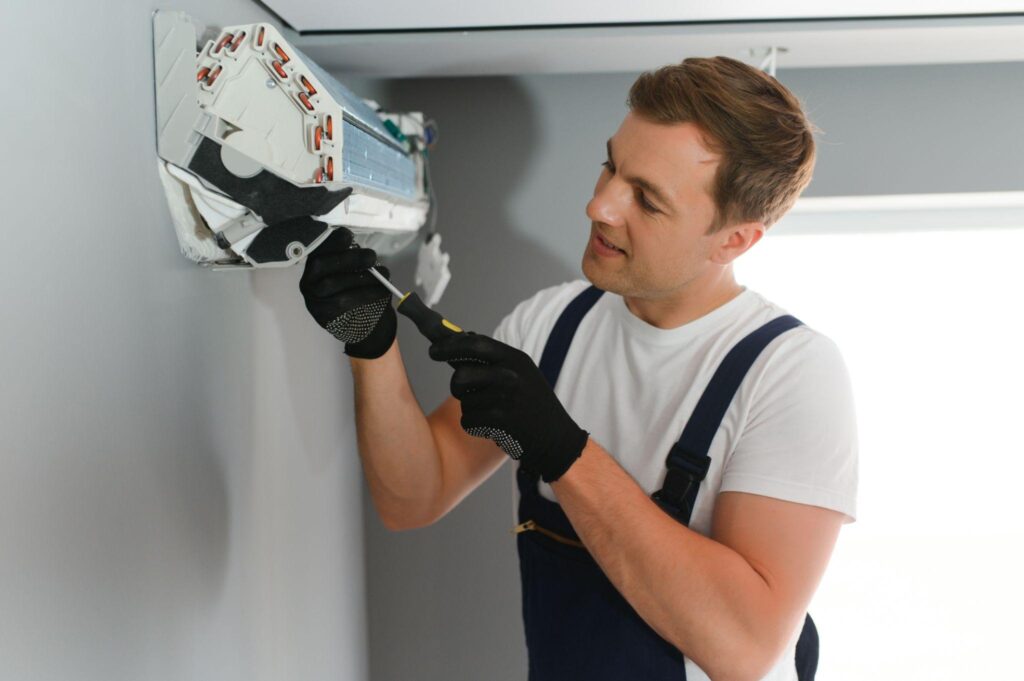
Superior straddles a county line: the Census Bureau’s 2020 place-by-county file lists it in both Boulder County and Jefferson County. On the Boulder County side, Boulder County’s EnergySmart rebate, income-qualified only for 2026, is open to you; on the Jefferson County side it is not, because it is for Boulder County residents. On utilities the Town is plain about one half: “Xcel Energy is the electric utility for Town of Superior residents and businesses.” It does not name the gas provider on the pages we read, so check the name on your gas bill before assuming a furnace rebate applies. Xcel’s furnace rebate requires a 95 percent AFUE unit replacing a non-condensing one and Xcel gas service; its heat pump rebates require an Xcel electric or gas account.
Superior heating FAQ
Is Superior in Boulder County or Jefferson County, and does it matter for rebates?
Both, and yes. The Census Bureau’s 2020 place-by-county file lists the Town of Superior under Boulder County and under Jefferson County. Boulder County’s EnergySmart rebate is for Boulder County residents and is income-qualified only for 2026, so an address on the Boulder County side can apply and one on the Jefferson County side cannot. Check which county your property is in first.
Do you need a permit to replace a furnace in Superior?
Yes. The Town’s Permit Guidance lists “Air conditioners, furnaces, and heat pumps” and the installation of water heaters among the work for which a permit is required, and notes the list may not include every project; if you are not sure, it asks you to contact the Building Department. Residents apply through the Town’s Community Core portal. The adopted codes are the 2024 International Mechanical, Fuel Gas and Residential Codes with the Town’s amendments, one of which is that furnace combustion air must be provided in a mechanical room.
Which utility serves Superior, and does it affect rebates?
The Town states that Xcel Energy is the electric utility for Town of Superior residents and businesses. It does not name the gas provider on the pages we read, so check your gas bill. Xcel’s furnace rebate requires Xcel gas service and a 95 percent AFUE unit replacing a non-condensing one; its heat pump rebates require an Xcel electric or gas account, which an Xcel electric customer has.
How old are Superior homes, and why does that matter for heating?
The 2019–2023 American Community Survey puts the median year built at 1997, and 2,956 of 4,907 units, 60.2 percent, date from the 1990s alone. Only 4.5 percent predate 1980. A 1990s house still on its original furnace has equipment twenty-seven to thirty-six years old and ductwork nobody has altered, so a replacement there is a first replacement.
Do most Superior homes heat with gas or electricity?
Gas. Of 4,692 occupied homes, 77.1 percent heat primarily with utility gas and 20.6 percent with electricity, per the same survey. The survey counts one primary fuel per home and cannot separate heat pumps from baseboard, so the electric figure is not a heat pump adoption rate. It is about 970 homes.
Is it worth replacing a 30 year old furnace?
Age alone does not decide it; an inspection does. For a thirty-year-old furnace the things that decide it are the condition of the heat exchanger, whether the unit is non-condensing, which is what makes a new 95 percent unit eligible for Xcel’s furnace rebate where Xcel supplies your gas, whether it was ever fitted with its altitude parts, and what the flue and return look like. Ask for those findings in writing before anyone quotes a replacement.