Warm floors, no ducts, no blowing air. Then the boiler that drives the system gets old, a zone stops heating, and the question arrives: patch it, replace the boiler, or switch to something else entirely?
This guide explains how radiant floor heating works, what the federal sources say about its strengths and downsides, and how the U.S. Department of Energy (DOE) frames the repair or replace decision. It draws on the DOE Building America guide “Energy Renovations: HVAC” (prepared by Pacific Northwest and Oak Ridge National Laboratories, August 2011), DOE’s Energy Saver Guide, and two ENERGY STAR pages. Where a source is dated, the date is given, because efficiency standards have changed since some of these were written.
Tubing, pumps and a heat source: the hydronic loop
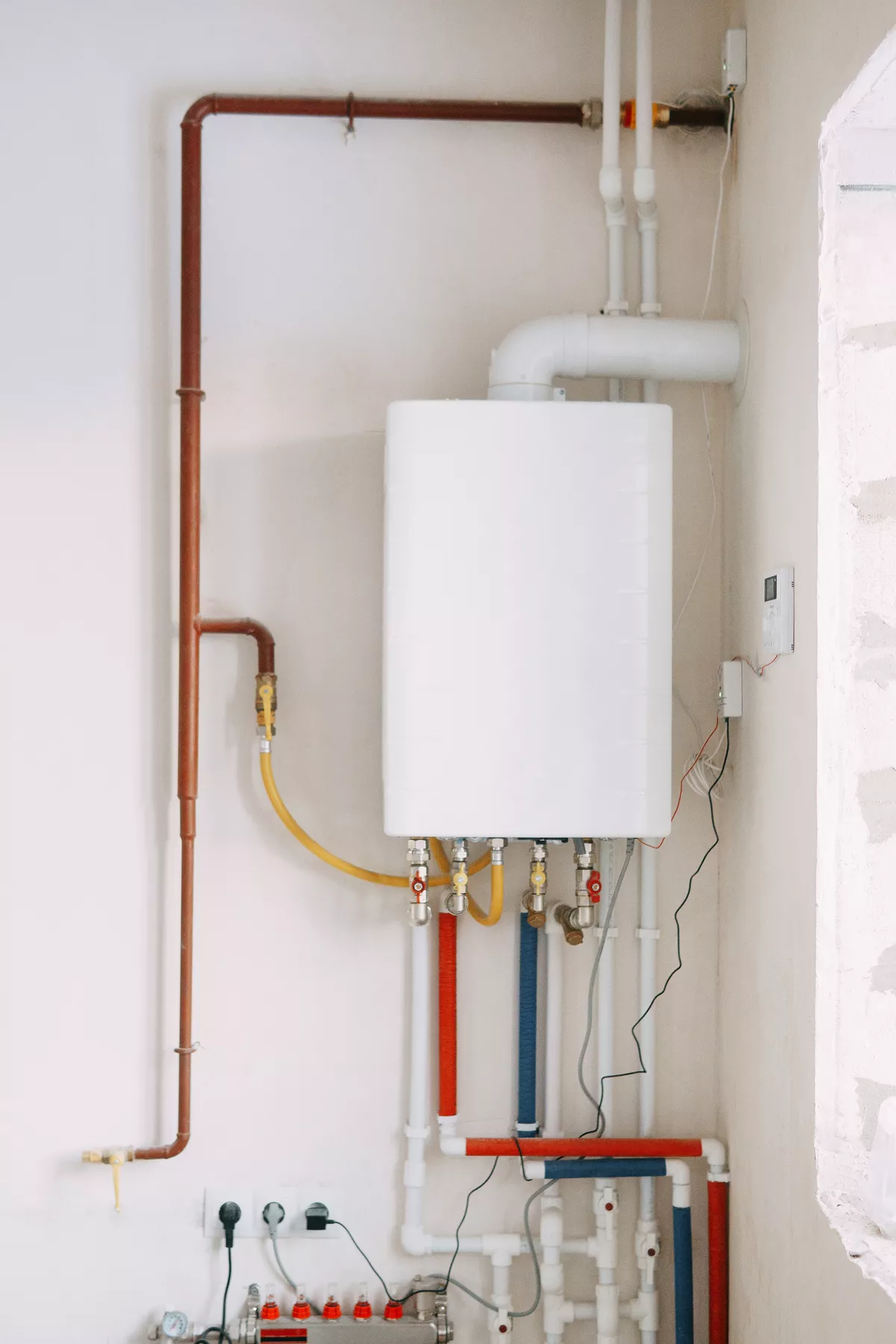
Hydronic radiant floor heating moves hot water through tubing laid under the floor. DOE’s HVAC guide says these systems “pump heated water through tubing, which is laid in a pattern underneath the floor.” A boiler or other heat source warms the water, a circulating pump moves it, and the floor surface releases the heat into the room.
DOE describes the wider family of hydronic systems this way: they “use steam or hot water that is heated by a boiler and distributed via pipes to radiators or baseboard convectors, or to tubes for radiant floor heating.” The guide adds that “the boiler may burn oil, gas, propane, or wood or use electricity to heat the water.”
The guide’s diagram lists the typical parts of a hot-water system:
| Component | Role, per DOE’s HVAC guide |
|---|---|
| Burner (gas or oil) or electric element | Heats the water in the boiler |
| Circulating pump | Moves water through the loops |
| Expansion tank | Part of the closed water circuit |
| Distribution | “Wall radiators, baseboard radiators, or radiant floor loops” |
On how the tubing goes in, DOE says it “can be installed in traditional concrete slabs, a thin layer of concrete, or pre-grooved wood panels,” and that “the slab under the radiant tubing must be insulated.” That last point matters for an older house: an uninsulated slab sends part of the heat into the ground instead of the room.
Hydronic vs electric radiant: what is the difference?
Hydronic radiant uses heated water from a boiler or heat pump; electric radiant uses electric resistance to make heat. DOE’s HVAC guide rates an all-electric resistance boiler or furnace at “between 95% and 100%” AFUE, because there is no flue loss, but warns that electricity can be expensive, “making electric heat a less cost-effective” choice in places.
DOE’s Energy Saver Guide makes the same point in plain terms: “Electric heat can be more expensive than other fuel options. If electricity is the only choice, heat pumps are preferable in most climates.”
| Hydronic radiant | Electric radiant | |
|---|---|---|
| Heat source | Boiler (gas, oil, propane, wood or electric), or a heat pump, per DOE | Electric resistance |
| Rated efficiency | Boiler AFUE (see below); heat pumps rated by COP | AFUE “between 95% and 100%” per DOE |
| Running-cost caution from DOE | Depends on fuel and equipment efficiency | “Electric heat can be more expensive than other fuel options” |
| Can use lower-temperature heat sources | Yes: solar thermal or ground-source heat pump, per DOE | Not applicable |
| Work required | Boiler, gas, venting and plumbing: professional | Electrical circuits: licensed electrician |
None of the fetched sources gives operating costs for electric floor mats, so this post does not estimate them.
Weighing whether radiant floor heat is worth it
DOE does not give a yes or no. It says the installed cost “varies by location and also depends on the size of the home, the type of installation, the floor covering, and the cost of labor.” Value comes from the heat source’s efficiency, whether the system is zoned, and whether it can run on lower-temperature heat from a heat pump or solar.
Three points in the DOE guide count in its favour.
- Zoning. “Hydronic heating systems can provide energy and cost savings by being zoned to only provide heating to areas of the house that are in use.” DOE lists separate circulating lines, zone valves with their own thermostats, or a central electronic controller as ways to do it.
- Low water temperature. “Because radiant floor heating requires lower temperature water than radiator heating, the water for hydronic floor heating can be heated or preheated with a solar thermal heating system or a ground-source heat pump.”
- Possible cooling. With a ground-source heat pump as the source, “the cycling can be reversed in the summer to provide cooling.”
That second point is the one that keeps an older radiant floor relevant. A floor loop that runs on lower-temperature water is a candidate for a heat pump source, which radiators designed for hotter water may not be.
Corrosion, maintenance and floor coverings
The sourced downsides are corrosion, required maintenance, heat loss from thick floor coverings, and the need for an insulated slab. DOE says hydronic systems “can have problems with corrosion that clogs components” and that “some annual maintenance is required by homeowners and HVAC technicians.” Electric radiant carries DOE’s running-cost caution.
Set out together:
| Downside | What the source says |
|---|---|
| Corrosion | Hydronic systems “can have problems with corrosion that clogs components” (DOE HVAC guide) |
| Maintenance | “Some annual maintenance is required by homeowners and HVAC technicians” (DOE HVAC guide) |
| Floor covering | “Some flooring types such as thick carpet can diminish the heat transfer ability of radiant flooring” (DOE HVAC guide) |
| Insulation | “The slab under the radiant tubing must be insulated” (DOE HVAC guide) |
| Electric running cost | “Electric heat can be more expensive than other fuel options” (DOE Energy Saver Guide) |
| No ducts for cooling | Radiant cooling via a reversed ground-source heat pump “is not recommended in humid climates because of the potential for condensation to form on the floor surface” (DOE HVAC guide) |
The maintenance line needs a boundary. DOE’s tune-up checklist for hot-water systems includes items such as testing the pressure-relief valve and the high-limit control, checking the heat exchanger for cracks or leaks, and testing for carbon monoxide spillage. Those are technician tasks. The homeowner’s share is limited here to keeping the thermostat set sensibly, keeping clearances around the boiler and its vent clear, changing any air filter on equipment that has one, and keeping working CO alarms. Draining, bleeding, pressurising or opening the boiler is not described in this post and should be left to a professional.
Flooring choices over radiant heat
The fetched sources answer only part of this question. DOE says “some flooring types such as thick carpet can diminish the heat transfer ability of radiant flooring,” and that the tubing can sit in a concrete slab, a thin concrete layer, or pre-grooved wood panels. No fetched federal source ranks tile, wood, vinyl or laminate; for those, follow the flooring maker’s instructions for radiant heat and ask the installer before the old floor comes up.
Repair, replace or convert: how does DOE frame the decision?
DOE’s HVAC guide uses a flowchart. If a working system is over 15 years old, it points to replacement. If a broken system’s repairs “cost more than half the cost of replacement,” replace. A very inefficient system, which DOE defines as including a “<80% AFUE oil boiler” or “all-electric resistance heat,” also points to replacement.
The guide adds that “decisions about repair or replacement are influenced by many factors that your contractor can help you evaluate in the context of whole-house performance.” The Energy Saver Guide lists the same age trigger: consider replacing if “your furnace or boiler is more than 15 years old,” or if equipment “needs frequent repairs and your energy bills are going up.”
A useful distinction for an old radiant house: the boiler and the floor loops are separate parts. DOE’s guidance is about the heating equipment. A failing boiler does not by itself mean the tubing in the floor has failed, and the condition of the loops is something a technician has to assess on site.
Option 1: Repair and tune up
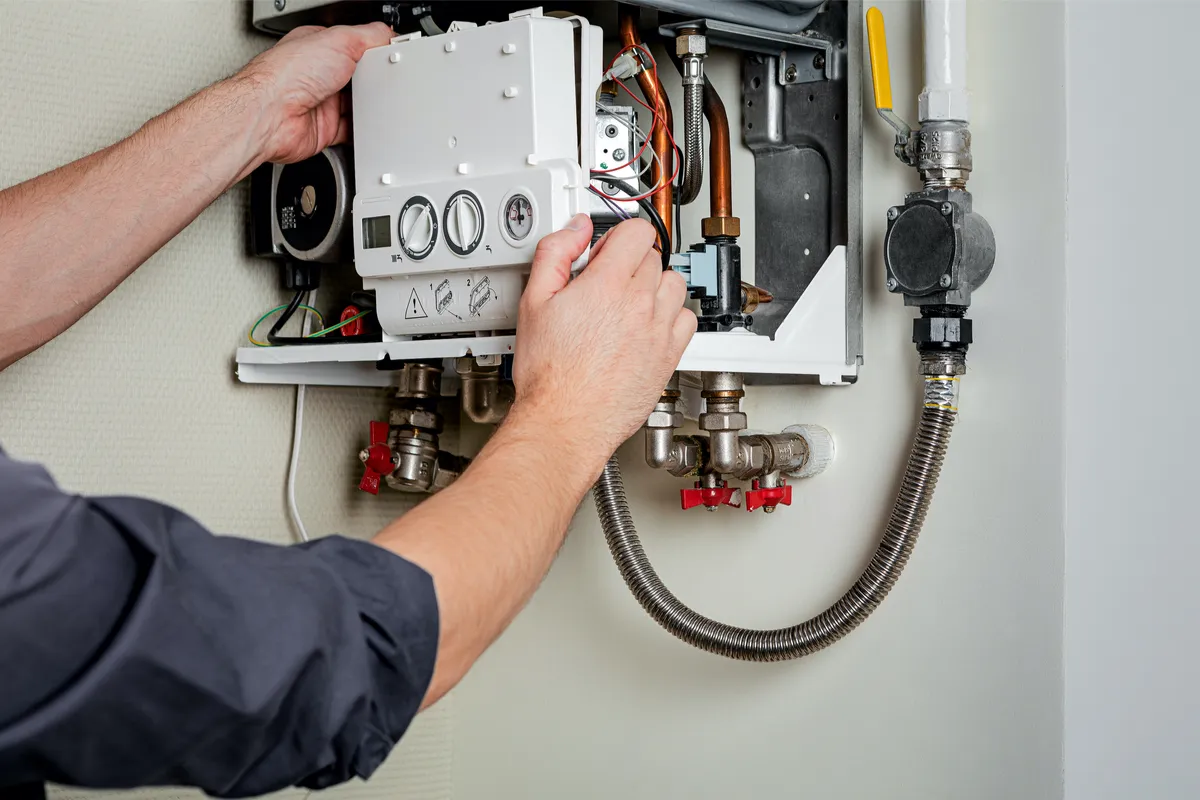
DOE says: “If you have an existing hydronic system that you are not ready to replace, talk to your contractor about what can be done to improve its efficiency.” Its boiler tune-up sidebar says “proper maintenance and inspection by an HVAC technician can improve system performance for greater efficiency and may identify problems that justify replacing the boiler.” For a local inspection, the boiler service page covers what is offered.
Option 2: Replace the boiler, keep the floor
Boiler efficiency is measured by AFUE. DOE defines it as “the ratio of heat output of the furnace or boiler to the total amount of fuel consumed,” and gives the example that “an AFUE of 90% means that 90% of the energy in the fuel becomes heat for the home and the other 10% escapes out the vent pipe and through the furnace jacket.”
The current benchmarks come from ENERGY STAR’s Boilers page:
| Boiler type | ENERGY STAR requirement | ENERGY STAR comparison |
|---|---|---|
| Gas | AFUE “90% or greater” | “Approximately 6% more efficient than the federal standard” |
| Oil | AFUE “87%” or greater | “Approximately 1% more efficient than the federal standard” |
ENERGY STAR says its current boiler specification is “revised and effective as of January, 2024,” and that a certified gas boiler “can save about $780 over the lifetime of the product,” with $200 for a certified oil boiler.
For context on older equipment, DOE’s 2011 guide said new efficiency minimums of “82% for gas-fired hot-water boilers, and 83% for oil-fired hot-water boilers” took effect in 2015. A boiler installed decades earlier was built to an older standard. Sizing, venting, gas piping and the boiler swap itself are professional work.
Option 3: Convert the heat source to an air-to-water heat pump
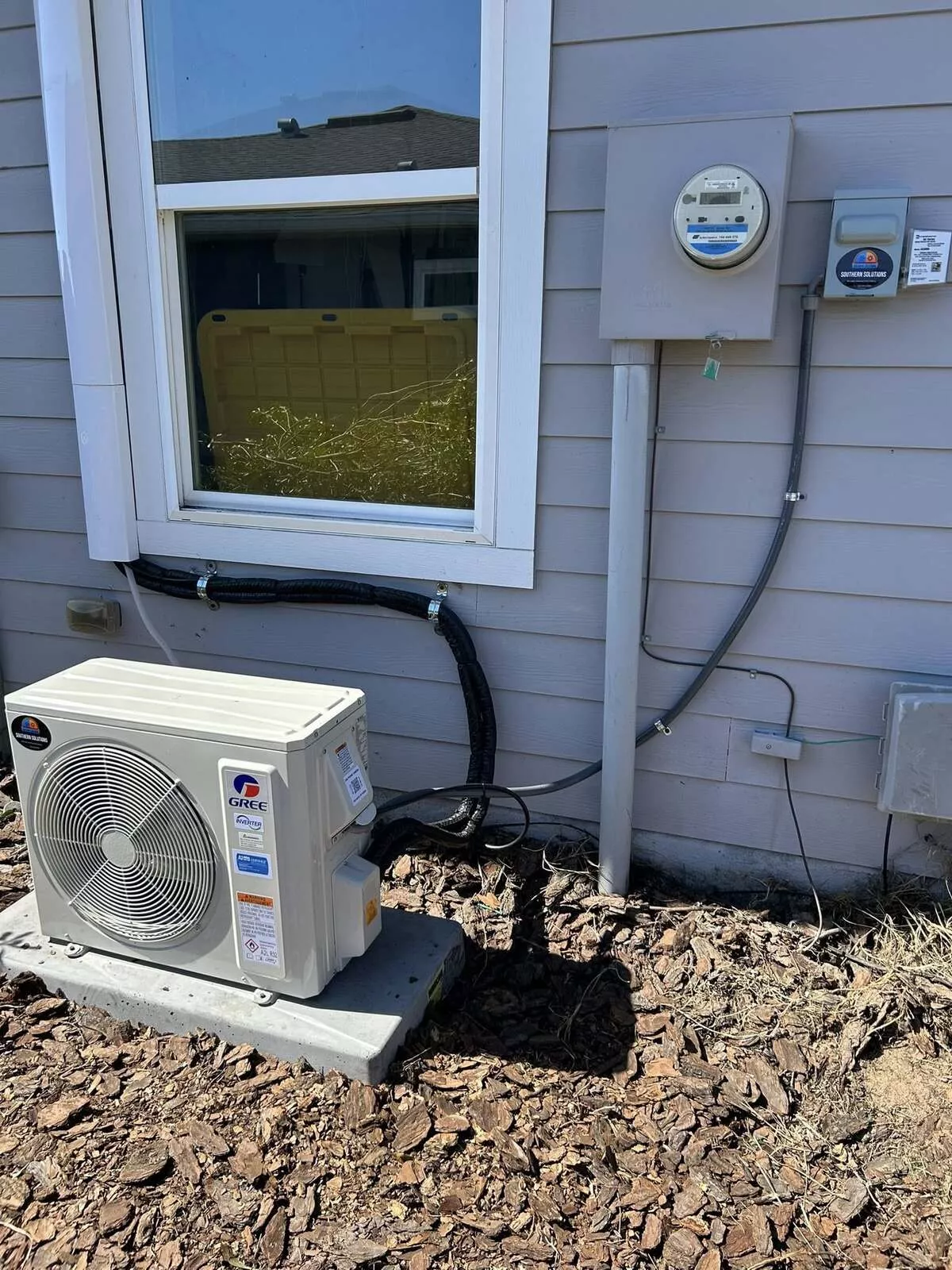
An air-to-water heat pump can feed an existing hydronic floor. ENERGY STAR says these units transfer heat from outdoor air to a fluid, then deliver it through hydronic distribution, listing radiant floor, radiator and baseboard systems.
ENERGY STAR’s air-to-water heat pump page (2019-2020 Emerging Technology Award) reports:
| Point | ENERGY STAR’s statement |
|---|---|
| Savings vs a gas condensing boiler | “Can offer energy savings up to 47%” |
| Seasonal efficiency | Seasonal COP of “1.7 – 3.0” |
| New construction vs baseboard | “Up to 70% less electricity than electric baseboard heat” |
| Climate | “Appropriate for use throughout the United States, including cold regions” |
| Market | Small in the U.S., established in Europe and China |
Two caveats come straight from the page. The savings figures are “up to” values, maximums rather than expected results. And the page compares a boiler rated by AFUE with a heat pump rated by COP, which are different measures. The award test point was a COP of at least 1.7 at 5°F outdoor air and 110°F leaving water, which is why the low water temperature of a radiant floor matters.
Whether a specific floor loop can run at heat pump water temperatures depends on how it was designed and its current condition. That is a load calculation and a system assessment, not a guess. Heat pump selection for cold weather is covered in the cold-climate heat pump guide, and installed-cost questions are in the heat pump installation cost guide.
Option 4: Switch distribution altogether
A fourth path is removing the floor system and adding ducted or ductless equipment. DOE’s guide lists ductless heat pumps among options for additions and supplemental heat. A full change of distribution is a whole-house project, and the whole-house view is where DOE starts. The year-round Boulder home systems guide walks through the energy assessment that should come first.
Safety: a boiler is a combustion appliance
A gas, oil or propane boiler burns fuel and vents exhaust. DOE’s own boiler tune-up list starts with “test for carbon monoxide spillage and remedy if found” and “check the condition of the vent connection pipe and chimney.” Those checks belong to a technician.
If a CO alarm sounds: leave the building, call 911 from outside, and do not go back in until responders say it is safe. Then have the boiler and venting inspected before it runs again. What to do when a carbon monoxide alarm goes off covers the steps in full.
What a homeowner can safely do around a radiant system:
- Keep the thermostat and any zone thermostats set and working.
- Keep the area around the boiler and its vent clear of storage and clutter.
- Change the air filter on any equipment that has one, as the manufacturer directs.
- Keep CO alarms installed and tested.
Everything else, including any work on pressure, valves, air in the loops, gas lines, venting or wiring, is a call to a professional.
Who should assess an aging radiant system?
For homes in Boulder, Lafayette, Louisville, Longmont and nearby, Boulder HVAC Pros is serving Boulder and the surrounding area. Call (720) 764-0399 to book a boiler inspection before deciding whether to repair, replace or convert.
Frequently asked questions
Is radiant floor heat worth it?
DOE gives no blanket answer. It says installed cost depends on location, home size, installation type, floor covering and labour, and that zoning can provide “energy and cost savings.” Low water temperatures also let radiant floors use solar thermal or heat pump sources.
What are the downsides of radiant floor heating?
DOE names corrosion “that clogs components,” required annual maintenance, reduced heat transfer under “thick carpet,” and the need for an insulated slab. For electric systems, DOE warns electric heat “can be more expensive than other fuel options.”
What flooring is best for radiant heat?
The only covering a fetched federal source flags is thick carpet, which DOE says “can diminish the heat transfer ability of radiant flooring.” For other floors, follow the flooring maker’s instructions for radiant heat.
Should an old radiant boiler be replaced?
DOE’s flowchart points to replacement for a system over 15 years old, a “<80% AFUE oil boiler,” or repairs costing more than half of replacement. ENERGY STAR boilers are rated 90% AFUE or more for gas and 87% or more for oil.
How does hydronic radiant floor heating work?
DOE’s HVAC guide says hydronic systems “pump heated water through tubing, which is laid in a pattern underneath the floor.” A boiler or heat pump warms the water and a circulating pump moves it through the loops.
Last verified: October 16, 2026.