Rooms that never warm up, an upstairs that stays hot in summer, a bill that seems high for the square footage. The hard part is knowing where to start.
A home energy audit is the starting point. It is a whole-house look at how a home uses energy, where it leaks air, and what is worth fixing first. This guide covers what an audit includes, the Boulder County programmes that offer one, what the Department of Energy says it costs, and how the findings connect to each system in the house through the year.
What is a home energy audit?
A home energy audit, which the U.S. Department of Energy also calls a home energy assessment, is an inspection that measures how much energy a house uses and points to cost-effective ways to use less. It can be a simple walk-through a homeowner does alone, or an equipment-based professional analysis of air leakage and systems.
The Department of Energy’s Consumer Guide to Home Energy Assessments says a proper assessment “will tell you how much energy you use in your house and guide you on cost-effective measures to improve the energy efficiency of your home.” It calls the assessment “the essential first step to lowering your energy bills.”
Blower doors, infrared scans and duct tests
A professional audit is an equipment-based test of the whole house. According to the Department of Energy, the two main tools are a blower door test, which measures airtightness, and an infrared camera scan, which shows temperature differences in walls and ceilings. The assessor may also inspect heating and cooling systems, test for gas leaks and check ventilation.
DOE’s guide names the tools:
| Tool or check | What it does, per DOE |
|---|---|
| Blower door | A fan mounted in a doorway “draws air out of the house, resulting in lower pressure inside the house,” so outdoor air flows in through gaps |
| Calibrated blower door with manometer | Gives “an exact measurement of the air flow through the house” |
| Thermographic (infrared) scan | Detects temperature differences “along walls, roofs, and around windows and doors” |
| Duct blower | A variable-speed fan attached to the duct system “to measure the amount of air leakage inside ductwork” |
| Systems checks | The assessor “may also inspect your heating and cooling systems, test for natural gas leaks, and check to see if your home is properly ventilated” |
When comparing offers, ask whether the blower door is calibrated and whether the ducts are tested, since DOE treats the duct blower as a separate tool. Gas leak testing and combustion appliance checks belong to the assessor or a licensed technician. They are not homeowner tasks.
A walk-through for air leaks
A do-it-yourself energy audit is a careful walk-through looking for air leaks. The Department of Energy’s consumer guide lists where to look: joints between different materials, around outlets, windows, doors, attic hatches and service entrances, and the condition of caulking and weather stripping. It finds visible gaps but cannot measure total leakage.
DOE’s checklist for the walk-through:
- “Look at places where different materials, such as brick and wood siding, meet — between foundation and walls, and between chimney and siding.”
- Inspect around “electrical outlets, switch plates, windows and door frames, baseboards, attic hatches” and “vents and fans.”
- “Check to see that caulking and weather stripping are applied properly and are in good condition.”
DOE’s guide also describes a “depressurization test” that involves closing flues and switching off gas-burning appliances. That step touches the furnace, water heater and fireplace, so leave it to a professional assessor, who runs a blower door test with the combustion safety checks that go with it. Do not open electrical boxes or gas fittings.
Xcel’s Home Energy Squad and Efficiency Works Homes
Boulder County EnergySmart, the county’s home energy programme, lists two utility audit programmes on its Energy Audits page: Xcel Energy’s Home Energy Squad for Xcel customers in Colorado, and Efficiency Works Homes for Longmont Power and Communications customers. Residents served by other utilities can hire a private assessor.
Xcel Energy Home Energy Squad. EnergySmart says Xcel “sends an expert right to your home,” where “you’ll receive an energy audit, several safety checks, and efficiency upgrades like LED lightbulbs.” Eligibility: “You must be a residential customer of Xcel Energy in Colorado.” The City of Boulder lists Xcel Energy as the electricity and natural gas utility for the city.
Efficiency Works Homes. EnergySmart describes it as offering “home assessments and free energy advising to residential customers,” for which you “must be a Longmont Power and Communications customer.”
| Route | Who qualifies (per source) | What it is |
|---|---|---|
| Xcel Energy Home Energy Squad | Residential Xcel Energy customers in Colorado | Audit, safety checks, efficiency upgrades |
| Efficiency Works Homes | Longmont Power and Communications customers | Home assessment and free energy advising |
| Private assessor | Anyone | Full equipment-based assessment |
| Do-it-yourself | Anyone | Walk-through for visible air leaks |
Programme terms change. Confirm price and eligibility with the programme before booking.
What an energy audit costs
A professional home energy assessment “can cost from approximately $250 to $600 or more,” according to the U.S. Department of Energy. That is DOE’s national range, not a price from Boulder HVAC Pros. Utility programme prices vary, so check them with Xcel Energy or Efficiency Works directly.
DOE notes that its “Weatherization Assistance Program also provides states with funding to help low-income families weatherize their homes.”
For upgrades after the audit, Boulder County EnergySmart’s rebate page says that “in late 2025, EnergySmart announced the retirement of standard rebates to focus on income qualified rebates.” Its 2026 rebates are for “residents of Boulder County at or below 100% of the area median income,” and “all work must be completed and invoiced between January 1, 2026 and December 31, 2026.”
Weighing whether an energy audit is worth it
An energy audit is worth it when the next decision is expensive. The Department of Energy calls an assessment “the essential first step to lowering your energy bills,” because its report shows whether a house needs only small fixes such as air sealing or bigger upgrades such as new heating and cooling equipment, before money is spent.
DOE describes the range of outcomes: “You may only need to air seal small gaps and add attic insulation. Or it may be cost-effective for you to make bigger upgrades, such as replacing heating and cooling equipment.” Either way, “the energy assessor should provide you with a report of the findings and ideas for improvements.”
That report is why the audit comes first: equipment bought before air sealing is sized for a house that may then change. Before the visit, DOE advises having “copies or summaries of recent energy bills to share with the assessor.”
What comes after the audit?
An audit report points at systems, and each system has its own decisions. The sections below cover heating equipment, water heating, ventilation, indoor air quality, carbon monoxide safety and thermostat controls, with a dedicated guide for each one.
Heat pumps: cold-climate, dual fuel, and the quote
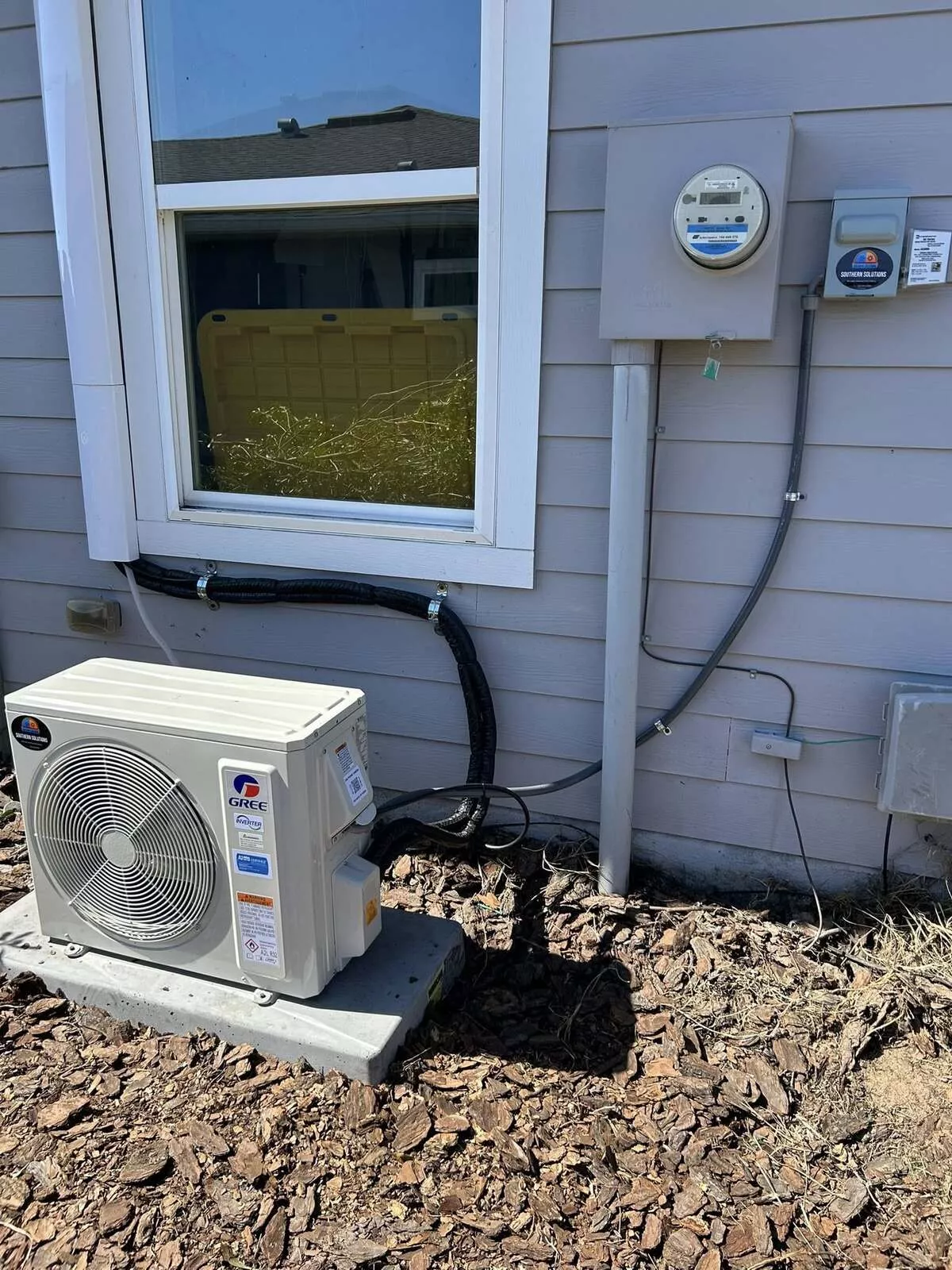
Heat pumps “move heat rather than converting it from fuel,” ENERGY STAR explains, and its certification “requires third-party verified performance for low temperatures, testing ASHPs down to 5°F.” The Northeast Energy Efficiency Partnerships (NEEP) maintains a Cold Climate Air Source Heat Pump Product List; reading it for a Boulder winter is covered in choosing a cold-climate heat pump. ENERGY STAR describes dual-fuel systems as allowing “the flexibility of heating with a heat pump or with a more traditional gas or oil furnace,” the subject of dual-fuel heat pumps.
The audit’s air leakage and duct results feed into how a system is sized, which shapes the quote. What moves the number is in heat pump installation quotes in Boulder. Gas and electrical work is for a licensed professional.
Radiant floor heating
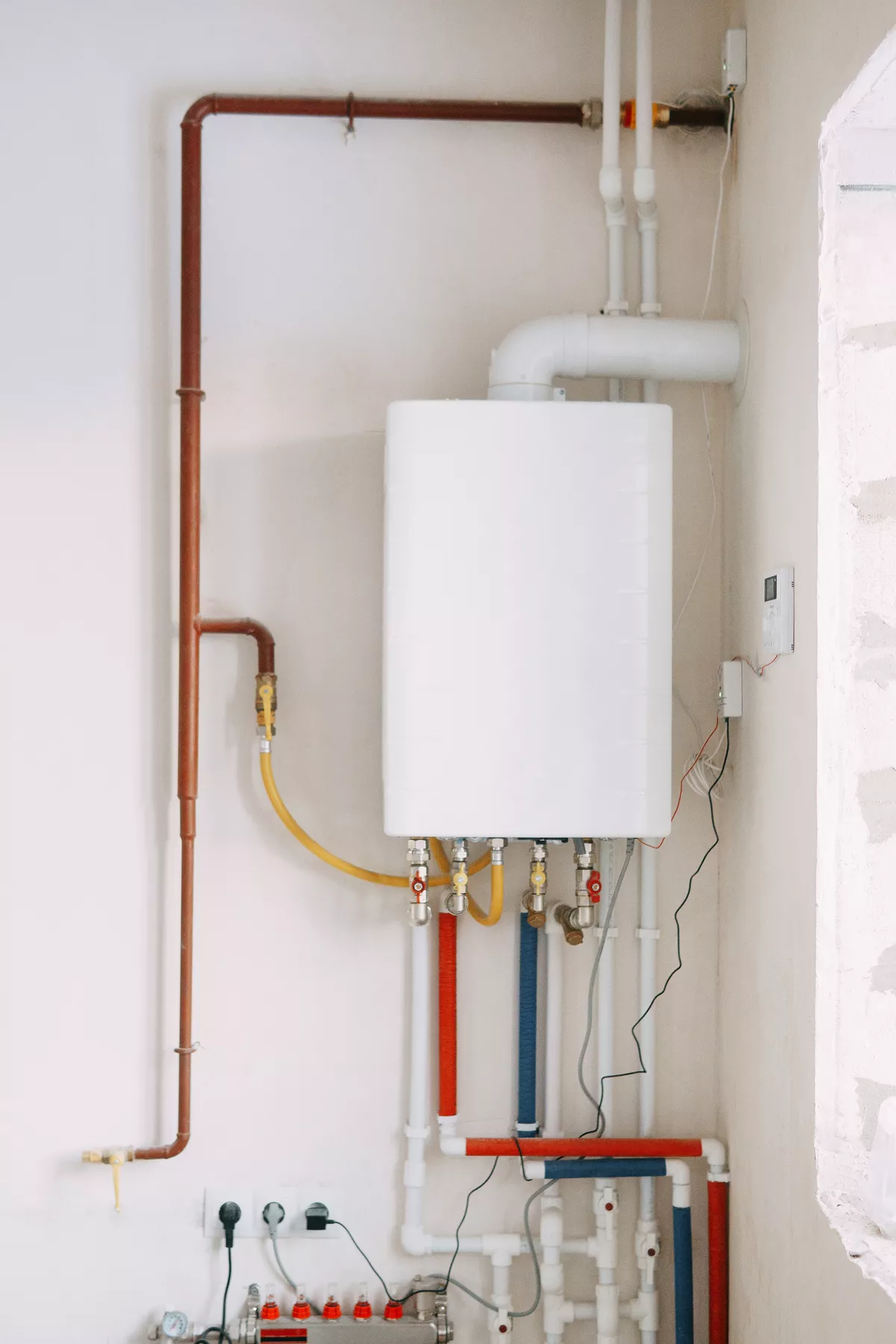
A radiant floor system has no supply ducts, so the audit’s duct test does not apply to it. When one ages, the decision is whether to repair it, replace the boiler or convert, covered in radiant floor heating: repair, replace or convert. Boiler and hydronic work is for a professional.
Should you consider a heat pump water heater?
A heat pump water heater pulls heat from the surrounding air, so where it sits matters. ENERGY STAR says these units “should be installed in interior spaces that remain between 40° to 90° F year-round,” with “1,000 cubic feet of air space around the water heater,” and warns they “can cool the spaces they are in.”
ENERGY STAR also notes that in colder conditions a unit “may need to go temporarily into a back-up standard electric water heating mode.” Whether a Boulder garage or basement stays inside that 40 to 90 degree band through the winter is the question to answer before choosing one, the focus of heat pump water heaters in Boulder. Electrical and plumbing connections are for a licensed professional.
Does your house need an ERV or an HRV?
An audit that finds a tight house raises the ventilation question: how fresh air gets in once the leaks are sealed. Heat recovery ventilators (HRVs) and energy recovery ventilators (ERVs) both exchange stale indoor air for outdoor air while recovering heat. The choice between them turns on indoor humidity.
For targets, the U.S. Environmental Protection Agency advises keeping indoor humidity “below 60 percent (ideally between 30 and 50 percent) relative humidity.” Which ventilator type suits a Boulder house is in ERV vs HRV for a dry Colorado house.
How do you check indoor air quality?
Indoor air quality is the second half of a whole-house look. EPA says the most effective ways to improve indoor air “are to reduce or remove the sources of pollutants” and to ventilate. Testing comes before buying equipment, and radon is the first test EPA names.
EPA calls radon “the number one cause of lung cancer among non-smokers,” and its radon zone map page says: “No matter where you live, test your home for radon—it’s easy and inexpensive.” What consumer air quality monitors measure, and what they miss, is in indoor air quality testing.
EPA’s guide to air cleaners says they “can reduce indoor air pollution” but “cannot remove all pollutants from the air.” For HVAC filters it advises one “rated at least MERV 13 or as high as your system will accommodate,” checked with an HVAC technician before upgrading, and to “avoid portable air cleaners and furnace/HVAC filters that intentionally produce ozone.” More in whole-house air purifiers.
On ducts, EPA says cleaning “has never been shown to actually prevent health problems,” and suggests considering it when “there is substantial visible mold growth inside hard surface (e.g., sheet metal) ducts,” when “ducts are infested with vermin,” or when “ducts are clogged with excessive amounts of dust and debris.” See is duct cleaning worth it and mold in air ducts. Opening and cleaning ductwork is a professional job.
Where should carbon monoxide alarms go?
If a carbon monoxide alarm sounds or anyone feels unwell, leave the building immediately and call 911 from outside. Do not go back in. For placement, CPSC, as quoted by EPA, recommends that every home have carbon monoxide alarms “on each level outside each sleeping area.” Testing alarms is a homeowner task.
EPA describes carbon monoxide as “an odorless, colorless and toxic gas.” Colorado law also sets a rule at the point of sale. Under C.R.S. § 38-45-102, the seller of an existing single-family home offered for sale or transfer on or after July 1, 2009 “that has a fuel-fired heater or appliance, a fireplace, or an attached garage” must assure “that an operational carbon monoxide alarm is installed within fifteen feet of the entrance to each room” used for sleeping, or where a building code specifies.
That is a seller’s obligation, not a blanket rule for every home. Placement in detail is in where to put carbon monoxide alarms.
How do you choose a smart thermostat?
The thermostat is one control a homeowner can set safely. ENERGY STAR advises: “Make sure the smart thermostat you purchase is compatible with your heating and cooling system.”
Compatibility, the common wire and what happens if a smart thermostat fails are in choosing and installing a smart thermostat. New wiring at the furnace or air handler is a job for a professional.
A year-round plan in one table
This table pulls the guides above into one plan, marking which steps a homeowner can do safely and which need a professional.
| System | Decision | Homeowner part | Professional part |
|---|---|---|---|
| Whole house | Audit first | Bills and a problem list; DIY walk-through | Blower door, infrared, duct and combustion checks |
| Heating | Cold-climate heat pump or dual fuel | Thermostat settings | Sizing, gas and electrical work |
| Water heating | Heat pump water heater | Clearances around the unit | Installation |
| Radiant heat | Repair, replace or convert | Thermostat only | Boiler and hydronic work |
| Ventilation | ERV or HRV | Filter and clearances | Design and install |
| Air quality | Test, filter, clean | Change the filter | Duct work, mold, equipment |
| Safety | CO alarm placement | Test and place alarms | Combustion appliance checks |
| Controls | Smart thermostat | Settings | New wiring |
The homeowner checks, all year
Four checks are safe for any homeowner in any season: the filter, clearances around equipment and vents, the thermostat, and the carbon monoxide alarm. Everything else on an audit report, from gas lines and combustion appliances to wiring and ductwork, is for a professional. If a carbon monoxide alarm sounds, leave the building and call 911 from outside.
For the equipment side of an audit report, Boulder HVAC Pros offers HVAC maintenance in Boulder, serving Boulder and the surrounding area. Call (720) 764-0399.
Frequently asked questions
How to do your own energy audit?
Walk through looking for air leaks where materials meet and around outlets, windows, doors and attic hatches, per the Department of Energy’s guide, and check caulking and weather stripping. Leave gas appliance steps to a professional.
How much does it cost to get an energy audit?
The U.S. Department of Energy gives approximately $250 to $600 or more for a professional assessment. Check utility programme prices with Xcel Energy or Efficiency Works directly.
Is an energy audit worth it?
DOE calls it “the essential first step to lowering your energy bills.” Its report shows whether a home needs only air sealing and attic insulation or bigger upgrades such as new heating and cooling equipment.
What does a professional home energy audit include?
According to the Department of Energy, the two main tools are a blower door test, which measures airtightness, and an infrared camera scan, which shows temperature differences in walls and ceilings.
Are there home energy audit programmes in Boulder County?
Boulder County EnergySmart lists two on its Energy Audits page: Xcel Energy’s Home Energy Squad for residential Xcel Energy customers in Colorado, and Efficiency Works Homes for Longmont Power and Communications customers.
Last verified: October 16, 2026.
Related reading and services: HVAC Maintenance & Tune-Ups in Boulder, CO · HVAC services in Boulder, CO