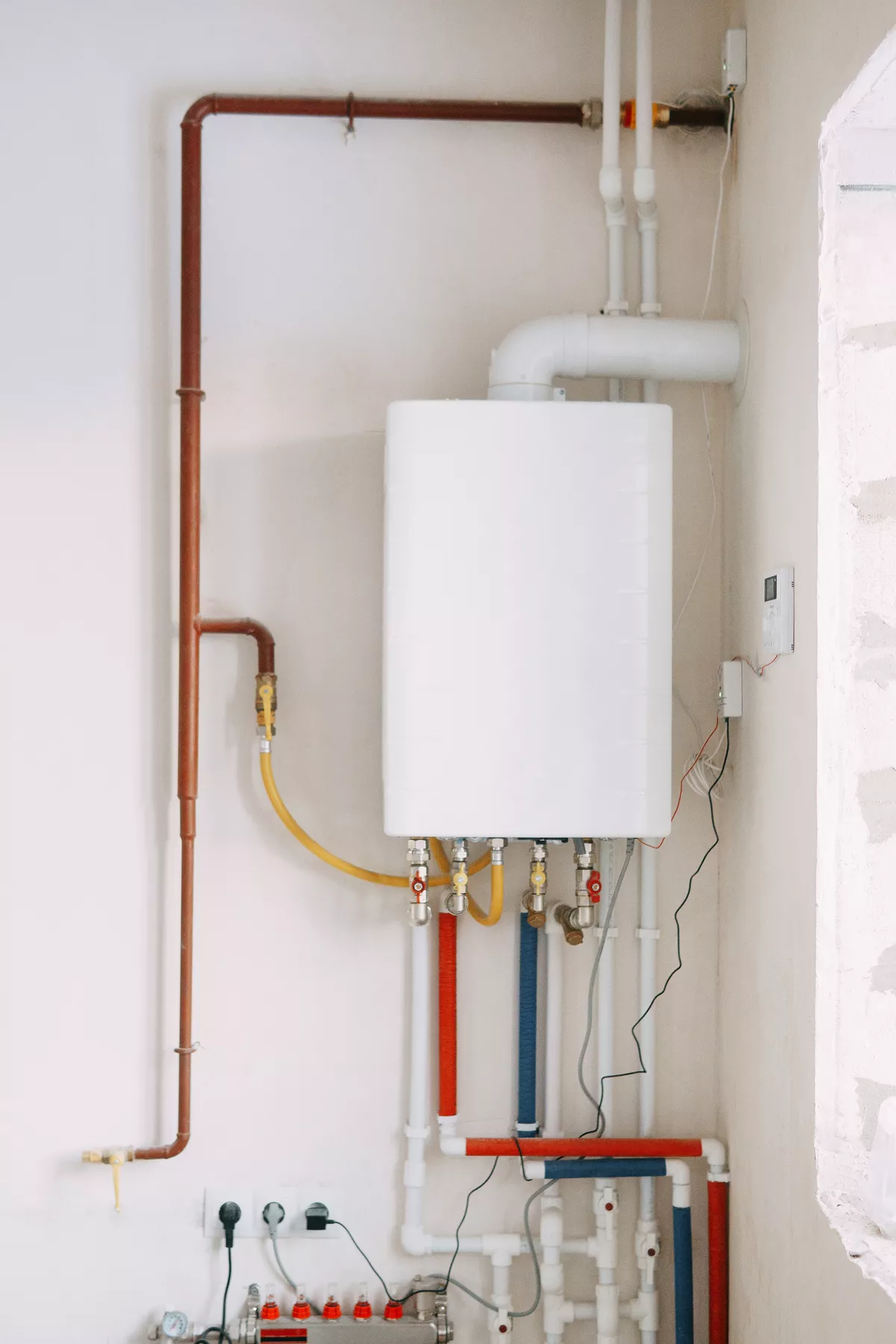
A furnace tune-up is easy to describe and hard to check. Most descriptions are a list of verbs: inspect, clean, tighten, test. Almost none of them say what a number should read, or what it is compared against. That matters, because the useful part of a tune-up is the measurements, and every one of them has a published target in the furnace’s own paperwork.
This guide takes the checklist straight from the source: the installation manual a furnace manufacturer ships with its equipment, and ENERGY STAR’s maintenance checklist. For each item it says what is measured, what the reading is compared against, and why it matters. It ends with the short list of readings worth asking for in writing, so a homeowner can tell a measured tune-up from a visual one without taking anyone’s word for it.
Why the manual, not a marketing checklist
Every gas furnace comes with an installation manual, and the manual is the standard its installer and anyone who services it are working to. Goodman’s installation manual for one of its gas furnace lines is a good example of what these documents contain, and it is the one cited throughout this guide.
Its maintenance section opens plainly: “The furnace should be inspected by a qualified installer, or service agency at least once per year. This check should be performed at the beginning of the heating season.” It then lists what to pay particular attention to: the flue pipe system, the heat exchanger, the burners and flame signal, the wiring, and the filters.
The same manual carries a record sheet at the back with blanks for the readings that matter: static pressure in the ductwork, return and supply air temperatures, the temperature rise between them, and the gas pressures at the inlet and at the manifold. That sheet is, in effect, the manufacturer’s own answer to the question of what a tune-up includes. A tune-up that fills those blanks has been measured. One that cannot has been looked at.
Other manufacturers publish their own manuals with their own figures. The principle is the same: the target for each reading is in the paperwork for the furnace in front of you, not in a general rule.
The heating checks, and what each is compared against
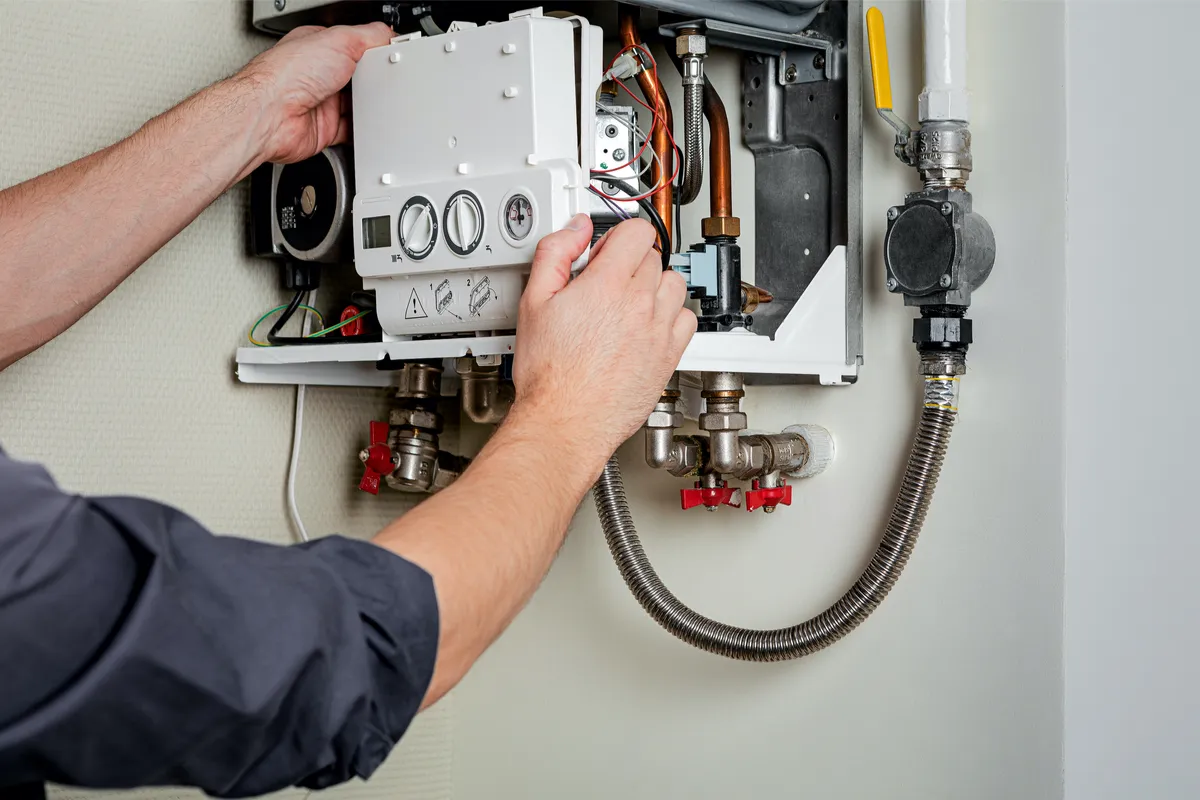
ENERGY STAR’s checklist groups the heating-specific work into one line: check “all gas (or oil) connections, gas pressure, burner combustion and heat exchanger”. Here is what each of those means in practice, with the target each reading is checked against.
Temperature rise: checked against the rating plate
Temperature rise is the difference between the air going into the furnace and the air coming out of it while the burners are firing. The manual is direct about it: “At all altitudes and with either fuel, the air temperature rise must be within the range listed on the furnace nameplate.”
The rating plate on the furnace prints that range. A technician measures return air and supply air with a thermometer, subtracts one from the other, and compares the result to the plate. A rise above the range points to too little air moving across the heat exchanger. That is the condition the furnace’s limit switch exists to catch, covered in how a furnace’s safety switches work. A rise below the range points the other way. Either reading is a finding, and neither is visible without a thermometer.
Gas pressure: checked against the specification sheet
The manual sets a tolerance for the manifold pressure, the gas pressure the burners actually receive: “At all altitudes, the manifold pressure must be within 0.3 inches w.c. of that listed in the Specification Sheet applicable to your model for the fuel used.” It also warns that gas input “must not exceed the rated input shown on the rating plate”, and that overfiring “can result in premature heat exchanger failure”.
Measuring it takes a manometer connected at the gas valve, with the furnace running. The reading is a number in inches of water column. It either sits within 0.3 of the figure for that model or it does not. This is qualified-servicer work on a live gas appliance, and nothing in this guide is a suggestion to attempt it.
Static pressure: checked against the rating plate
External static pressure is the resistance the duct system puts up against the furnace’s blower. The manual instructs that a furnace be installed “with a duct system which has external static pressure within the allowable range, as specified on the furnace rating plate”. The record sheet has blanks for return static, supply static and the total.
It is measured with a manometer at test points on either side of the furnace. A total above the allowable range means the blower is fighting the ductwork. That can show up as a rise out of range, a noisy system, or rooms that never warm. The duct side of that problem is its own subject, but the tune-up is where the number first gets taken.
The burners and the flame signal
The manual’s annual list includes “Burners. Check for proper ignition, burner flame, and flame signal.” The flame signal is the electrical reading that tells the control board a flame is present. The manual explains that a “nearly invisible coating” can form on the flame sensor and act “as an insulator causing a drop in the flame sense signal”, and that “if the flame sense signal drops too low the furnace will not sense flame and will lock out.”
The fix it specifies is cleaning by a qualified servicer, after which “the flame sense signal should be as indicated in the Specifications Sheet”. Once again there is a published number to compare against. When ignition fails, the order of diagnosis is set out in why a furnace won’t ignite.
The heat exchanger and the flue
Two items on the manual’s list concern where combustion gases go. “Heat exchanger. Check for corrosion and/or buildup within the heat exchanger passageways.” And “Flue pipe system. Check for blockage and/or leakage. Check the outside termination and the connections at and internal to the furnace.” The manual repeats that the heat exchanger flue passageways “should be inspected at the beginning of each heating season.”
ENERGY STAR explains why it matters: “A dirty burner or cracked heat exchanger causes improper burner operation,” and either “can cause the equipment to operate less safely and efficiently.” These are the checks that stand between combustion and the air in the house. That is why a tune-up is a safety inspection as much as an efficiency one.
Electrical connections and controls
The manual lists “Wiring. Check electrical connections for tightness and/or corrosion. Check wires for damage.” ENERGY STAR adds “measure voltage and current on motors,” and checking “the starting cycle of the equipment to assure the system starts, operates, and shuts off properly.” The record sheet has blanks for line voltage, the transformer’s secondary voltage and blower amps. The manual’s own closing step before a technician leaves is to “cycle the furnace with the thermostat at least three times.”
What the altitude line means for a tune-up here
Altitude changes how a gas furnace burns, and the manual addresses it model by model rather than with a general rule. Goodman’s installation manual for this furnace line says a high-altitude orifice kit must be applied where the furnace’s specification sheet calls for one, and the same manual’s table lists no kit for natural gas up to 7,000 feet. Boulder sits at about 5,319 feet by the U.S. Geological Survey’s measure. Of the towns we serve, Nederland is the only one above that 7,000-foot line. So the tune-up question here is not whether a kit exists. It is what this furnace’s own manual requires at this elevation, and whether that was done.
One instruction in the same manual holds at every altitude: “Do not derate the furnace by adjusting the manifold pressure to a lower pressure than specified on the furnace rating plate.” Lower air density combined with lower manifold pressure “may cause incomplete combustion, flashback, and possible yellow tipping.” That is one more reason the gas pressure reading belongs on the tune-up record.
Carbon monoxide: the alarm is the homeowner’s check
Incomplete combustion is how carbon monoxide is made, which is why the heat exchanger, flue and gas pressure checks above matter. The homeowner’s part is simpler. Press the test button on each carbon monoxide alarm, as its maker instructs, before the heating season starts. What to do if an alarm sounds, and how a sounding alarm differs from a low-battery chirp, is set out in what to do when a carbon monoxide alarm goes off.
What a homeowner can do, and what stays with a technician
ENERGY STAR lists one maintenance action for the homeowner: “Inspect, clean, or change air filters once a month in your central air conditioner, furnace, and/or heat pump.” The manufacturer puts it more bluntly: “Improper filter maintenance is the most common cause of inadequate heating or cooling performance,” and it tells owners to use the filter sizes given in the specification sheet for their model.
Beyond the filter, a homeowner can keep the space around the furnace clear and can test the carbon monoxide alarms. Everything else on the lists above sits behind the manual’s own marking, “Qualified Servicer Only”, or involves a live gas appliance. None of it is written here as a step-by-step, and it should not be attempted.
The readings to ask for in writing
Here is the practical test of a tune-up. Ask for the numbers, and ask what each was compared against. The manufacturer’s record sheet asks for the same set:
- Temperature rise, with the range from the rating plate beside it.
- Manifold gas pressure, with the figure from the specification sheet for this model and fuel.
- Total external static pressure, with the allowable range from the rating plate.
- Flame signal, with the figure from the specification sheet.
- What was found at the heat exchanger passageways and the flue, including the outside termination.
- What the manual requires at this elevation, and whether the furnace is set up that way.
- Line voltage and blower amps.
A written record with those readings is also useful the next time something goes wrong. A furnace that is short cycling or blowing cold air is easier to diagnose against last autumn’s numbers than from scratch.
If the tune-up turns up a component near the end of its life, the repair-or-replace decision and the rebates that still apply are covered in our rebates guide. How this fits into heating a home here more broadly is in the guide to winter heating in Boulder. To book one, see furnace maintenance and tune-ups.
Frequently asked questions
What does a furnace tune-up include? The manufacturer’s own list is a good baseline: the flue pipe system, the heat exchanger, the burners and flame signal, the wiring, and the filters. A measured tune-up adds the readings printed on the manual’s record sheet: temperature rise against the rating plate, manifold gas pressure against the specification sheet, and external static pressure against the rating plate.
How often should a furnace be tuned up? Goodman’s manual says the furnace “should be inspected by a qualified installer, or service agency at least once per year,” and that “this check should be performed at the beginning of the heating season.”
Is a furnace tune-up worth it? It is worth it if it is measured. The readings on the manual’s record sheet are the ones that reveal a problem before it becomes a no-heat call or a safety issue: temperature rise, gas pressure, static pressure and flame signal. A tune-up that produces no numbers leaves you with no way to tell what was checked.
How much does a furnace tune-up cost? This guide does not quote a price. Whatever the price, ask which of the readings listed above are included, because that is what separates one tune-up from another.
Can I tune up my furnace myself? The filter is yours. ENERGY STAR’s checklist tells homeowners to inspect, clean or change it, and the manufacturer tells owners to use the filter size in the specification sheet. The flame sensor, gas pressure, heat exchanger and flue work is marked “Qualified Servicer Only” in the manual and involves a live gas appliance.
What should I ask for after a tune-up? The readings, and what each was compared against: temperature rise and the rating-plate range, manifold pressure and the specification-sheet figure, total static pressure and its allowable range, and the flame signal. Ask too what was found at the heat exchanger and flue, and what the manual requires at your elevation.
Sources
- Goodman, Installation Instructions for *M9S80 & *C9S80 gas furnaces: Maintenance (“Annual Inspection”, “Flame Sensor (Qualified Servicer Only)”, “Flue Passages”, “Before Leaving an Installation”), gas pressure and temperature-rise requirements, “High Altitude Derate” section and altitude table, and the start-up record sheet (static pressure, temperatures, gas pressures, electrical) – https://documents.alpinehomeair.com/product/goodmangm9s8gc9s8installationmanual.pdf
- ENERGY STAR, Maintenance Checklist (“A typical maintenance check-up should include”, “Heating Specific”, “Actions To Do Yourself”) – https://www.energystar.gov/saveathome/heating-cooling/maintenance-checklist
- USGS 3DEP Elevation Point Query Service at the GNIS populated-place point for Boulder (5,319 ft) – https://epqs.nationalmap.gov/v1/json?x=-105.2705456&y=40.0149856&units=Feet&wkid=4326&includeDate=false
- Boulder HVAC Pros, Carbon Monoxide: What To Do When the Alarm Sounds – /carbon-monoxide-alarm-what-to-do/