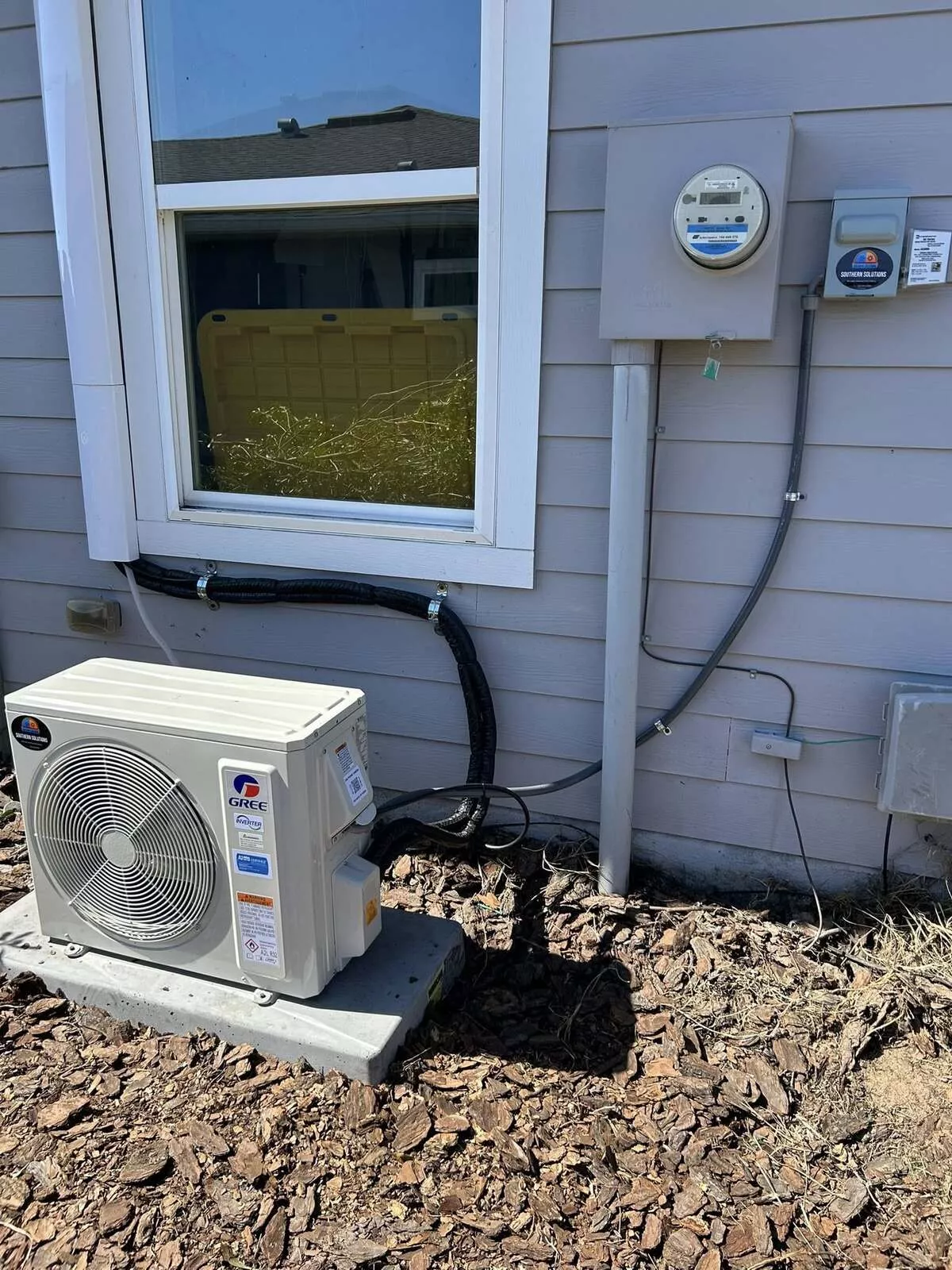
A heat pump with backup heat has two ways to warm a house. One is the heat pump itself. The other is the backup, shown as “aux” or “auxiliary” heat on the thermostat. On the systems the sources below describe, that backup is electric resistance heat, and the difference in running cost between the two is the reason this matters. The backup is meant for the times the heat pump cannot keep up, not for every cold morning.
What decides when the backup runs is a control setting. This guide covers what the energy code requires of that control, how a lockout setting puts the requirement into practice, what one utility programme specifies, and what a homeowner can check and ask.
Why backup heat costs more
Energy Trust of Oregon, a nonprofit that runs efficiency programmes for Oregon utility customers, describes the difference plainly. “Heat pumps can reliably provide heating when outdoor temperatures are well below freezing,” it says. “When in operation, auxiliary backup heating relies on electric resistance heat strips to heat the home, using substantially more energy than the heat pump technology, resulting in higher utility costs when in use.”
The Building America Solution Center, a Department of Energy resource run by Pacific Northwest National Laboratory, describes the same backup as “costly auxiliary heating, which is typically electric resistance heat.”
That is the whole case for controlling it. Every hour the backup runs when the heat pump could have carried the load is an hour of the more expensive kind of heat.
What the energy code requires
The International Energy Conservation Code addresses this directly, in a section titled “Heat pump supplementary heat.”
The 2021 edition says: “Heat pumps having supplementary electric-resistance heat shall have controls that, except during defrost, prevent supplemental heat operation when the heat pump compressor can meet the heating load.”
The 2024 edition widens and sharpens it. It applies to “heat pumps having supplementary electric-resistance, fuel gas or liquid fuel heating systems,” which “shall have controls that are configured to prevent supplemental heat operation when the capacity of the heat pump compressor can meet the heating load.” It then limits backup operation to four cases:
- “The vapor compression cycle cannot provide the necessary heating energy to satisfy the thermostat setting.”
- “The heat pump is operating in defrost mode.”
- “The vapor compression cycle malfunctions.”
- “The thermostat malfunctions.”
In plain terms: the backup should run when the heat pump genuinely cannot keep the house at the set temperature, during defrost, or when something has failed. It should not run simply because it is cold outside and the heat pump is working hard.
Which edition applies, and to what
Energy codes are adopted town by town, and towns in the same county can be on different editions at the same time. Across the towns we serve, Mead, Frederick and Dacono list the 2024 edition on their building-codes pages, Erie adopted the 2024 edition with local amendments in April 2026, and Firestone’s building-permits page lists the 2018 edition. Your town’s building department can tell you which edition applies and whether it has amended this section.
The requirement also applies to work done under the adopted code, such as a new installation or a replacement that needs a permit. It is not a pass or fail grade on a system installed before your town adopted it. For an older system, it is a useful description of how the controls should behave, and a fair basis for a question to your installer.
The balance point, in plain terms
The first of the 2024 code’s four cases, where the heat pump “cannot provide the necessary heating energy to satisfy the thermostat setting,” depends on the weather and on the particular house and heat pump. The outdoor temperature below which that case begins, for a given house and system, is what installers call the balance point. Above it, the code’s intent is that the heat pump carries the load alone. Below it, backup heat is allowed.
The balance point is specific to the house. It is a number worth asking your installer for, because it tells you roughly where a sensible lockout setting sits.
How a lockout puts the rule into practice
One way to keep backup heat off in milder weather is an outdoor temperature lockout. Energy Trust describes it: “The lockout temperature in the installer settings of the heat pump controller (thermostat) prevents the auxiliary backup heating kit in the air handler from being activated if outdoor temperatures are above the programmed lockout setting threshold.”
Two things follow from that description. The lockout is an installer setting, so it is set, or not set, when the system is commissioned. And it depends on the control knowing the outdoor temperature.
How the control knows the outdoor temperature
Energy Trust’s specification answers that question too: “The outdoor air temperature shall be determined either by a locally installed outdoor temperature sensor or by online weather data. If the heat pump control utilizes online weather data, the unit shall be connected to the home’s internet and, if applicable, the thermostat must be registered.”
In a January 2026 notice, it explained why the connection matters for thermostats that use weather data. Among its reasons: “Smart controllers access current local weather data from web-based weather stations,” and “operating system updates, which keep smart thermostats running correctly, require a Wi-Fi connection.” It put the general point plainly: “Smart controllers are only capable of operating at peak performance when connected to a Wi-Fi network.”
Whether your system uses a wired outdoor sensor or weather data is a question for the installer.
One programme’s number
There is no single lockout temperature that suits every house, and the energy code does not set one. For a sense of what a programme requires, Energy Trust of Oregon publishes its specification. Its 2025 Specifications Manual says: “The heat pump control shall have the ability to lock out supplemental/auxiliary electric furnace heat at 35°F. The lockout temperature shall be set at or below 35°F.” It adds: “Energy Trust recommends that the lockout is set to no greater than 25°F for extended capacity systems.”
That is an Oregon programme’s requirement for its own incentives, not a Colorado rule. It is useful here as an example of a published, specific setting, and as a reminder that the right number depends on the equipment.
Why it gets missed
Energy Trust is candid about its own programme’s experience. In a December 2025 notice to contractors, it wrote: “The most common corrective action issued to Residential trade allies for heat pump and heat pump control projects is failure to program correct auxiliary heat lockout settings. Missing this simple step leads to reduced comfort and savings for customers, along with costly return visits to make corrections.”
That describes Oregon installations inspected by one programme, not every installation. But it makes the point that a lockout is a setting someone has to program, and that it is worth asking about.
Setbacks and backup heat
A thermostat setback can bring the backup on when the house is warmed back up. The Building America Solution Center’s advice is that “if the home has a heat pump for heating and cooling, the programmable thermostat should have adaptive-recovery technology,” which “directs the heat pump to minimize the use of costly auxiliary heating” when returning from a setback. Its example: a setback to 62°F during the day, returning to 68°F at 5 pm, where the thermostat “triggers the heat pump earlier allowing it to bring up the space temperature gradually over a longer period of time. This allows the heat pump alone to provide the temperature increase and minimizes the use of the more costly electric resistance auxiliary heat.”
It adds that such thermostats “‘learn’ from experience how soon to turn on the heating or cooling system,” and that “within a week or so of installation,” one “will have adjusted to the home’s specific heating and cooling system, construction type, and local climate.”
Defrost: why backup can run in mild weather
Both code editions allow backup heat during defrost. The 2021 edition’s rule applies “except during defrost,” and the 2024 code lists “the heat pump is operating in defrost mode” as one of the four cases where backup operation is allowed.
So a brief “aux” indication on a cold, damp day is not on its own a sign that the lockout is wrong. Backup running for long stretches in mild weather is the pattern worth asking about.
What a homeowner can check
These checks involve nothing inside the equipment and no installer settings:
- The thermostat. Watch when it shows auxiliary or backup heat, and note the outdoor temperature at the time. Check the schedule, and whether a deep setback is followed by backup heat each morning.
- The filter. A clogged filter restricts airflow through the whole system.
- Clearances. Registers and return grilles open and clear, and nothing stored against the indoor equipment.
- The carbon monoxide alarm. If the backup heat is a gas furnace, test it.
Changing a lockout or any other installer setting is a job for a technician, who can confirm the setting suits the equipment.
What to ask your installer
A short list of questions covers the ground:
- Is there an outdoor temperature lockout on the auxiliary heat, and what is it set to?
- What is the balance point for this house and system, and how does the lockout relate to it?
- How does the control know the outdoor temperature?
- If the thermostat does setbacks, does it have adaptive recovery?
- Was the system commissioned with the controls configured as the adopted energy code requires, if the work was permitted under it?
If a rebate is involved, the installer’s paperwork may matter too. See winter heating rebates and credits in Boulder. For service, see heat pump repair, and for the wider picture, the guide to winter heating costs and safety in Boulder.
Frequently asked questions
What does it mean when my heat pump says auxiliary heat? The backup heat is running alongside or instead of the heat pump. Under the 2024 energy code, that should happen only when the heat pump cannot meet the thermostat setting, during defrost, or when something has malfunctioned.
Does auxiliary heat run up your electric bill? It can. Energy Trust of Oregon says auxiliary heating that relies on electric resistance heat strips uses “substantially more energy than the heat pump technology, resulting in higher utility costs when in use.” How much depends on how long it runs.
At what temperature should a heat pump switch to auxiliary heat? The energy code does not set a temperature. It requires controls that keep backup heat off whenever the heat pump can meet the load. As one example of a programme setting, Energy Trust of Oregon requires a lockout at or below 35°F, and recommends no greater than 25°F for extended capacity systems.
Can I leave aux heat on all the time? The energy code’s intent is the opposite: backup heat should be prevented whenever the heat pump can meet the load. Running it when the heat pump could carry the load means paying for the more expensive heat.
Is it okay to run auxiliary heat? Yes, when the code’s conditions apply: when the heat pump cannot meet the thermostat setting, during defrost, or when something has malfunctioned. That is what the backup is for. The concern is backup heat running when the heat pump could have carried the load, which the energy code’s control requirement is written to prevent.
How do I stop my auxiliary heat from coming on? Avoid deep setbacks unless the thermostat has adaptive recovery, keep the filter and registers clear, and ask your installer whether an outdoor lockout is set and at what temperature. Changing installer settings is a technician’s job.
What is a balance point in HVAC? The outdoor temperature below which a heat pump alone can no longer keep a particular house at the set temperature. Above it, backup heat should not be needed except during defrost.
Sources
- International Code Council, 2021 International Energy Conservation Code, Section R403.1.2 Heat pump supplementary heat – https://codes.iccsafe.org/content/IECC2021P2/chapter-4-re-residential-energy-efficiency
- International Code Council, 2024 International Energy Conservation Code, Section R403.1.2 Heat pump supplementary heat – https://codes.iccsafe.org/content/IECC2024P1/chapter-4-re-residential-energy-efficiency
- Energy Trust of Oregon, Auxiliary heat lockout settings vital to energy-efficient operation of heat pump equipment (November 17, 2025) – https://insider.energytrust.org/auxiliary-heat-lockout-settings-vital-to-energy-efficient-operation-of-heat-pump-equipment/
- Energy Trust of Oregon, Energy Trust discontinues correcting auxiliary heat lockout requirements for contractors (December 9, 2025) – https://insider.energytrust.org/energy-trust-discontinues-correcting-auxiliary-heat-lockout-requirements-for-contractors/
- Energy Trust of Oregon, Connecting smart thermostats to the internet is critical to energy-efficient operation of heat pumps (January 13, 2026) – https://insider.energytrust.org/connecting-smart-thermostats-to-the-internet-is-critical-to-energy-efficient-operation-of-heat-pumps/
- Town of Mead, Building Codes (2024 IECC) – https://meadco.gov/building/page/building-codes
- Town of Frederick, Building Codes (2024 IECC) – https://www.frederickco.gov/141/Building-Codes
- City of Dacono, Building Codes (2024 IECC) – https://www.daconoco.gov/918/Building-Codes
- Town of Erie, Building Codes & Design Criteria (2024 IECC with local amendments, Ordinance No. 12-2026) – https://www.erieco.gov/1772/Building-Codes-Design-Criteria
- Town of Firestone, Building Permits & Fees (2018 IECC) – https://www.firestoneco.gov/425/Building-Permits-Fees
- Pacific Northwest National Laboratory for the U.S. Department of Energy, Building America Solution Center, Thermostat Controls – https://basc.pnnl.gov/resource-guides/thermostat-controls