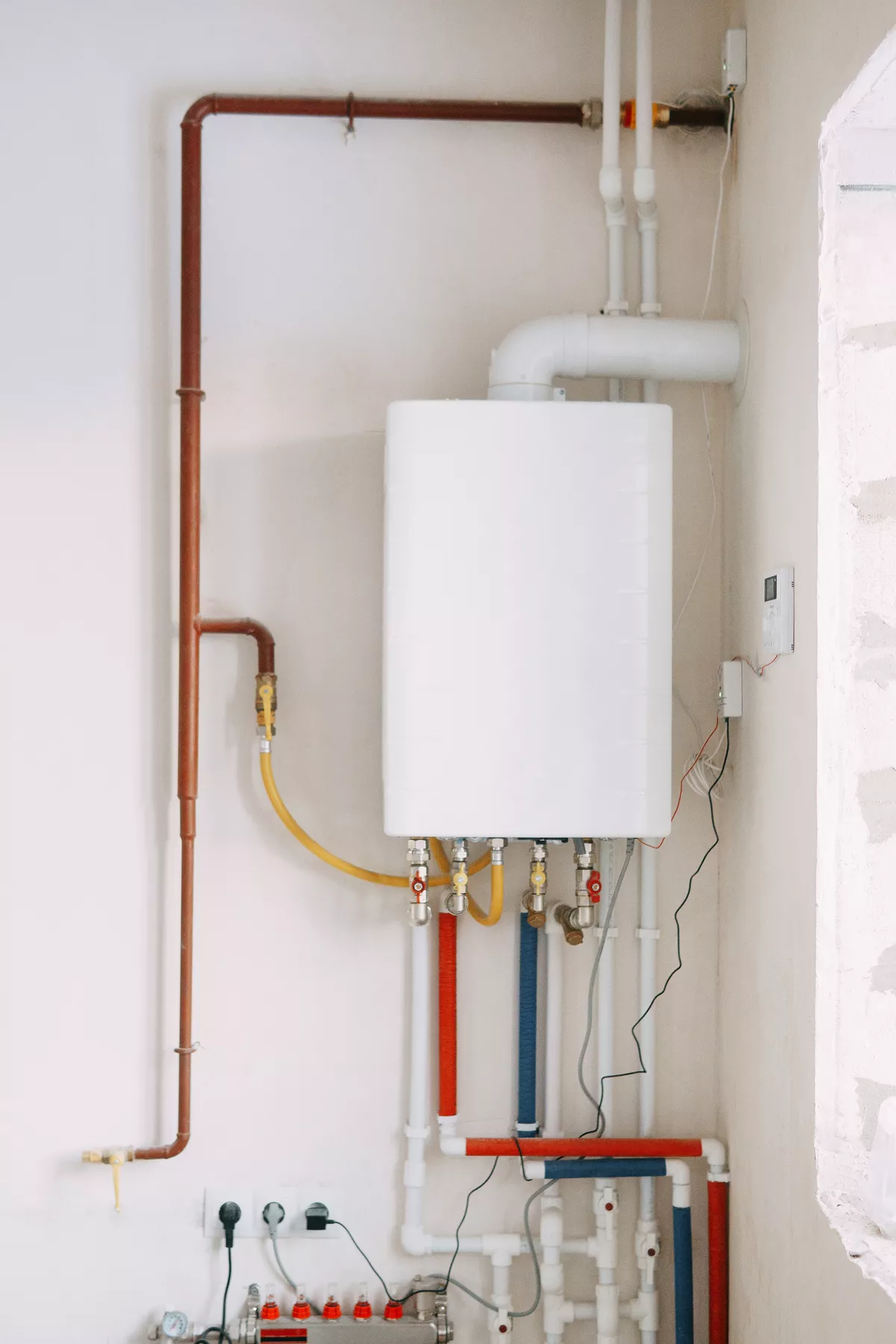
A frozen pipe is a heating problem as much as a plumbing one. Both sources below tie prevention to heat: keeping it on, keeping it steady in extreme cold, and keeping it on when the house is empty. This guide covers prevention in the order it happens: what to do before the cold arrives, what to do during a cold snap, what to do when you are away, and what to do if a pipe freezes anyway.
It draws on two sources written for exactly this: the City of Boulder’s frozen pipes guidance and the American Red Cross’s guide to preventing and thawing frozen pipes. Where they agree, which is almost everywhere, this guide says so.
Why pipes break when they freeze
The City of Boulder explains the mechanism in one line: “When frigid arctic air hits, water freezes, and as it freezes, it expands, causing pipes to burst and possibly flood.” The Red Cross adds that “no matter the strength of a container, expanding water can cause pipes to break.”
The damage is not only the pipe. A burst pipe in a wall, a ceiling or a basement can release water until someone finds it and shuts it off.
Which pipes are at risk
Both sources name the same places. The City of Boulder: “Pipes that freeze most frequently are those that are exposed to severe cold, such as outdoor hose bibs, swimming pool supply lines, water sprinkler lines and water supply pipes in unheated interior areas such as basements and crawl spaces, attics, garages or kitchen cabinets. Pipes that run against exterior walls that have little or no insulation are also subject to freezing.”
It also makes a point that is easy to miss: “A hot water supply line can freeze just as a cold water supply line can freeze if water is not running through the pipe, and the water temperature becomes cold.”
A useful exercise before winter is to walk the house with that list in hand. Look in the basement, the crawlspace, the attic, the garage, and under the kitchen and bathroom sinks, and note where the water lines run.
Before the cold weather
The City of Boulder’s list of what to do before cold weather arrives:
- “Drain water from swimming pool and water sprinkler supply lines following manufacturer’s or installer’s directions.” It adds: “Do not put antifreeze in these lines unless directed.”
- “Remove, drain and carefully store hoses used outdoors.”
- “Close inside valves supplying outdoor hose bibs. Open the outside hose taps to allow water to drain. Keep the outside valve open so that any water remaining in the pipe can expand without causing the pipe to break.”
- “Check around the home for other areas where water supply lines are located in unheated areas,” and insulate them: “Both hot and cold water pipes in these areas should be insulated.”
Insulating exposed pipes
The city names the products: “Consider installing specific products made to insulate water pipes like a ‘pipe sleeve’ or installing UL-listed ‘heat tape,’ ‘heat cable,’ or similar materials on exposed water pipes.” On fitting them: “Pipes should be carefully wrapped, with ends butted tightly and joints wrapped with tape. Follow manufacturer’s recommendations for installing and using these products.” And as a stopgap: “Newspaper can provide some degree of insulation and protection to exposed pipes.”
For the spaces around the pipes, the Red Cross advises: “Add insulation to attics, basements and crawl spaces. Insulation will maintain higher temperatures in these areas.”
Find the water shut-off valve now
This step is the one to take before it is needed, because it is the one you need fastest if something goes wrong. The City of Boulder says: “Determine where the water shut-off valve is in the house and how to use it in case pipes freeze and break.” Its directions: “locate the outside water line that leads to the residence,” and look where it enters. “Likely places for the water turn-off valve include internal pipes running against exterior walls or where water service enters a home through the foundation.”
If a pipe bursts, knowing where that valve is can be the difference between a wet floor and a flooded one.
During a cold snap
When the weather turns very cold, the City of Boulder’s list is short:
- “Keep garage doors closed if there are water supply lines in the garage.”
- “Open kitchen and bathroom cabinet doors to allow warmer air to circulate around the plumbing.” It adds: “Be sure to move any harmful cleaners and household chemicals out of the reach of children.”
- “When the weather is very cold outside, let the cold water drip (at a minimal amount) from the faucet served by exposed pipes. Running water through the pipe, even at a trickle, helps prevent frozen pipes.”
- “During extreme cold, keep the thermostat set to the same temperature both during the day and at night.”
The Red Cross is candid about the trade-off in that last one: “By temporarily suspending the use of lower nighttime temperatures, you may incur a higher heating bill, but you can prevent a much more costly repair job if pipes freeze and burst.”
The heating connection
Every step above assumes the heating is on and working. That is the link between frozen pipes and the furnace.
A thermostat setback that saves money in a mild week can leave pipes in cabinets and exterior walls exposed in a hard freeze, which is why both sources say to suspend it during extreme cold. A furnace that stops working overnight in a cold snap is a pipe emergency as well as a heating one.
A furnace also depends on electricity. The installation manual for one gas furnace line specifies its “115 Volt Line Connections,” so a furnace like it stops when the power does, whatever the gas supply is doing. In an outage, the Red Cross’s warnings apply: “Only use generators, grills, and camp stoves outdoors and away from windows,” and “never heat your home with a cooking oven or stove.”
The safe checks that keep the heating side working are short:
- The thermostat. Set to heat, and, in a cold snap, without a night setback.
- The filter. A clogged filter restricts airflow through the whole system.
- Clearances. Registers and return grilles open and clear, and nothing stored against the furnace. The City of Boulder’s cold-weather advice is to “keep anything that can burn at least three feet away from heating equipment, like the furnace, fireplace, wood stove or portable space heater.”
- The carbon monoxide alarm. Test it.
If the furnace stops in a freeze, call for service. For after-hours help, see emergency HVAC repair.
If you use a space heater
In a cold snap, a portable heater in a cold room or a basement can look like an easy fix. If one is used, the safety rules come first. The City of Boulder’s cold-weather guidance says to “keep anything that can burn at least three feet away from heating equipment,” to “have a three-foot ‘kid-free zone’ around open fires and space heaters,” and to “remember to turn portable heaters off when leaving the room or going to bed.” The Red Cross gives the same distance: “Keep anything that could catch fire at least 3 feet (1 meter) from the heat!”
Both are direct about ovens. The city: “Never use your oven to heat your home.” The Red Cross: “To prevent carbon monoxide poisoning and home fires, never heat your home with a cooking oven or stove.” And the city’s reminder belongs in any cold-weather routine: “Test smoke and carbon monoxide alarms at least once a month.”
The city’s general cold-weather advice extends beyond the house: “Limit time outside and check on your neighbors.” A neighbour who is away, or who cannot check their own pipes and heating, is worth a knock during a hard freeze.
When you are away
Both sources set the same floor for an empty house. The City of Boulder: “If you will be going away during cold weather, leave the heat set to a temperature no lower than 55°F.” The Red Cross: “leave the heat on in your home, set to a temperature no lower than 55° F.”
The city adds one more step for a trip: “Shut off your interior water valve before you leave for vacation to avoid flooding while you’re gone.”
If a pipe freezes
The first sign, according to both sources, is a faucet that barely runs. The Red Cross puts it simply: “If you turn on a faucet and only a trickle comes out, suspect a frozen pipe.” It also says where to look: “Likely places for frozen pipes include against exterior walls or where your water service enters your home through the foundation.” The City of Boulder: “If there is no flooding but you turn on a faucet and only a trickle comes out, make sure your main water valve is turned on. If it is, suspect a frozen pipe.”
If water is already escaping, the city’s instruction is immediate: “If your house or basement is flooding, turn off the water valve and call 911.”
The City of Boulder’s frozen pipes page describes how a frozen section can be thawed. Two parts of it apply to everyone. First, what never to use: “Do not use a blowtorch, kerosene or propane heater, charcoal stove or other open flame device.” Second, when to stop: “If you are unable to locate the frozen area, if the frozen area is not accessible or if you cannot thaw the pipe, call a licensed plumber.”
The city also advises: “Check all other faucets in your home to find out if you have additional frozen pipes. If one pipe freezes, others may also freeze.”
The city is clear about who handles what. For “maintenance problems such as frozen pipes indoors or no hot water, please contact a private plumber.” Its utilities department handles the public water system, and it lists 303-441-3200 for reporting a water outage or main break, with a prompt for after-hours emergencies.
After the winter: longer-term fixes
The City of Boulder’s suggestions for future protection: “Consider relocating exposed pipes to provide increased protection from freezing. For example, if the home is being remodeled, a professional can relocate pipes.” And: “To maintain higher temperatures, add insulation to attics, basements and crawl spaces.”
For how pipes fit into heating a home here, see the guide to winter heating costs and safety in Boulder.
Frequently asked questions
At what temperature do pipes freeze? Water freezes at 32°F, but no single outdoor temperature tells you when a given pipe will freeze. It depends on where the pipe runs, how well it is insulated and how warm the house is. The City of Boulder and the Red Cross both focus on exposure: pipes in unheated spaces and against poorly insulated exterior walls are at most risk.
At what temperature should you let your faucets drip? Neither source gives a number. The City of Boulder says “when the weather is very cold outside, let the cold water drip (at a minimal amount) from the faucet served by exposed pipes.” The faucets that matter are the ones served by pipes in the at-risk places.
What can I put on my pipes to keep them from freezing? The City of Boulder names a “pipe sleeve” or UL-listed “heat tape” or “heat cable,” installed following the manufacturer’s recommendations, with newspaper as a stopgap. Insulating the attic, basement and crawlspace around the pipes helps too.
Can you shut water off to prevent frozen pipes? For a trip, the City of Boulder advises: “Shut off your interior water valve before you leave for vacation to avoid flooding while you’re gone.” Leave the heat on as well, no lower than 55°F.
What can I do if my pipes are frozen at home? Check that the main valve is on, then suspect a frozen pipe. If there is flooding, turn off the water valve and call 911. Never use an open flame to thaw a pipe. If you cannot find or reach the frozen section, the city’s advice is to call a licensed plumber.
How do you prevent frozen pipes when the power goes out? A furnace that needs electricity stops when the power does. Keep cabinet doors open and faucets on exposed pipes dripping, and know where the water shut-off valve is. Never run a generator, grill or camp stove indoors, and never heat the house with an oven.
Sources
- City of Boulder, Frozen Pipes – https://bouldercolorado.gov/frozen-pipes
- City of Boulder, How to Stay Safe in Cold Weather (January 16, 2025) – https://bouldercolorado.gov/news/how-stay-safe-cold-weather
- City of Boulder, Water Utility Service Disruptions – https://bouldercolorado.gov/services/water-utility-service-disruptions
- American Red Cross, Preventing & Thawing Frozen Pipes – https://www.redcross.org/get-help/how-to-prepare-for-emergencies/types-of-emergencies/winter-storm/frozen-pipes.html
- American Red Cross, Winter Storm Preparedness & Blizzard Safety – https://www.redcross.org/get-help/how-to-prepare-for-emergencies/types-of-emergencies/winter-storm.html
- Goodman, Installation Instructions for *M9S80 & *C9S80 gas furnaces (115 volt line connections) – https://documents.alpinehomeair.com/product/goodmangm9s8gc9s8installationmanual.pdf