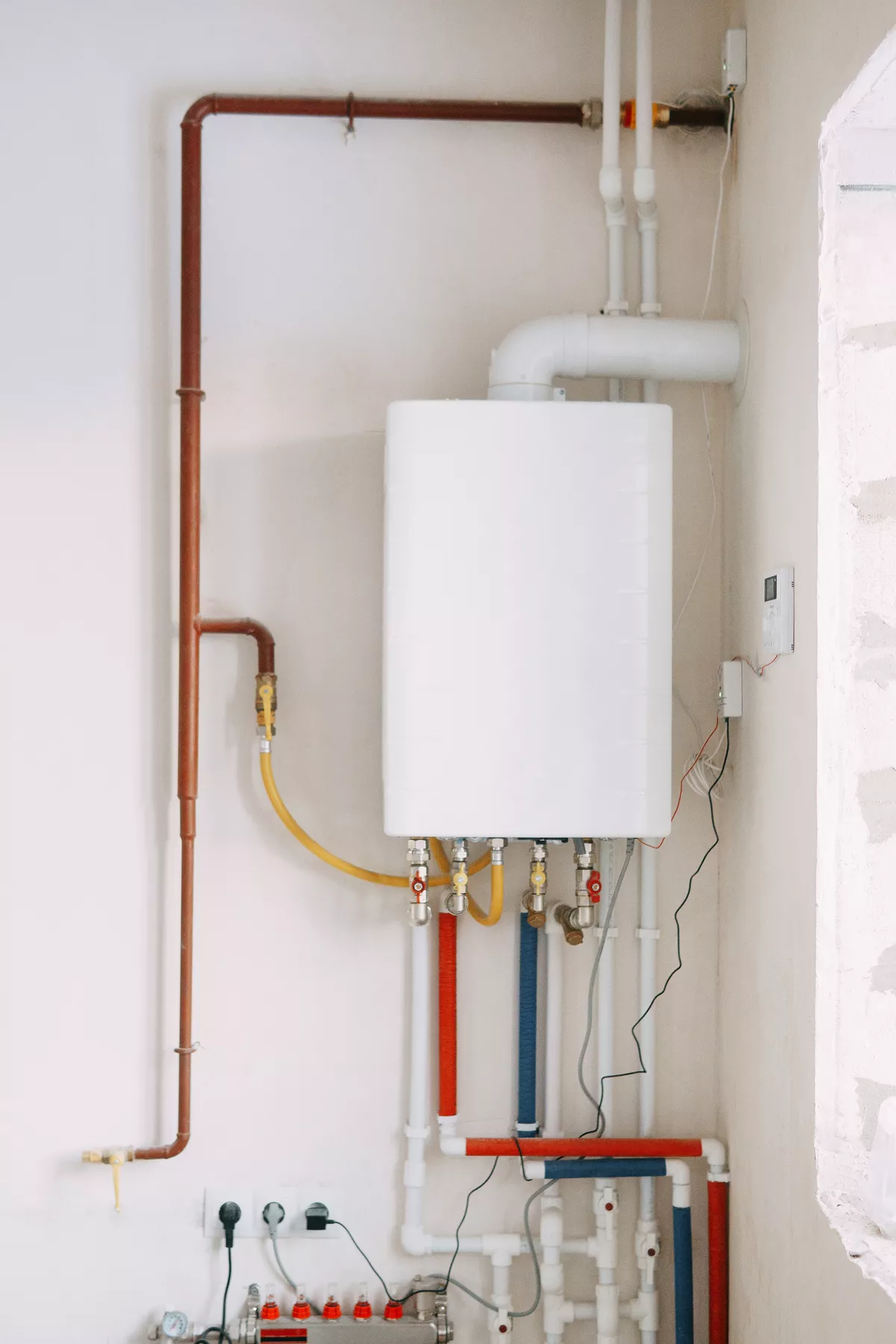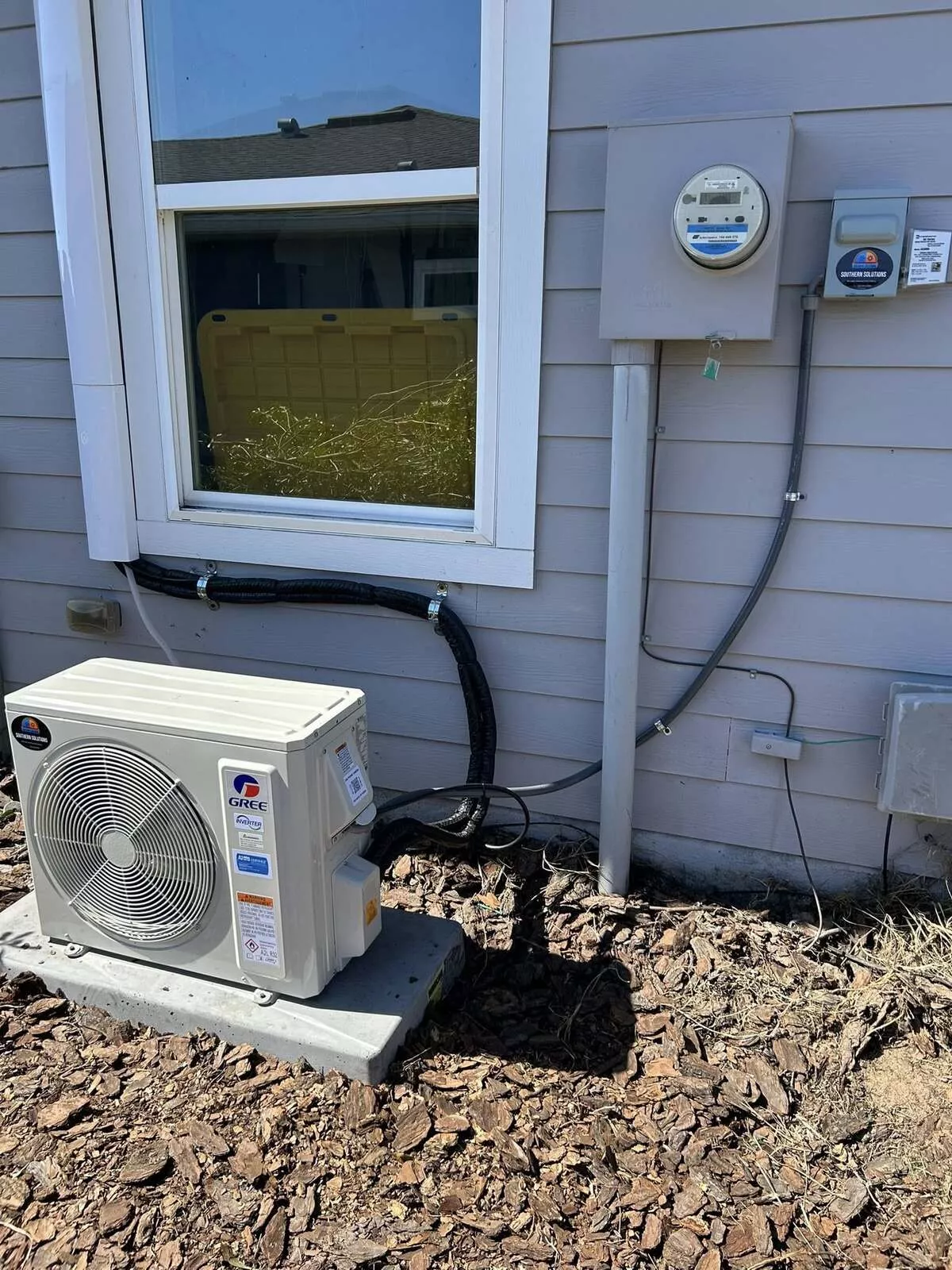
Auxiliary heat is your heat pump’s backup, engaging automatically when the heat pump alone cannot keep up. Emergency heat is the same hardware run manually, with the heat pump switched off entirely. Both are expensive because both bypass the thing that made your system efficient in the first place.
What the two settings actually are
The words are used interchangeably and they should not be. They describe the same equipment doing two different jobs.
Auxiliary heat (AUX) is automatic. The thermostat brings the backup in alongside the heat pump when the heat pump alone cannot meet demand — on cold nights, during defrost cycles, or when recovering from a setback. The heat pump keeps running and keeps contributing. Aux tops it up.
Emergency heat (EM HEAT) is manual. You select it, and the system stops using the heat pump entirely and heats on the backup alone. It exists for when the heat pump is broken or its outdoor unit is inaccessible — a failed compressor, a unit buried in snow, ice damage.
That is the whole distinction, and it has a practical consequence: emergency heat is almost always the more expensive of the two, because it discards the efficient source completely rather than supplementing it.
Why backup heat costs so much more
The economics come down to one difference, and it is worth being precise about it rather than quoting a multiplier.
Electric resistance heating — the strip heaters in most air handlers — converts electricity to heat at a fixed one-to-one ratio. One unit of electrical energy in, one unit of heat out. It cannot do better, and it cannot do worse.
A heat pump does not convert; it moves heat that already exists in the outdoor air. That is why it can deliver several units of heat for each unit of electricity it consumes, and why it is cheaper to run. That advantage narrows as the outdoor air gets colder — there is less heat available to move — but in the conditions Boulder spends most of its winter in, it is substantial.
So when the strips carry the house instead of the heat pump, you are paying for heat at the worst rate your system can produce it. Not slightly worse. Categorically worse, because you have dropped from moving heat to making it.
In a dual-fuel system the backup is a gas furnace rather than strips, which changes the arithmetic completely — the question there is whether gas or electricity is cheaper per unit of delivered heat at that moment, which depends on your rates. The bill shock described below is characteristically an electric-backup problem. In Boulder, Xcel Energy supplies both fuels, so both appear on one account, which makes the cause harder to see.
When auxiliary heat is supposed to run
Aux heat is not a fault. It is a designed part of the system, and there are three occasions when it engaging is entirely correct.
On genuinely cold nights, below the balance point where the heat pump alone can no longer meet the house’s heat loss. Boulder’s normal January low is 21.5 °F, per NOAA’s 1991–2020 normals for the Boulder station, so this happens routinely in midwinter.
During defrost cycles. When the outdoor coil frosts, the system temporarily reverses to melt it, which stops heating the house. Aux covers that gap deliberately so you do not feel a cold draught every time.
On recovery from a large setback. Raise the thermostat several degrees at once and the thermostat may decide the heat pump cannot close that gap fast enough and bring the strips in to help.
That third one is the most controllable, and it is the reason deep overnight setbacks can save less on a heat pump than on a gas furnace — the recovery can cost more than the setback saved.
When it is a fault
Here is the distinguishing test, and it is the thing T3’s homeowner needed and never got.
Ask what the outdoor temperature is when aux engages. That single observation separates normal from faulty better than anything else.
Aux at 10 °F is expected. Aux at 45 °F is not, and it points at one of three things:
- No outdoor lockout is configured, so nothing stops the strips coming on in mild weather. It is a setting rather than a broken part, and the first thing to check.
- The thermostat brings aux on whenever the setpoint is raised, regardless of outdoor temperature.
- The heat pump itself has failed or is impaired, and the strips are silently carrying the entire house.
That third case produces the most alarming bills, because everything appears to work. One homeowner on a trade forum described buying a house with an unfamiliar heat pump and watching the electric bill multiply several times over in a single month, with the aux indicator lit almost constantly and ice visible on one refrigerant line. The responses were immediate: the system was running on aux alone and needed a technician. Ice on the line is a defrost or refrigerant fault — the heat pump had effectively stopped contributing, and the strips were doing the whole job at the worst possible rate.
The figures in that thread are not reproduced here on purpose. They were one household’s bills, in another state, in another decade, on another tariff. The transferable part is the signature — a bill that multiplies rather than rises, an aux indicator that is on almost continuously, and ice that does not clear. Those three together mean the same thing anywhere.
The signs that distinguish a fault from normal operation:
- Aux engaging in mild weather, not just cold
- The aux indicator lit for most of the run time rather than intermittently
- Ice on refrigerant lines, or an outdoor coil that never clears
- The outdoor unit not running at all while the house still heats
- A bill that has multiplied rather than risen
Any one of those is worth a call. The last one on its own is worth a call, because by the time you notice it you have already paid for it.
Whether one has actually failed, versus simply working hard in the cold, is covered in what a heat pump is supposed to do on a cold Boulder morning.
The setting nobody configured
The first setting to check when aux runs more than it should is the outdoor lockout: whether one exists, and at what temperature it is set.
An outdoor lockout is a temperature threshold above which the thermostat is not allowed to energise the strips. Set it sensibly and the expensive backup simply cannot come on in mild weather. The part required is inexpensive, and on many thermostats the capability is already present and merely unconfigured.
Whether your system has one is a question for the installer’s commissioning record. If you don’t have the commissioning record, a technician can check whether the lockout is configured during a diagnostic visit.
Can you run emergency heat all night?
Yes, it will work, and it will be expensive. That is the honest answer.
Emergency heat is not dangerous to run. It is a resistance heater or a gas furnace doing what it was built to do. The drawback is entirely economic — you are heating on the most expensive source your system has, with the efficient source switched off.
The case for using it is narrow and real: the heat pump has clearly failed, or the outdoor unit is buried, iced or damaged and you want to stop it trying. In those situations emergency heat is the correct setting and it is what it is for.
The case against leaving it on is that people switch it on during a cold snap, the house warms up, and it stays selected for weeks. The system never uses the heat pump again until someone notices the bill. If you switch to emergency heat, set a reminder to switch back.
And if you find yourself reaching for it because the house is not warm enough on ordinary cold days, that is not a reason to run emergency heat. That is a symptom to investigate.
Where this stops, and why
Reading your thermostat and noting outdoor temperatures is yours. The equipment is not, and the reason is specific.
Electric resistance strips are high-current heating elements, and a breaker that trips on them is an electrical fault to diagnose, not to keep resetting. The outdoor unit carries mains voltage and a capacitor that holds a charge after power is removed. The refrigerant circuit is sealed and pressurised, and whether it is correctly charged can only be established by measuring pressures and temperatures against the manufacturer’s chart for that model at that outdoor condition — which matters here because an undercharged heat pump and a heat pump working hard in the cold look identical from indoors.
Configuring lockout temperatures and staging is also not a homeowner adjustment on most systems, but it is something you can ask for by name, which is the point of knowing it exists.
In a dual-fuel house the backup is a gas furnace, which brings combustion safety with it. If a carbon monoxide alarm sounds, get everyone out of the building and call emergency services before anything else. The furnace safety devices and why defeating one is dangerous are covered in the safety switches your furnace uses.
What a correct diagnosis looks like
For aux heat running more than it should, a correct diagnosis answers three questions with evidence.
At what outdoor temperature is backup currently configured to engage? This is a setting, and a technician should be able to tell you what it is set to and what it should be for your equipment and rates. If the answer is that there is no lockout, that is the finding.
Is the heat pump itself delivering what it should? That means measured refrigerant performance against the manufacturer’s chart at the outdoor conditions on the day, and confirmation that defrost cycles initiate, complete and terminate correctly — not a verdict based on how the unit sounds.
What is the balance point for this house? The outdoor temperature below which the heat pump alone cannot meet the load, from a load calculation and the equipment’s capacity data at low temperature. Without it, nobody can say whether the backup running is appropriate or excessive.
A correct fix changes the configuration or repairs the fault. Replacing strip heaters, or advising you to raise the thermostat less aggressively, without establishing any of the three numbers above, is not a diagnosis.
Frequently asked questions
Does auxiliary heat run your bill up? Yes, substantially. Electric resistance backup produces one unit of heat per unit of electricity, while a heat pump delivers several times that by moving heat rather than making it. When aux carries the house, you are paying the worst rate your system can produce heat at.
What is the difference between auxiliary and emergency heat? Auxiliary heat engages automatically alongside a running heat pump when it cannot keep up. Emergency heat is selected manually and switches the heat pump off entirely, heating on the backup alone.
What is the drawback of emergency heat? Cost. It is not unsafe, but it discards the efficient heat source completely. The costly mistake is switching it on during a cold snap and leaving it selected for weeks.
Can I run emergency heat all night? Yes, and it will work. It will also be expensive. If you are using it because the house will not warm on an ordinary cold night, the underlying problem is what needs attention.
Why does my aux heat keep coming on in mild weather? The three things to check are whether an outdoor lockout is configured, whether the thermostat calls for backup whenever the setpoint is raised, and whether the heat pump is impaired so the backup is carrying the load. Aux at 45 °F is not normal.
Is it normal for the aux light to come on during defrost? Yes. Defrost temporarily stops the system heating the house, and backup covers that gap deliberately.
What is the cheapest way to heat a home? For most Boulder homes on a working system, the heat pump itself in moderate conditions, with backup limited to the coldest hours. The cheapest source at any given moment depends on your equipment and your utility rates, which is why the balance point matters.
Talk to us
Boulder HVAC Pros works across Boulder and the surrounding communities. If your aux light is on more than it should be, or your bill has jumped, call (720) 764-0399, or see heat pump repair in Boulder.
For how this fits into heating a Boulder home as a whole, see the full guide to winter heating in Boulder. For what drives the rest of a winter bill, see winter heating costs and safety in Boulder, and for what rebates remain on a heat pump, our rebates guide.
Sources
- Xcel Energy, residential heat pumps (cold-climate definition, Boulder gas and electric supply) — https://co.my.xcelenergy.com/s/residential/heating-cooling/heat-pumps
- NOAA National Centers for Environmental Information, U.S. Monthly Climate Normals 1991–2020, station USC00050848 (January normal low) — https://www.ncei.noaa.gov/access/services/data/v1?dataset=normals-monthly-1991-2020&stations=USC00050848&dataTypes=MLY-TMIN-NORMAL&startDate=2010-01-01&endDate=2010-12-31&format=json
- HVAC-Talk, “High Electric bill due to Heat pump” (started 2011-01-24) — https://www.hvac-talk.com/threads/738561
- HVAC-Talk, “Auxiliary Heat running too much” (started 2012-12-12) — https://www.hvac-talk.com/threads/auxiliary-heat-running-too-much.1220051/
- City of Boulder, list of Boulder utilities — https://bouldercolorado.gov/list-boulder-utilities