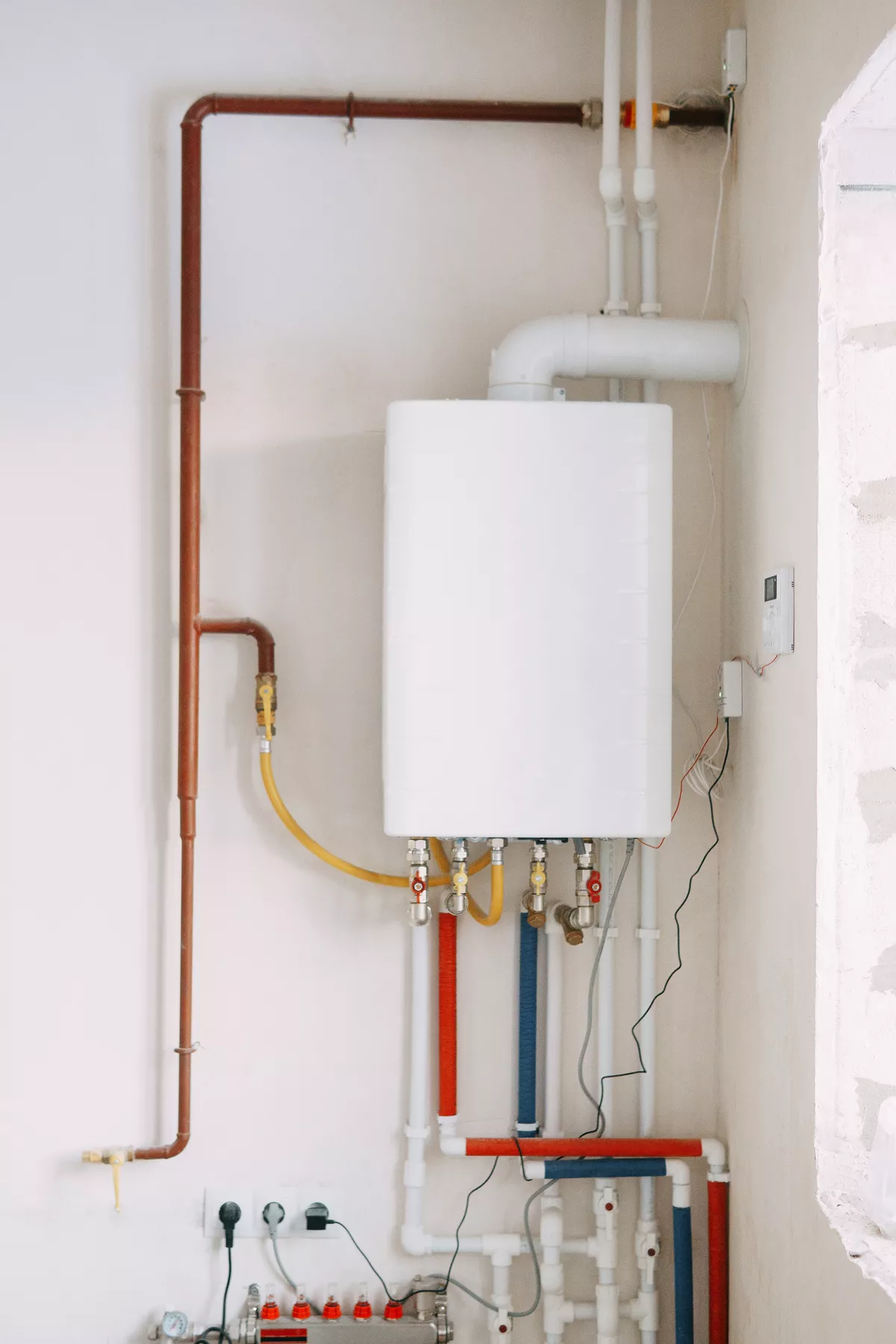
Check the thermostat and the filter first — both take minutes and need no tools. Then read the error code on the control board if it can be seen through the blower door window. The power switch, the breaker and the blower door are for the technician. If the furnace only runs after you cut the power and restore it, that is not a fix.
The power-cycle reset, and why it is not a fix
The pattern this section is about: the thermostat is calling, the furnace does nothing, the power to the furnace is cut and restored, and it runs for a few minutes before stopping again.
Here is what that power cycle is actually doing. It is not restarting a stalled machine. It is clearing a lockout.
A furnace that has shut itself down and refuses to retry may have entered a lockout state: the control board attempted the start sequence, one of its checks failed, it tried again a set number of times, and then it stopped trying and latched the fault. Cutting power clears that latch. The board forgets, and runs the sequence again from the top — in the same conditions that made it stop.
So the few minutes of heat is not the furnace recovering. It is the furnace getting far enough through the sequence to light, then hitting the same problem again. Every cycle you force is a cycle where something the manufacturer installed to stop a dangerous or damaging condition is being overruled by hand.
And the diagnosis may already be available. Modern furnaces carry a status LED or a small seven-segment display on the control board, visible through a window in the blower door, with a legend printed inside the door translating the code. Before you reset anything, read it.
What actually happens when a furnace starts
This is worth understanding because it turns “it won’t turn on” into “it stopped at a specific step,” which is a far more answerable question.
Goodman’s installation manual for its GM9S8/GC9S8 gas furnaces sets out the sequence. Paraphrased, with the checks that stop the sequence highlighted:
- The thermostat contacts close, and the control board receives 24 volts on its heat call terminal.
- The board runs a self-check.
- The board verifies the limit switch is closed. If it is open — because the furnace is still too hot from a previous cycle, or airflow is restricted — nothing further happens.
- The board verifies the pressure switch circuit is open at rest. This proves the switch is not stuck closed.
- The board checks the gas valve circuitry.
- The induced draft blower is energised.
- The pre-purge period begins once the pressure switch is detected closed — that is, once the inducer proves it is actually moving exhaust. A blocked flue means this never happens, and the sequence stops here.
- After the pre-purge, the igniter is energised.
- After the igniter warm-up, the gas valve opens.
- The igniter is de-energised as soon as flame is sensed. If flame is not sensed, the gas valve closes within seconds.
- About 30 seconds later, the indoor blower comes on at heating speed.
Note how many of those steps are the furnace proving something to itself before it is willing to continue. That is the whole design. A furnace that will not turn on may have failed one of those proofs and correctly declined to proceed.
What to check, in order
The first three checks are safe, require no tools, and involve no gas, combustion or mains voltage. The fourth is what to leave to the technician.
1. Is the thermostat actually calling for heat?
Set to Heat, not Cool, Off or Auto-changeover sitting in cooling. Target temperature set clearly above the current room reading — a degree is not always enough to trigger a call. Then check the batteries; a thermostat with dying batteries can display normally and still fail to close the circuit.
If the thermostat display is blank, or the furnace never responds to it while running fine on its own, the fault may be in the thermostat or its wiring rather than the furnace. Those cases are covered in Thermostat or Furnace? How to Tell Which One Is Causing the Problem.
2. The filter
A filter loaded enough to restrict airflow can leave the furnace too hot from its last cycle for the limit switch to close, which stops the sequence at step 3. Pull it and look at it. If light does not pass through, replace it.
3. Read the code the board is showing, if you can see it
This is a high-value minute.
If the status LED or seven-segment display on the control board can be seen through the window in the blower door, note what it is doing — the number, or the flash pattern and its rhythm. Do not remove the door to see it. The legend that translates the code is printed inside the door, and the code can name the failed step: pressure switch, limit switch, flame sense, ignition lockout.
You are not being asked to act on it. You are being asked to know it, because a homeowner who can say “it is showing a pressure switch fault” gets a materially better service call than one who can say “it won’t turn on.”
4. What to leave for the technician
The furnace has its own power switch, which can look like an ordinary light switch, and a breaker at the panel. Both are electrical. So is the blower door: Goodman’s manual says the furnace “is equipped with a blower door interlock switch which interrupts unit voltage when the blower door is opened for servicing. Do not defeat this switch.” If the thermostat and the filter check out and the furnace still does nothing, tell the technician what you checked and what the board showed, and leave the switch, the breaker and the door to them. A breaker that has tripped is reporting an electrical fault, and finding it is their job.
6. Whether other gas appliances are working
If the furnace reaches ignition and fails, and your gas range and water heater are also not working, the issue may be gas supply rather than the furnace. That is a question for the utility. In Boulder, gas is supplied by Xcel Energy.
If you smell gas, do not investigate. The City of Boulder’s instruction is to leave the area immediately, call 911, and then contact Xcel Energy.
Where this stops, and why
The six checks above are yours. What comes next is not, and the reason is specific.
Every remaining step in the start sequence involves the components that make and contain a fire: the pressure switch proving the exhaust path, the igniter, the gas valve, the burners, the flame sensor, and the limit and rollout switches watching all of it. Those are not merely awkward to reach. They are the devices whose job is to refuse to continue when something is wrong — which means the failure mode of working on them is a furnace that runs while a hazard it was designed to catch goes uncaught.
That is why a repeated reset is worse than no action at all. It produces heat, which feels like success, while the condition that stopped the furnace is untouched and unreported.
The full account of what each safety device protects against — and why making one stop tripping is the wrong goal — is in the safety switches your furnace uses, and why defeating one is dangerous. If your furnace tries to light and fails rather than never starting, the ignition side is covered in the sequence a technician follows when a furnace will not ignite.
One thing overrides all of it. If a carbon monoxide alarm is sounding, get everyone out of the building and call emergency services before doing anything else on this page.
What a correct diagnosis looks like
For a furnace that will not start, a correct diagnosis names the step that failed, not just the part that was replaced.
A technician should be able to tell you which check in the start sequence the furnace did not get past, and how they established it — the diagnostic code the board reported and what it maps to in that manufacturer’s documentation, and the electrical measurement that confirmed it. “It needed a new part” is an outcome, not a diagnosis.
Where the failed step was a safety proof, the correct fix addresses what made the proof fail. If the pressure switch did not close, the question is whether the inducer is working and whether the flue is clear — not whether the switch can be replaced with one that closes more easily. If the limit switch was open, the question is what made the furnace too hot, and airflow is the first thing to check.
And if the answer you are given is that the furnace was reset and seems fine now, that is the same non-repair you were performing yourself. Ask what caused the lockout.
Frequently asked questions
What would cause my furnace to not kick on? The homeowner checks are a thermostat that is not calling for heat and a loaded filter, which can leave the limit switch open so the sequence never begins. Beyond those, a furnace power switch or breaker that is off, an unseated blower door, or the control board holding a lockout after a failed start sequence are for a technician to check.
Is there a reset button on a furnace? Some furnaces have one, and cutting power has the same effect. What it does is clear the control board’s lockout so it will attempt the start sequence again — it does not repair whatever caused the lockout. If a reset is needed repeatedly, the reset is not the answer.
How do I force my furnace to start? Repeatedly forcing a start is the thing to avoid. Each forced cycle overrides a safety decision the furnace made. Read the diagnostic code instead, and work through the thermostat, power, door and filter checks above.
Why is my furnace not responding to the thermostat? Either the thermostat is not sending a heat call — wrong mode, too small a temperature difference, dead batteries, or a wiring fault — or the furnace is receiving the call and stopping at one of its internal checks. The control board’s diagnostic code distinguishes the two.
Why is my furnace running but not producing heat? That is a different fault from one that will not start, and can point at ignition, flame sensing, or the fan being set to run continuously. It is covered separately in Furnace Blowing Cold Air: The Diagnostic Order.
My furnace works for ten minutes after I flip the power switch, then stops. That is a lockout being cleared and re-triggered. Something is failing partway through each cycle — such as flame sensing, ignition, or a venting problem tripping a safety. Stop resetting it and have the fault read.
How long should a furnace take to start? The sequence includes a deliberate pre-purge before ignition and roughly a 30-second delay before the indoor blower runs, so a short pause between the thermostat calling and warm air arriving is normal.
Talk to us
Boulder HVAC Pros works across Boulder and the surrounding communities. If your furnace will not start, or only runs after a reset, call (720) 764-0399, or see heating service in Boulder.
For how this fits into heating a Boulder home generally, see the full guide to winter heating in Boulder.
Sources
- Goodman, Installation Instructions, GM9S8 / GC9S8 gas furnaces (gas heat sequence of operation, blower door interlock, limit and pressure switch verification) — https://documents.alpinehomeair.com/product/goodmangm9s8gc9s8installationmanual.pdf
- National Fire Protection Association, Carbon Monoxide safety — https://www.nfpa.org/education-and-research/home-fire-safety/carbon-monoxide
- City of Boulder, list of Boulder utilities (gas supplier and gas smell instruction) — https://bouldercolorado.gov/list-boulder-utilities