Two heat pump quotes for the same Boulder house can be far apart, and neither has to be wrong. A heat pump has more moving parts in the decision than an air conditioner: it has to heat through a Front Range winter, it may need backup heat, it draws power the house may not have spare, and it can be ducted, ductless or a mix. Each of those choices changes the number.
This post does not give prices: no federal agency or utility page we fetched publishes a range. It explains what goes into a heat pump quote, using guidance from the U.S. Department of Energy (DOE), ENERGY STAR, and the Building America Solution Center (BASC), which Pacific Northwest National Laboratory runs for DOE. For the general method of comparing written estimates side by side, see how to compare heating repair quotes. For the air conditioner version of this question, see what changes an AC replacement quote.
Why heat pump quotes differ more than AC quotes
An air conditioner replacement swaps one cooling machine for another. A heat pump takes on the heating as well, so the quote has to answer questions an AC quote never asks. The DOE Energy Saver Guide lists what a contractor should provide before a heating or cooling replacement, including “heating and cooling system options,” “required permits and building code compliance,” and “calculations for proper sizing for your home.”
For a heat pump, the options branch five ways: the model, the backup heat, the electrical capacity, ducts or ductless, and the refrigerant lines. Two contractors who answer those differently are quoting two different systems.
Is a cold-climate model worth it in Boulder?
This is the first fork in most heat pump quotes here. DOE’s guide says “cold-climate air-source heat pumps are designed specifically for cold climates.” A standard model and a cold-climate model can look alike on paper and be priced differently, because they are not built to do the same job in January.
ENERGY STAR’s air-source heat pump page says its certification “requires third-party verified performance for low temperatures, testing ASHPs down to 5°F.” It adds that a cold climate unit “will continue working at temperatures below 5°F, but pairing it with a back-up energy source will heat your home the most efficiently when temperatures are even lower.”
BASC’s guide to traditional split heat pumps explains why the distinction matters. It says “the heating efficiency of standard, central air-source heat pumps drops when outside temperatures drop below about 35°F,” and that “in climate zones 4 and up, a cold-climate-specific heat pump can be installed.” It describes cold-climate models as having “greater capacity and efficiency at colder temperatures.”
Ask each contractor which category the proposed unit is in, and its rated heating output at low temperatures. The cold-climate heat pump guide goes further into the ratings, and how heat pumps handle Boulder’s cold weather covers performance in a cold snap.
Backup heat: electric strips or a furnace
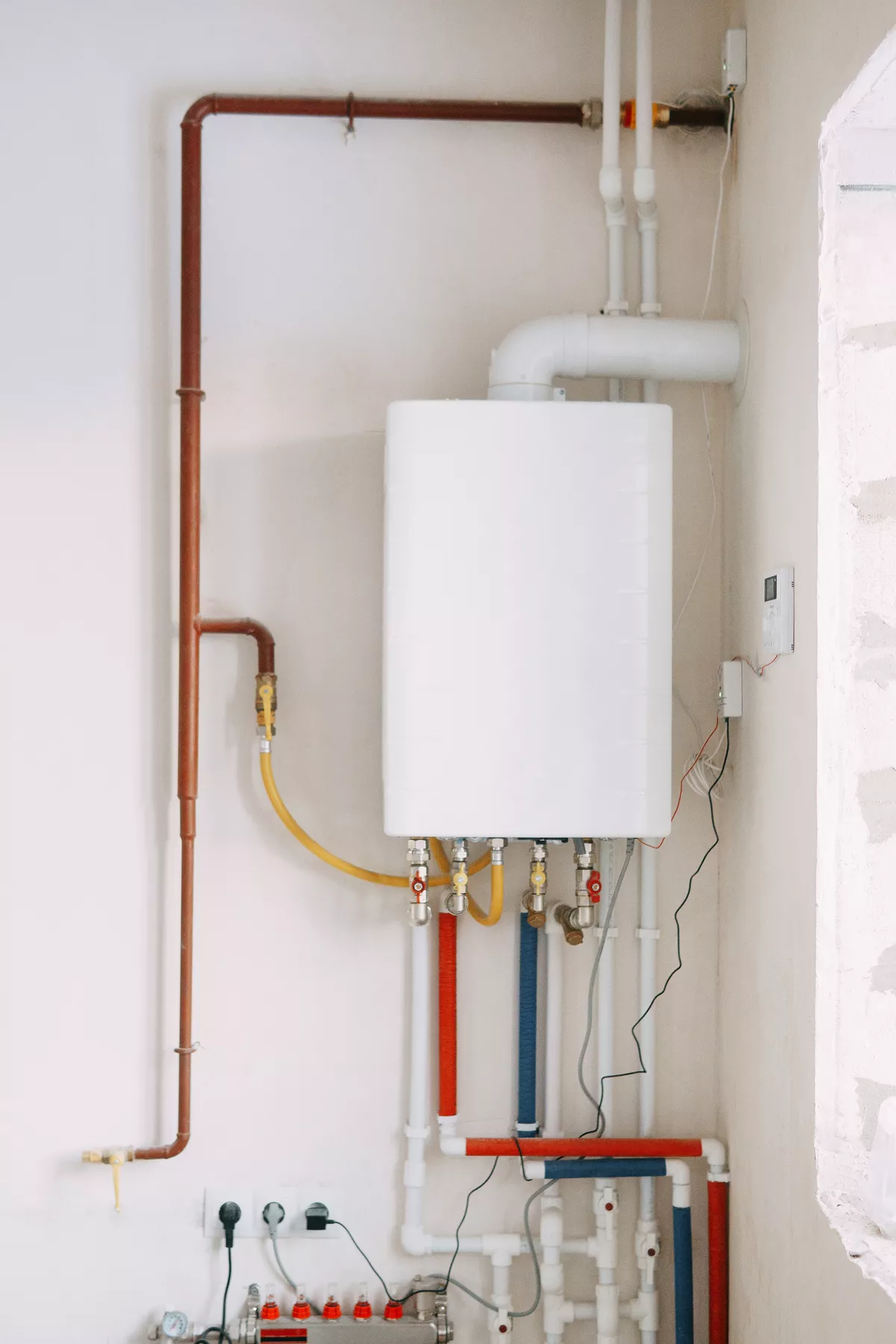
Whatever the model, the quote has to say what happens on the coldest nights. BASC says “air-source heat pumps can be all-electric or dual-fuel systems.” It says all-electric systems “come equipped with electric resistance strip heaters for supplementary heat if needed,” while dual-fuel systems “combine the air-source heat pump with another source of supplementary heat, such as a gas furnace.”
These are different jobs with different line items. An all-electric system needs its strip heat sized and wired. A dual-fuel system keeps or adds a furnace and needs controls to switch between the two. ENERGY STAR says that if you have “a relatively new furnace with an older central AC,” a certified heat pump “creates a dual-fuel system for a modest extra cost over an AC system.” The dual-fuel heat pump guide sets out that choice.
Backup heat also drives running cost. DOE’s guide says not to set back a heat pump’s thermostat manually “if it causes backup electric-resistance heating to come on,” because “this type of heating is more expensive.” BASC notes that “some researchers suggest central-air-source heat pumps may need to be slightly oversized, to enable the system to provide enough warmth without turning on the backup heat.” How much a house leans on strip heat is a design question, and what auxiliary heat costs to run explains the bill side.
ENERGY STAR puts the backup decision with the installer: “A good contractor will work with you to determine the size and potential integration with a back-up heating system that will work best for your home.”
Is the electrical panel big enough?
A heat pump and any electric strip backup add electrical load, and whether the house can carry it is easy to leave out of a quote.
BASC’s ductless mini-split guide lists, as part of the installation, to “assess the home’s electrical system and perform any upgrades needed to accommodate the heat pump and any auxiliary electric heating.” That covers both halves of the load: the heat pump and the backup.
The size of the system changes the answer. BASC says some small single-zone ductless units run on 115/120V, and that “their modest current draw allows them to be installed into lightly loaded existing 15A and 20A 120V circuits.” It adds that putting several such units each on their own branch circuit “could allow a home with no space in the circuit breaker panel and no room to install ducts to switch from electric baseboards or cadet wall heaters to heat pumps.” A whole-house ducted system with strip heat is a different electrical job.
Federal rules have treated this work as part of the cost of the equipment. The IRS page on the Energy Efficient Home Improvement Credit counted “panelboards, sub-panelboards, branch circuits, and feeders” as electrical components “needed to support” qualifying property. That credit has ended, but electrical work can be part of a heat pump job. Ask each contractor whether the panel was checked and whether electrical work is in the price. It is professional work only.
Ducted, ductless or both
The second big fork is how the heat reaches the rooms. ENERGY STAR says a heat pump “can be installed and connected to the conventional forced-air ductwork system that is typical of most American homes.” For homes without ducts, its ductless heating and cooling page describes ductless systems as “specifically designed for homes or sections of homes that do not have ductwork.”
A ductless quote is driven by how many indoor units it includes. BASC says “it is generally not recommended to connect more than three indoor units to one outdoor unit,” and that adding heads for small rooms means “the extra units would add considerably to the overall cost of the system.” A house covered room by room can need several outdoor units as well.
So a ducted and a ductless quote may be buying very different amounts of equipment. The guide to ductless mini-splits explains how those systems are laid out.
Can the existing ducts carry heat pump air?
If the quote reuses ducts, the ducts themselves become a cost question. BASC says “ducts may need to be larger for a heat pump than for a gas or oil furnace because furnaces generally deliver air to the living space at between 130°F and 140°F.” It says “heat pumps provide air at about 80°F to 115°F so more air needs to be delivered to provide the same amount of warmth.”
A duct system sized for a furnace may therefore limit what heat pump can be fitted to it. ENERGY STAR’s Bid Comparison Checklist has a question for exactly this: “Will you test to determine the maximum system size that can be installed with my existing ductwork?” It also asks, “Will you check for damage to existing ductwork and duct insulation, and make repairs if necessary?”
One quote may include duct changes while another assumes the ducts are fine. Duct work is a professional job.
New or reused refrigerant lines
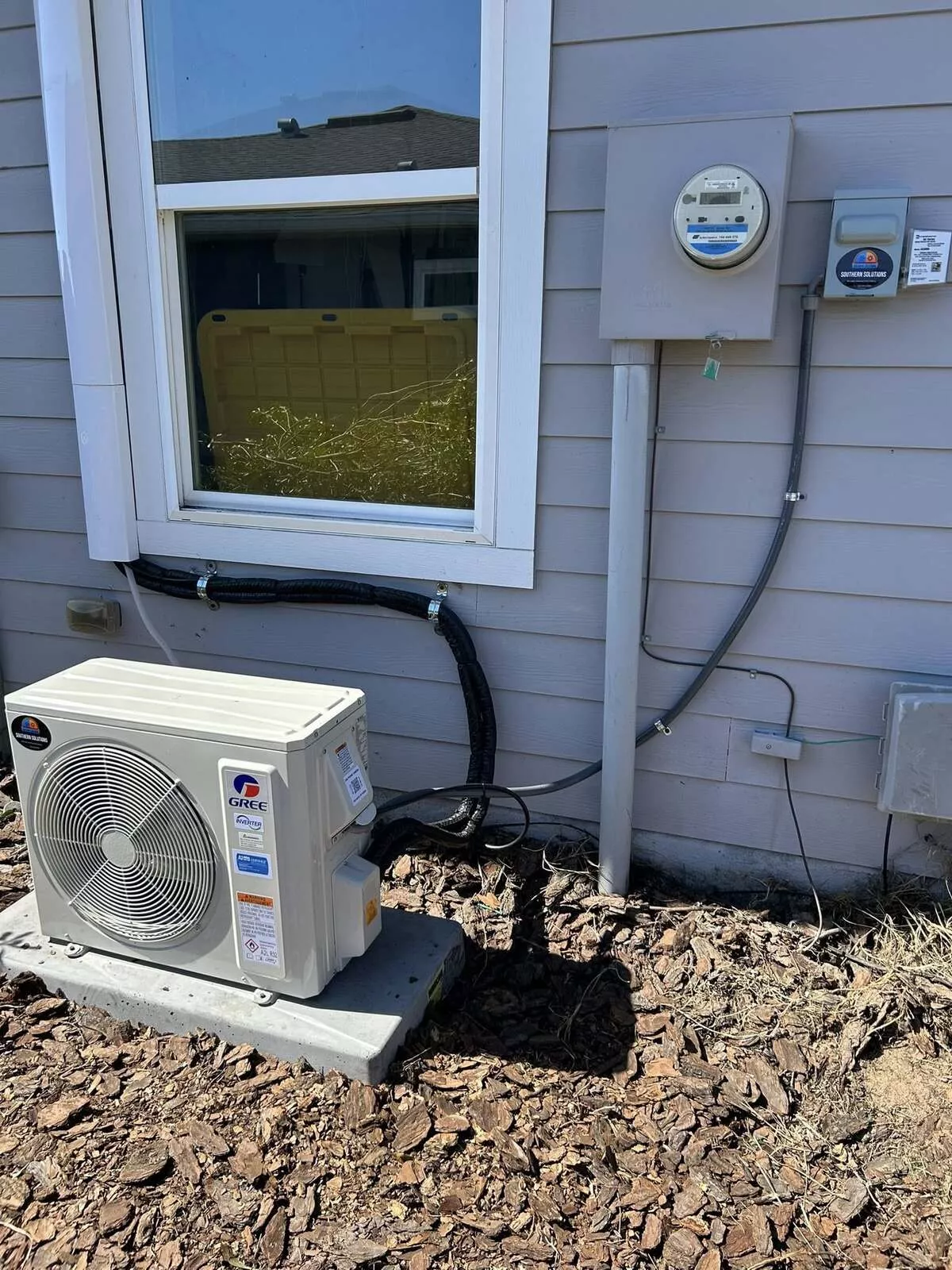
The refrigerant line set runs between the outdoor unit and the indoor unit. Whether it is replaced or reused, and how long it is, both show up in the price.
ENERGY STAR’s checklist asks, “Will you install new refrigerant lines rather than reusing existing lines?” BASC’s traditional split guide explains why the work matters: “the lines should be cleared with a vacuum pump to remove pockets of air before charging the lines with refrigerant,” and “any water or water vapor in the lines will mix with the oil used for lubricant in the refrigeration system creating an acidic sludge that eats away at compressor windings and clogs valve openings.”
Length changes the charge. BASC’s ductless guide says “refrigerant may need to be added if the line set length(s) are longer than the factory charge allows.” Routing changes the finish work: ENERGY STAR says that by running the line set “through closets, basement/attic stairways, attached garages, basements, crawlspaces, or attics, you can minimize the need to patch or paint walls and ceilings.” A quote with long, hidden line runs and one with a short, exposed run are different jobs.
Refrigerant handling is professional work only.
What should a heat pump quote show in writing?
Size first. ENERGY STAR’s checklist says the contractor “should calculate your home’s heating and cooling loads using the Air Conditioning Contractors of America (ACCA) Manual J or equivalent.” BASC says to “properly size the heat pump for the design heating or cooling load of the home, whichever is greater,” using Manual J for the load and Manual S to choose the equipment. The Manual J guide explains what that calculation involves.
Then installation quality. ENERGY STAR’s checklist warns that “improper installation can reduce performance by as much as 30%.” It asks for “documentation of installation procedures, including Manual J calculations, AHRI certificate, and records of any measurements or testing,” and asks, “Will you confirm proper levels of refrigerant and airflow across the coil?”
A heat pump quote that can be compared line by line names:
| Line on the quote | Why it moves the number |
|---|---|
| Model and whether it is cold-climate | Different equipment, per ENERGY STAR and BASC |
| Backup heat type | Strip heat wiring, or a furnace and controls |
| Electrical work | BASC: upgrades “needed to accommodate the heat pump and any auxiliary electric heating” |
| Ducted, ductless, or both, and how many indoor units | BASC: extra units add “considerably” to cost |
| Duct testing and changes | BASC: ducts “may need to be larger” for a heat pump |
| Line set new or reused, and its length | ENERGY STAR checklist; BASC on charge and moisture |
| Load calculation | ENERGY STAR and BASC: Manual J |
For choosing who to ask, how to choose a heating contractor covers that step.
Where rebates fit on a heat pump quote
Incentives change the net figure, not the installed cost, and they change often. The federal credit is the clearest case. The IRS page says the Energy Efficient Home Improvement Credit “is allowed for qualifying property placed in service on or after Jan. 1, 2023, and before December 31, 2025.” A quote dated 2026 should not net out that credit.
Utility and county programmes are a separate question, with their own amounts, deadlines and installer requirements. We do not restate them here. Boulder heating rebates and credits lists what is available, with the source and date for each figure. Ask every contractor to show the installed price and each incentive as separate lines.
What can a homeowner do?
Once a heat pump is in, the homeowner part is four things: the filter, the clearances, the thermostat and the carbon monoxide alarm.
- Filter. ENERGY STAR says heat pump filters “should be cleaned when visibly dirty or when indicated by the filter light.” DOE’s guide says to “clean or change filters once a month or as needed.”
- Clearances. ENERGY STAR says to “prioritize unobstructed airflow by avoiding tight placements with shrubs, structures, etc.” Keep plants, stored items and drifted snow clear of the outdoor unit.
- Thermostat. DOE says to use a thermostat “with functions suitable for a heat pump,” and not to set it back manually if that brings on backup electric-resistance heat.
- CO alarm. ENERGY STAR says a heat pump has “no combustion,” but a dual-fuel system with a gas furnace, or a gas water heater, still means the house needs a working carbon monoxide alarm. If it sounds, leave the building and call 911 from outside.
Anything past those four, including wiring, refrigerant, ducts and the inside of the equipment, is work for a heating and cooling professional. For a whole-house look at insulation, air sealing and equipment together, see the Boulder home energy audit guide.
Boulder HVAC Pros offers heat pump installation in Boulder, Lafayette, Louisville, Longmont and the surrounding area, with an itemised written quote. Call (720) 764-0399.
Frequently asked questions
What is the typical cost of installing a heat pump?
No federal agency or utility page we fetched publishes a figure, so we give none. ENERGY STAR says heat pumps “can be more expensive to purchase up front,” and that “the cost difference will be paid back over time through lower energy bills.”
What size heat pump do I need?
That comes from a load calculation, not floor area. ENERGY STAR’s checklist says to use ACCA “Manual J or equivalent,” and BASC says to size for the heating or cooling load, “whichever is greater.”
What is the downside to a heat pump?
BASC says standard models lose heating efficiency “below about 35°F,” so “a backup heat source is often needed.” DOE adds that backup electric-resistance heat “is more expensive.” A cold-climate model narrows that gap.
Is there a federal tax credit for installing a heat pump?
Not for new work. The IRS says the credit applied to property “placed in service on or after Jan. 1, 2023, and before December 31, 2025.” Current local rebates are listed in our Boulder heating rebates guide.
Is it okay for a heat pump to run all night in winter?
Yes. BASC says inverter compressors can “ramp down to as little as 10% of rated capacity.” DOE says not to set the thermostat back manually if that brings on backup electric-resistance heat, which costs more.
Last verified: October 16, 2026.
Related reading and services: Heat Pump Installation · HVAC services in Boulder, CO · Choosing a Cold-Climate Heat Pump for Boulder