Search for “repair or replace furnace” and you will find the same few rules repeated: replace it at 15 or 20 years, replace it when a repair costs more than half a new unit, or apply the “$5,000 rule”. None of them comes with a published source, and none of them mentions the rules that actually changed for gas furnaces in 2026 or the federal standard due in 2028.
This guide takes the decision in two parts. The first is what your furnace is: how old, how efficient, and what actually failed. The second is the calendar: four dates, each checked against its primary source, that change what a replacement furnace has to be and what it can earn in rebates. Where a statement depends on something that could still change, it is dated.
Part one: what your furnace is
How old it is
The furnace’s rating plate carries its model and serial number, and the manufacturer can date the unit from them. Goodman’s installation manual for one of its furnace lines tells technicians to “provide the furnace model, manufacturing, and serial numbers” when ordering parts. Those numbers are also the start of any repair-or-replace conversation, because they identify the specification sheet for that exact model.
Age on its own is guidance, not a verdict. ENERGY STAR’s own guidance on replacement puts it this way: it may be time to call a professional if “your furnace or boiler is more than 15 years old”. The same page lists the other signals it considers: equipment that “needs frequent repairs” while “energy bills are going up”, rooms that are too hot or too cold, and a noisy system. It notes that several of those can come from duct problems or inadequate insulation rather than the furnace itself: leaky ducts can cause dust and humidity problems, and a noisy system can point to “an undersized duct system”. Those are reasons to check the ductwork before blaming the furnace. A 15-year-old furnace is a prompt to look closely, not an instruction to replace it.
How efficient it is
Efficiency for a gas furnace is stated as AFUE, annual fuel utilization efficiency. The federal minimum for non-weatherized gas furnaces, the indoor units this guide is about, has been 80 percent AFUE since November 19, 2015, according to DOE’s own table of current standards. A furnace at or near that level is non-condensing. DOE’s rule treats 90 percent AFUE and above as condensing levels. A condensing furnace extracts enough heat that water condenses out of the exhaust and has to be drained away.
Which one you have matters twice. It sets how much a new furnace could save on fuel, and it decides whether a replacement qualifies for Xcel’s furnace rebate, covered in part two. ENERGY STAR’s replacement page describes an ENERGY STAR furnace as “15% more efficient than a conventional furnace”. The saving on your own bill depends on what you have now and what you replace it with, which is why the AFUE of the existing unit is worth finding before any quote.
What actually failed
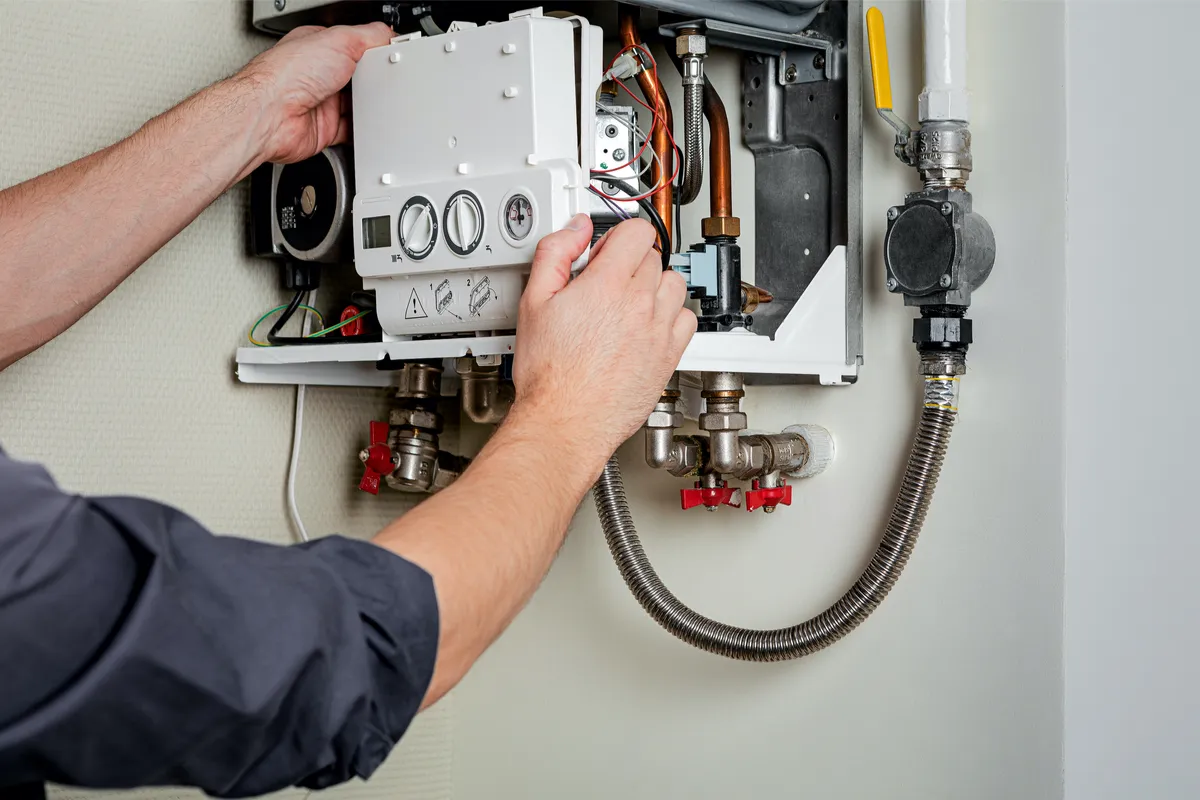
A furnace is a set of parts, and they do not carry the same weight. Goodman’s manual lists its functional parts: the gas valve, blower motor, igniter, flame sensor, pressure switch, limit switches, control module, inducer, and the heat exchanger. All but the last are components that can be replaced on their own. A failed igniter or flame sensor is a repair on a furnace that is otherwise sound. The order in which to diagnose them is in why a furnace won’t ignite, and what the safety switches are protecting against is in how a furnace’s safety switches work.
The heat exchanger is different. It is the part that keeps combustion gases separate from the air in the house. ENERGY STAR notes that “a dirty burner or cracked heat exchanger causes improper burner operation”, and the manufacturer warns that overfiring “can result in premature heat exchanger failure”. A heat exchanger finding is a safety finding. It is the point at which the question stops being about cost. If a carbon monoxide alarm is involved, stop reading and follow what to do when a carbon monoxide alarm goes off.
Part two: the calendar
Four dates bear on a replacement decision made this winter. Each is stated here with what it does and, just as importantly, what it does not do.
January 1, 2026: Colorado limits emissions from new furnaces
Colorado’s HB23-1161, approved on June 1, 2023, provides that on and after January 1, 2026, a person shall not sell, lease, or offer for sale or lease in Colorado “any new water heater or fan-type central furnace unless the emissions of the product do not exceed certain limits”. It governs what may be sold or leased. It does not require anyone to replace a furnace that is already installed. What it means for a replacement is that the new furnace will be one that meets the state’s limits.
July 31, 2026: ENERGY STAR moves to 97 percent
The ENERGY STAR Furnaces Version 5.0 specification took effect on July 31, 2026. Under it, a gas furnace certified for the U.S. North, a region that explicitly includes Colorado, must reach 97.0 percent AFUE to carry the ENERGY STAR label.
This is a label, not a legal minimum. A furnace below 97 percent can still be sold and installed. It simply cannot carry the ENERGY STAR mark in this region. Where the label matters is in programmes that ask for it, and in comparing units on a like-for-like basis.
December 18, 2028: the federal floor rises to 95 percent
In a final rule published on December 18, 2023, DOE raised the minimum efficiency for non-weatherized gas furnaces to 95 percent AFUE. Compliance “is required on and after December 18, 2028”, and the standard applies to furnaces “manufactured in, or imported into, the United States” from that date. In DOE’s own description, 95 percent is a level that “effectively require[s] the use of condensing technology.”
Three things follow. The rule does not take effect until December 18, 2028. It governs what can be manufactured or imported, not a furnace already in your house, so it does not require you to replace anything. And a condensing furnace is a different installation from a non-condensing one. Gas industry commenters on the rule described it as needing “new venting, electric fans, and a condensate drainage system”.
The date may move. On February 19, 2026, the American Gas Association, the American Public Gas Association and the National Propane Gas Association petitioned DOE to extend the compliance date for this standard “until January 1, 2030, at a minimum”. DOE published the petition for comment on April 27, 2026, with comments due by May 27, 2026. As of September 24, 2026, when this guide was checked, no decision on the petition had been published, and the December 18, 2028 date stood. If you are reading this later, check the Sources section below for the date it was last verified.
What is left in rebates
The federal 25C tax credit for efficient heating equipment applied only to property placed in service before December 31, 2025. It is not available for a 2026 installation.
Xcel Energy’s furnace rebate asks for a 95 percent AFUE furnace replacing a non-condensing one, and it requires Xcel gas service. A home on another gas utility is outside it, and a replacement that is itself below 95 percent does not qualify. What remains, what ended, and which programmes apply by county are kept current in our rebates guide. This guide does not carry rebate amounts, because they change.
What a replacement involves that a repair does not
A repair restores the furnace you have. A replacement is a chance to correct what the last installation got wrong, and it has more steps.
- A load calculation. The size of a new furnace should come from a calculation of the house’s heat loss, not from the size of the old one.
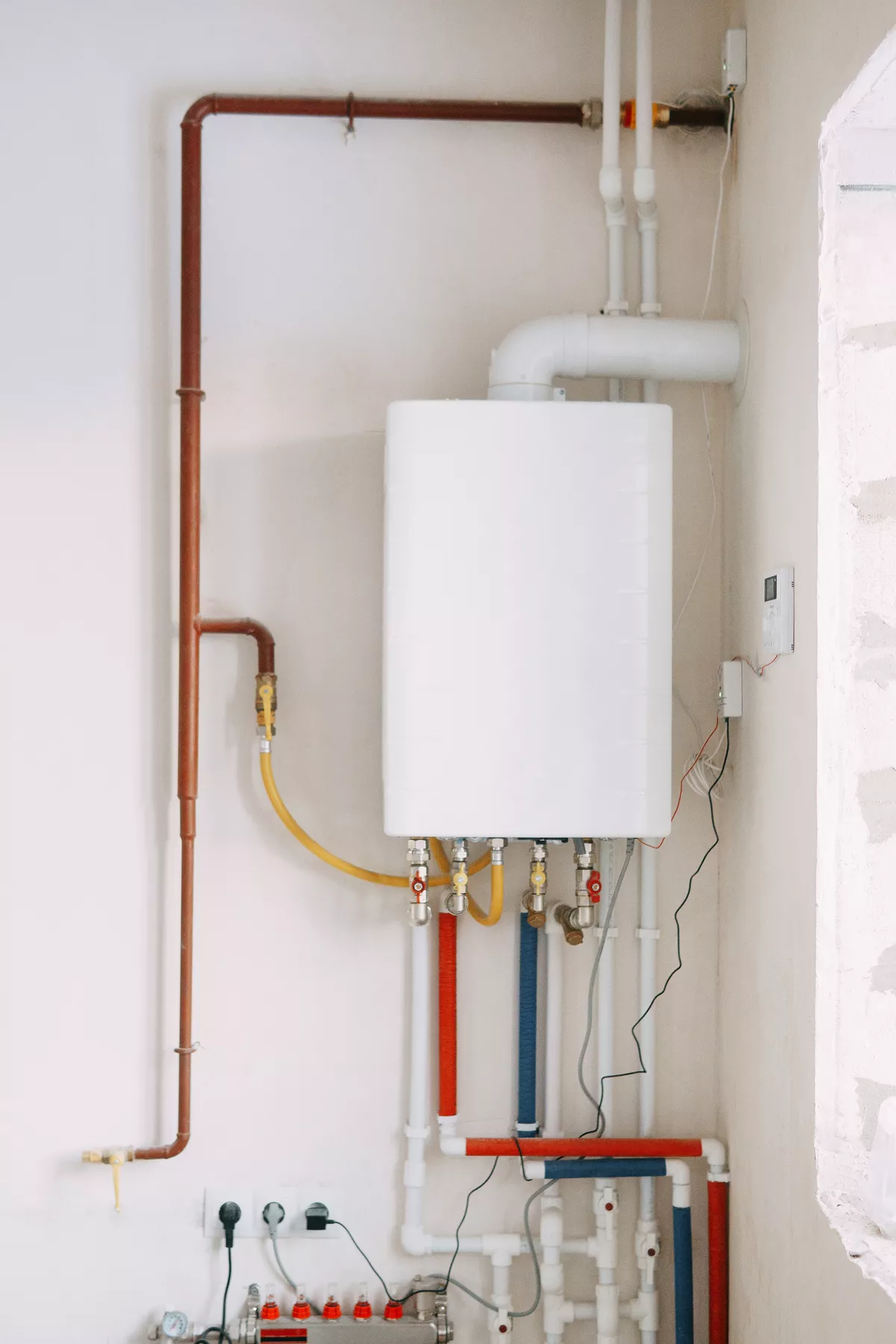
- Venting and drainage, if it is condensing. Going from a non-condensing furnace to a condensing one changes the exhaust and adds a condensate drain.
- A permit. Permit requirements are set town by town. Each of our city pages carries what that town’s own building pages say, indexed on our service-area page.
- Setup at your elevation. Manufacturers set altitude requirements model by model. Goodman’s manual says a high-altitude orifice kit must be applied where the furnace’s specification sheet calls for one, and its table lists no kit for natural gas up to 7,000 feet. Nederland is the only town we serve above that line. Everywhere, the question is what the new furnace’s own manual requires at your elevation, and whether it was done.
What that work looks like is set out in furnace installation. If the answer is repair, the detail is in furnace repair.
The other option: a heat pump
Replacing a furnace is also the point at which a heat pump becomes a practical alternative, either on its own or paired with a gas furnace as backup. It is a different decision, with different rebates and a different question about cold-weather capacity. Xcel’s heat pump rebates are tied to holding an Xcel electric or gas account, and a heat pump has to be installed and invoiced by December 31, 2026 to qualify under the current programme. The equipment side is covered in heat pump installation. The rebates that apply to heat pumps are in our rebates guide.
How to weigh it
There is no single number that decides this, and any rule that claims to be one has no source. These are the questions that do decide it, in order:
- Is there a safety finding? A heat exchanger or venting problem is not a cost question.
- What failed? A replaceable component on a sound furnace is a different decision from a failure of the heat exchanger.
- How old and how efficient is it? Read the model and serial number from the rating plate, and find its AFUE on the specification sheet.
- What would a replacement qualify for? A 95 percent unit on Xcel gas can qualify for Xcel’s furnace rebate; the federal credit has ended.
- What does the calendar say? Nothing forces a replacement of an installed furnace, but the rules for new ones are changing, and a planned replacement is easier than one forced by a January failure.
A written record from a measured tune-up makes the first three questions much easier to answer. What that record should contain is in the pre-winter tune-up.
What to gather before a quote
A repair-or-replace conversation goes faster, and is easier to check, with a few things to hand:
- A clear photo of the rating plate, showing the model and serial number.
- The specification sheet or AFUE for that model, if you can find it.
- The last service record, ideally with the readings from a measured tune-up.
- A recent gas bill, which shows which utility serves the address and so which rebates can apply.
- What happened: when the furnace stopped or started misbehaving, any error code on the control board, and whether a carbon monoxide alarm has sounded.
With those, the questions in the previous section can be answered from records rather than from memory, and two quotes can be compared on the same basis.
Frequently asked questions
Should a 25-year-old furnace be replaced? Age alone does not decide it. ENERGY STAR suggests considering replacement once a furnace or boiler is “more than 15 years old”, so a 25-year-old furnace is well past that point and worth a close look. What decides it is what the inspection finds, above all the condition of the heat exchanger and venting, and what a replacement would qualify for.
What is the $5,000 rule? It is an industry rule of thumb. As contractor sites that use it describe it, you multiply the furnace’s age by the repair cost and replace if the result is over 5,000. It has no published source and does not account for safety, efficiency, or rebates. Weigh those instead, in the order set out above.
Do I have to replace my 80 percent furnace before 2028? No. DOE’s 95 percent standard applies to furnaces manufactured in or imported into the United States from December 18, 2028. It does not require anyone to replace an installed furnace. As of September 24, 2026, a petition to delay that date to January 1, 2030 at the earliest was pending with DOE, with no decision published.
Does a new furnace have to be 97 percent efficient? No. 97 percent is the threshold for the ENERGY STAR label in the U.S. North, including Colorado, since July 31, 2026. It is not a legal minimum. The legal minimum for non-weatherized gas furnaces is 80 percent AFUE today and is scheduled to rise to 95 percent on December 18, 2028.
Does Colorado law make me replace my furnace? No. HB23-1161 limits the emissions of new furnaces and water heaters sold or leased in Colorado from January 1, 2026. It does not apply to equipment already installed.
How much does it cost to replace a furnace for a 2,000 square foot house? This guide does not quote prices. Square footage alone does not size a furnace; a load calculation does. A quote also depends on the efficiency chosen, whether the venting and drainage have to change for a condensing unit, the permit, and any rebate the unit qualifies for.
Sources
- U.S. Department of Energy, Energy Conservation Standards for Consumer Furnaces, final rule, 88 FR 87502 (December 18, 2023): 95% AFUE for non-weatherized gas furnaces, compliance on and after December 18, 2028; Table II.1, current standard 80% AFUE since November 19, 2015; public comments on venting and condensate drainage – https://www.govinfo.gov/content/pkg/FR-2023-12-18/html/2023-25514.htm
- U.S. Department of Energy, Notification of Petition for Rulemaking, Federal Register, April 27, 2026, docket EERE-2026-BT-STD-0001: petition of February 19, 2026 to extend the consumer furnace compliance date to January 1, 2030 at a minimum; comments due May 27, 2026 – https://www.govinfo.gov/content/pkg/FR-2026-04-27/html/2026-08145.htm
- Colorado General Assembly, HB23-1161, Section 9 (January 1, 2026) – https://leg.colorado.gov/bills/hb23-1161
- U.S. EPA, ENERGY STAR Furnaces Version 5.0 Final Specification (97.0% AFUE, U.S. North, effective July 31, 2026) – https://www.energystar.gov/sites/default/files/2025-01/ENERGY%20STAR%20Version%205.0%20Furnaces%20Final%20Specification_0.pdf
- ENERGY STAR, When is it time to replace? – https://www.energystar.gov/saveathome/heating-cooling/replace
- ENERGY STAR, Maintenance Checklist – https://www.energystar.gov/saveathome/heating-cooling/maintenance-checklist
- Goodman, Installation Instructions for *M9S80 & *C9S80 gas furnaces (functional parts list, repair and replacement parts, gas input, altitude table) – https://documents.alpinehomeair.com/product/goodmangm9s8gc9s8installationmanual.pdf
- Xcel Energy, Colorado residential heating equipment rebates – https://co.my.xcelenergy.com/s/residential/heating-cooling/heating-equipment-rebates
- Xcel Energy, Colorado residential heat pumps (install and invoice by December 31, 2026; Xcel electric or gas account) – https://co.my.xcelenergy.com/s/residential/heating-cooling/heat-pumps
- IRS, Energy Efficient Home Improvement Credit – https://www.irs.gov/credits-deductions/energy-efficient-home-improvement-credit