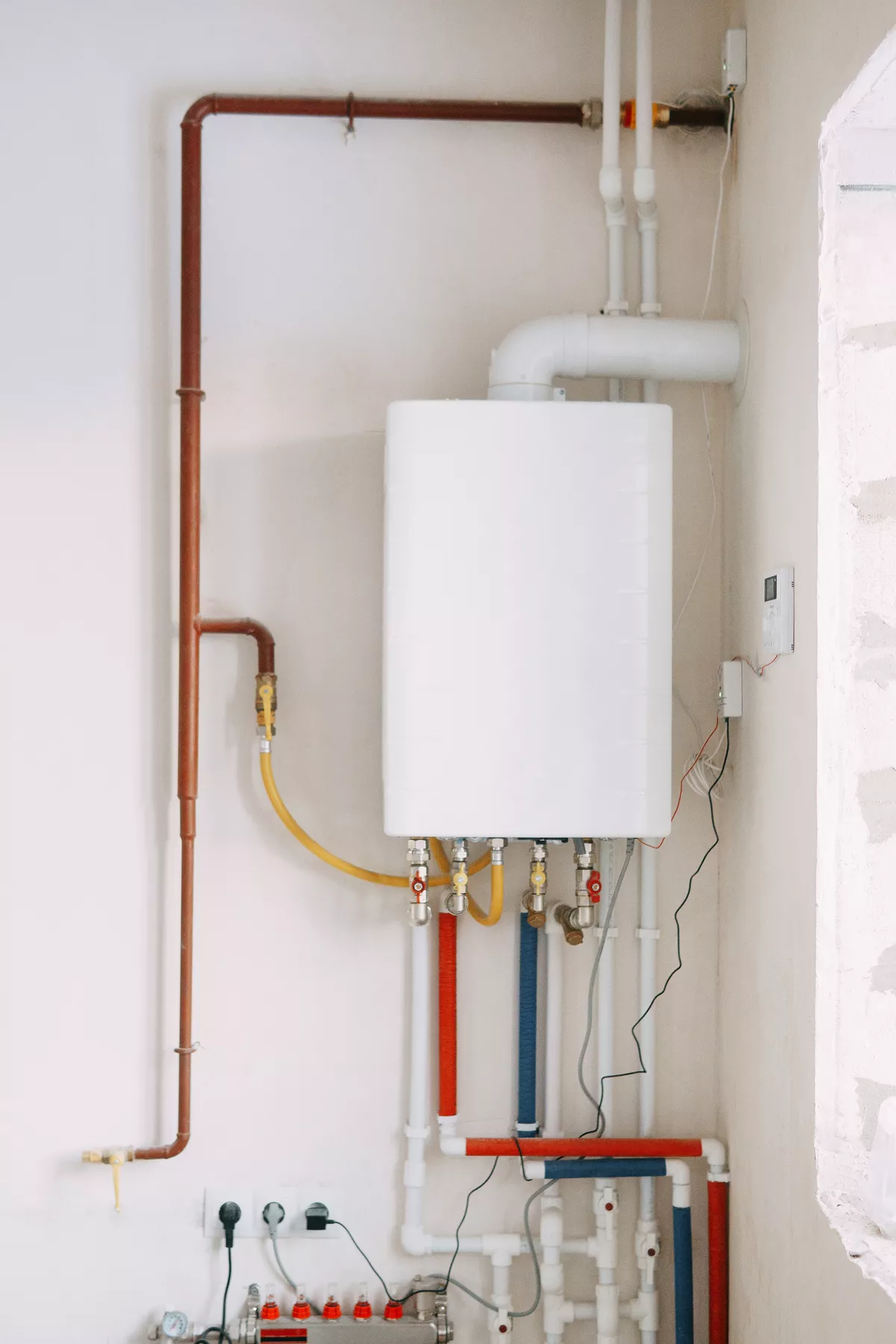
The furnace stops in the middle of a winter night. The house is cooling, the thermostat says it is calling for heat, and nothing is happening. The question is not only what is wrong with the furnace. It is whether this needs someone tonight, or whether it can safely wait until morning.
This guide is a way to answer that. It starts with the situations that are always emergencies, whatever the furnace is doing. It then covers the few safe checks a homeowner can make, the narrow set of cases that can wait until morning, and how to stay warm safely in the meantime. The rule underneath all of it is simple: here is how to tell, and when in doubt, call.
First: the situations that are always emergencies
Some situations are emergencies before anyone looks at the furnace. If any of these apply, do not wait for morning.
A carbon monoxide alarm, or symptoms
The Centers for Disease Control and Prevention describes carbon monoxide as “an odorless, colorless gas that kills without warning,” and lists “gas- and oil-burning furnaces” among the household items that produce it. The symptoms it names are “headache, dizziness, weakness, upset stomach, vomiting, chest pain, and confusion,” and it warns that “people who are sleeping, drunk, or under the influence of other substances can die from CO poisoning before they have symptoms.”
If the carbon monoxide alarm sounds, or anyone in the house has those symptoms, get everyone out into fresh air and call 911 from outside. Do not stay to check the furnace. Our guide on what to do when a carbon monoxide alarm goes off covers the steps in more detail.
A smell of gas
If you smell gas, leave the house and call from outside. Xcel Energy’s instructions for Colorado customers are specific: “If you’ve detected a gas leak, please don’t use anything that can create a spark (like flip a light switch, open/close a garage door, etc.) and move a safe distance away before calling 911 and then call Xcel Energy at 800-895-2999 for help.” It adds: “Stay away until Xcel Energy or emergency responders have told you it is safe to return.”
That is the whole of a homeowner’s part. Nothing on the gas supply or the furnace is for anyone but the utility and emergency responders.
Someone in the house is at higher risk from cold
The CDC names the people most at risk of hypothermia. “Victims of hypothermia are often,” it says, “older adults with inadequate food, clothing, or heating” and “babies sleeping in cold bedrooms.” For carbon monoxide, it says that “infants, the elderly, and people with chronic heart disease, anemia, or breathing problems are more likely to get sick from CO.”
If an infant, an older adult, or anyone with a health condition that cold could worsen is in the house, a loss of heat on a winter night is an emergency. Do not use the wait-until-morning test below for them. Call for service, and if the house is getting cold, get them somewhere warm.
The CDC also lists the warning signs of hypothermia. In adults: “shivering,” “exhaustion or feeling very tired,” “confusion,” “fumbling hands,” “memory loss,” “slurred speech” and “drowsiness.” In babies: “bright red, cold skin” and “very low energy.” It is direct about what to do: “Hypothermia is a medical emergency. If you notice any of the above signs, take the person’s temperature. If it is below 95° F, get medical attention immediately!” A person showing those signs needs medical help first. The furnace can wait.
Pipes at risk of freezing
A cold house is also a plumbing risk. The American Red Cross explains that “water has a unique property in that it expands as it freezes,” and that “no matter the strength of a container, expanding water can cause pipes to break.” It lists the pipes most at risk: “water supply pipes in unheated interior areas like basements and crawl spaces, attics, garages, or kitchen cabinets,” and “pipes that run against exterior walls that have little or no insulation.”
If the house is losing heat on a freezing night and you have pipes in those places, treat it as an emergency. The Red Cross’s own guidance for a cold spell is to “open kitchen and bathroom cabinet doors to allow warmer air to circulate around the plumbing” and, “when the weather is very cold outside, let the cold water drip from the faucet served by exposed pipes.” A burst pipe adds a water emergency to a heating one.
The checks a homeowner can make safely
If none of the emergencies above applies, a few checks can be made before calling. These involve nothing inside the furnace, nothing on the gas and nothing electrical.
- The thermostat. Confirm it is set to heat, that the set temperature is above the room temperature, and, if it runs on batteries, that the display is working. A thermostat that has been switched to cool or off, or a schedule that changed, can look exactly like a failed furnace.
- The filter. Pull it out and look. A clogged filter restricts airflow through the whole system, and the furnace manual is plain about it: “Improper filter maintenance is the most common cause of inadequate heating or cooling performance.”
- Clearances. Check that supply registers are open and return grilles are clear, and that nothing is stored against or around the furnace.
- The carbon monoxide alarm. Test it. If the house has no working carbon monoxide alarm, that changes the answer: a gas furnace that has stopped and restarted overnight in a house with no working alarm is not a case to sit out until morning.
If these checks do not bring the heat back, stop there. Resetting, relighting or opening the furnace is a technician’s work. For what the symptoms can mean, see furnace won’t turn on and furnace won’t ignite.
The narrow case that can wait until morning
Some no-heat nights can wait. The test is strict, and every part of it has to be true:
- Everyone in the house is a healthy adult. No infants, no older adults, and no one with a condition cold could worsen.
- No carbon monoxide alarm has sounded, the alarm tests as working, no one has symptoms, and there is no smell of gas.
- No pipes are at risk. The house is holding enough warmth that pipes in cabinets, exterior walls, the basement, crawlspace, attic or garage are not exposed to freezing.
- There is a safe way to stay warm until morning, without using any fuel-burning appliance indoors.
- Nobody in the house is showing any of the CDC’s warning signs of hypothermia.
If any one of those is not true, or you are not sure, it is not a case for waiting. Call.
When every part is true, a call first thing in the morning is reasonable, and it is worth writing down what happened before you make it: when the heat stopped, what the thermostat showed, and anything you heard or saw.
Staying warm safely until help arrives
How a house is kept warm overnight matters as much as the furnace. The CDC is blunt about what never to do: “Never heat your house with a gas oven.” It also warns: “Never use a generator inside your home or garage, even if doors and windows are open,” “never burn charcoal indoors,” “never use a portable gas camp stove indoors,” and “do not use portable flameless chemical heaters indoors.”
The Red Cross gives the same warning from the other side: “To prevent carbon monoxide poisoning and home fires, never heat your home with a cooking oven or stove.” If a space heater is used, it says to “use care with space heaters and fireplaces to prevent fires” and to “keep anything that could catch fire at least 3 feet (1 meter) from the heat!”
Warm clothing and blankets are the safest heat source available. The Red Cross advises that you “wear layers of loose clothing,” and it has a plan for when the house cannot be kept warm: “Know where you will go if your home becomes too cold. You could go to a friend’s house, a public library, or a warming center.”
If anyone in the house is at higher risk from the cold, moving them somewhere warm is not a last resort. It is the first step.
If someone is already showing signs of hypothermia and medical help cannot be reached right away, the CDC sets out what to do while waiting. “Get the person into a warm room or shelter. Remove any wet clothing the person is wearing.” It says to warm “the center of the person’s body—chest, neck, head, and groin—using an electric blanket, if available,” and notes that “warm drinks can help increase body temperature, but do not give alcoholic drinks.” Then: “Get the person proper medical attention as soon as possible.”
A working carbon monoxide alarm matters more on a night like this, when people may be trying other ways to keep warm. The CDC advises you to “install battery-operated or battery back-up CO detectors near every sleeping area in your home.”
If you rent
If you rent, tell your landlord or property manager as soon as the heat stops, and keep a record of when you did.
In the City of Boulder, the city’s own tenant resource guide sets out the next step. “If conditions in your building are putting you or others in immediate danger, leave the building and call 911,” it says. “If there are essential repairs impacting health and safety that need to be addressed immediately, such as loss of heat or water, and your landlord does not respond promptly, contact Code Compliance at 303-441-3173 or submit a report at bldr.fyi/report-building-safety.”
Outside the City of Boulder, contact your own town’s building or code enforcement office, or Boulder County, if the landlord does not respond. The emergencies above apply to renters in exactly the same way: a carbon monoxide alarm, a smell of gas, a person at risk from cold or pipes at risk are reasons to act tonight, not to wait for a reply.
Calling for service
When you call, it helps to have the details ready: when the heat stopped, what the thermostat shows, the results of the checks above, and who is in the house. If anyone is at higher risk from cold, say so first. For after-hours help, see emergency HVAC repair. For the wider picture of heating safely here, see the guide to winter heating costs and safety in Boulder.
Frequently asked questions
Is it an emergency if you have no heating? It is an emergency if a carbon monoxide alarm has sounded, you smell gas, anyone in the house is at higher risk from cold, or pipes are at risk of freezing. It can wait until morning only when everyone is a healthy adult, the alarm works and has not sounded, pipes are not at risk, and there is a safe way to stay warm. When in doubt, call.
What do I do if I have no heat in my house? Check for the emergencies first: a carbon monoxide alarm, a gas smell, someone at higher risk from cold, or pipes at risk. Then check the thermostat setting, the filter, the registers and the space around the furnace, and test the carbon monoxide alarm. If the heat does not come back, call for service.
How do you keep your house warm with no heat? With layers and blankets, and by moving anyone at risk somewhere warm. The CDC says to “never heat your house with a gas oven” and never to use a generator indoors. The Red Cross advises knowing where you would go if the home becomes too cold, such as a friend’s house, a public library or a warming center.
Will pipes freeze in a house without heat? They can. The Red Cross lists pipes in unheated basements, crawlspaces, attics, garages and kitchen cabinets, and pipes against poorly insulated exterior walls, as the most at risk. Opening cabinet doors and letting cold water drip from faucets served by exposed pipes are its advice for very cold weather.
How long can a house go without heat in the winter? There is no safe fixed number of hours. It depends on how cold it is outside, how well the house holds heat, where the pipes run and, most of all, who is in the house. If anyone is at higher risk from cold, or pipes are at risk, do not wait.
How cold is unhealthy for a house? This guide does not give a single indoor temperature. The CDC’s warning is about people: it names “babies sleeping in cold bedrooms” and “older adults with inadequate food, clothing, or heating” among those at risk of hypothermia. Watch the people, and treat any warning sign of hypothermia as a medical emergency.
Sources
- Centers for Disease Control and Prevention, Preventing Hypothermia (page dated August 25, 2026) – https://www.cdc.gov/winter-weather/prevention/index.html
- Centers for Disease Control and Prevention, Carbon Monoxide Poisoning Basics (page dated January 12, 2026) – https://www.cdc.gov/carbon-monoxide/about/index.html
- Xcel Energy, What do I do in an emergency gas situation? – https://co.my.xcelenergy.com/customersupport/s/article/What-do-I-do-in-an-emergency-gas-situation
- American Red Cross, Preventing & Thawing Frozen Pipes – https://www.redcross.org/get-help/how-to-prepare-for-emergencies/types-of-emergencies/winter-storm/frozen-pipes.html
- American Red Cross, Winter Storm Preparedness & Blizzard Safety – https://www.redcross.org/get-help/how-to-prepare-for-emergencies/types-of-emergencies/winter-storm.html
- City of Boulder, Tenant Resource Guide – https://bouldercolorado.gov/tenant-resource-guide
- Goodman, Installation Instructions for *M9S80 & *C9S80 gas furnaces (filter maintenance) – https://documents.alpinehomeair.com/product/goodmangm9s8gc9s8installationmanual.pdf